Bobby Pulido pitches himself as the Democrat “you used to vote for” in bid to oust Rep. Monica De La Cruz
By Gabby Birenbaum, The Texas Tribune
October 16, 2026
EDINBURG — The grills were firing ahead of the University of Texas Rio Grande Valley’s football game Saturday when a woman in UTRGV orange came out from under her tailgate tent to greet Bobby Pulido.
She had been to one of his concerts years ago, she told him, and he had kissed her on the cheek. Would he do it again?
He acquiesced, and she answered with a “You have our vote!” before more people spilled out of the tent for pictures of their own. Similar scenes played out across the afternoon as tailgaters blasted Pulido’s 1994 hit “Desvelado” upon spotting him, and he rarely went more than a couple minutes between photo requests and brief chats — sometimes on politics, sometimes not — followed with a reminder to vote.
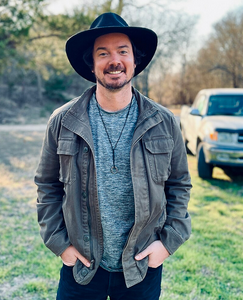
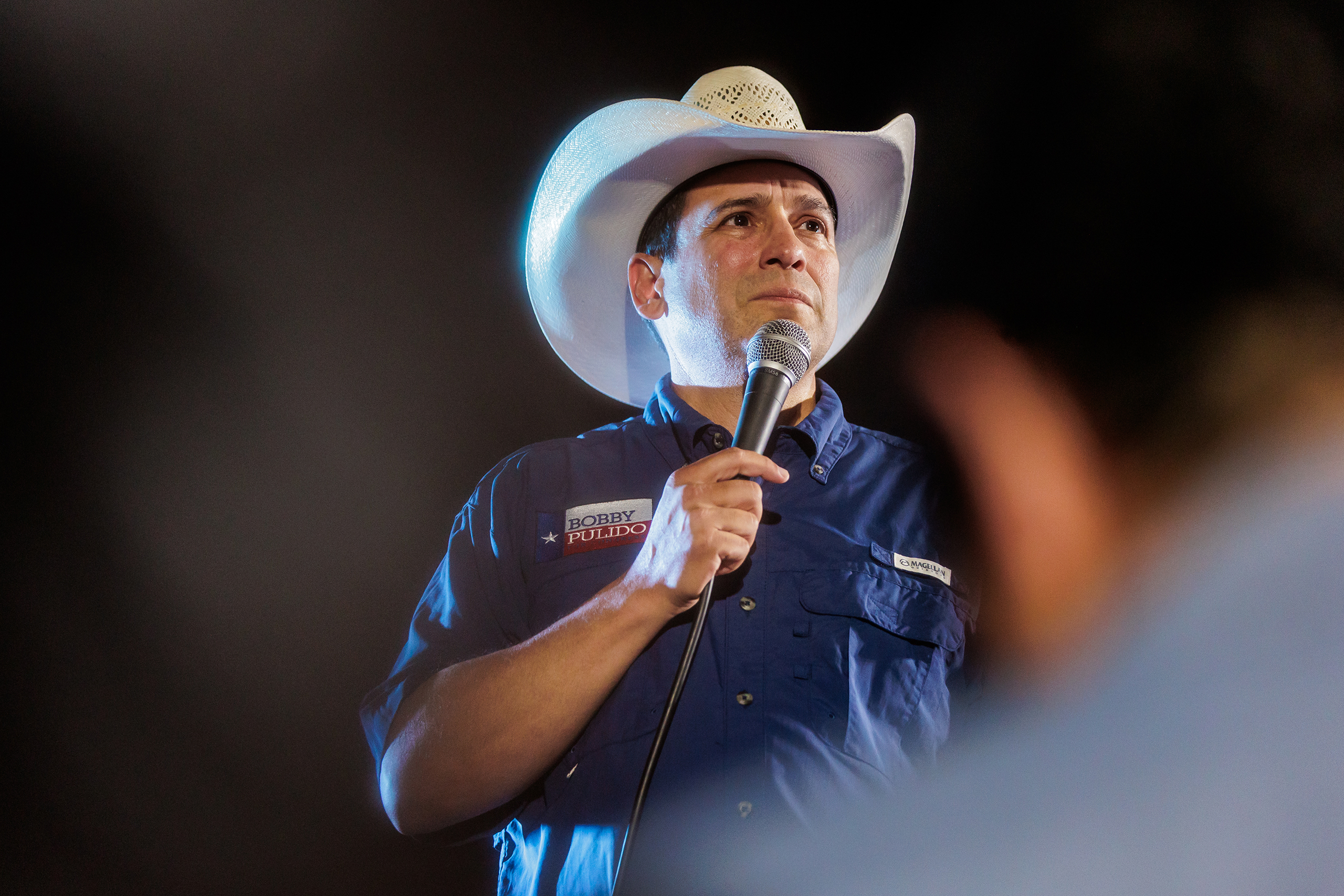
Pulido is a Tejano musician and Latin Grammy winner whose songs are part of the Rio Grande Valley’s soundtrack, blared from icehouses to tailgates to block parties. He’s also the Democratic candidate for Texas’ 15th Congressional District, betting that his household name status and moderate politics can flip a seat President Donald Trump won by 18 percentage points in 2024.
Pulido’s campaign runs on regional nostalgia — for his 1990s hits and for a political era when the Democratic Party was synonymous with South Texas and its working-class Latino voters. He is trying to bring that back with a heavy dose of retail politicking, a break from his party on border security and a pitch to what he calls Latino voters’ financial aspirations. The bet is that all this will stymie Republicans’ momentum in the Valley and remind voters of the Democratic Party their abuelitas loyally supported for decades.
“I’m the Democrat that you used to vote for,” Pulido said when asked how he sells himself to people who voted for Trump. “That’s it.”

Rep. Monica De La Cruz, the Republican incumbent, embodies the inroads her party has made in the region. An insurance agent, De La Cruz flipped the historically Democratic district in 2022, becoming the first Republican to win a full congressional term in the Valley in over a century. Two years later, Trump became the first Republican to win Hidalgo County, the anchor of the district, since 1972, as the Valley lurched to the right.
As Pulido tries to remind voters of better times, De La Cruz is running on the opposite premise: that her opponent is a vestige of an old political system that voters in the Valley were right to break from when they elected her.
“My opponent is a silver-spooned celebrity who had a nice song in the 1990s,” De La Cruz said between recent campaign stops in the border town of Progreso. “I think what people need to remember about him is he comes from the corrupt, compadre system that ruled South Texas for decades.”

This clash over the Valley’s political past is playing out in one of the country’s most politically fluid regions, in a district where voters have soured on both parties. Pulido and De La Cruz are both running against core elements of their parties’ national brands, with De La Cruz distancing herself from the administration on immigration enforcement — even as she carries Trump’s endorsement.
The district’s eligible voting population is 75% Hispanic, meaning an expected leftward shift in the Hispanic vote, captured by polling throughout the midterms, would have seismic implications. Its boundaries stretch from Hidalgo County, which comprises nearly three-quarters of the 15th District’s voting-age population, up to rural, Republican-dominated counties near Corpus Christi, which were added to the district when Texas Republicans redrew the map last summer.
“That is a real difficult race to gauge, because a lot of people — including Democrats — have seen what [De La Cruz] has done, and she has been very good for the district,” said Javier Villalobos, a Republican and the mayor of McAllen. “But the popularity of Pulido, whether he has experience or not, his plans, the way he speaks, is pretty decent too. He seems like a moderate Democrat.”
Inside the Pulido experience
Through local appearances, concerts and performances at quinceañeras — a practice he took up after a jab from De La Cruz — Pulido’s campaign estimates he’s had personal contact with 30,000 voters.
In interviews with over a dozen of them, between the UTRGV tailgate, a concert in Alice and a rally in Donna, nearly everyone cited Pulido’s South Texas roots as one of the reasons they’re voting for him. Pulido is “a Valley guy,” said Mission retiree David Munson. Alice resident Amy Perez noted “he comes from down here.” An attendee at the tailgate, Alex Gonzalez, said the Democrat’s campaign is “refreshing — to have somebody who not only speaks the language, understands the people of the area, but more importantly, is going to advocate for the folks that he’s going to represent.”
That cultural authenticity, supporters said, gives Pulido an in. Combined with his centrist positions, they believe he can win over ancestral Democrats who voted for Trump last cycle — an essential task in a district the president carried with 59% of the vote two years ago.

“I think Bobby Pulido is going to do well with someone that used to be a moderate Democrat, became a Republican, and is now like, honestly, I might come back to being a moderate Democrat,” said Claudia Cuellar, the RGV field manager for Mi Familia Vota, which is canvassing for Pulido. “I don’t think they’ll ever be a Bernie supporter or that left [wing], but I think he’s going to relate to that moderate Democrat that I grew up with down here. Those are my uncles and my dad.”
Pulido’s diagnosis of the Democratic Party’s recent woes in South Texas starts with what he saw as a nonexistent economic message in 2024. That created a vacuum, he said, that GOP candidates filled by linking their opponents to coastal Democrats’ social beliefs, such as inclusivity around pronouns, that don’t resonate in the Valley.
While Democrats neglected the economy, Pulido said, Trump was promising to bring costs down.
We have to be better,” he told attendees at a recent Democratic candidate rally in Donna. “If I write a song, and the people don’t like the song, is it the people’s fault? No. It’s my fault. I’ve got to write a better song.”
Jesse Garcia, of Edinburg, said he has voted for candidates of both parties but skipped the polls in 2024 because he felt stuck between the two sides.
Garcia hasn’t fully decided on his choice for Congress this year, but he does plan to vote, he said, because the Valley needs change — and he is leaning toward Pulido.
“He’s kind of not all the way [partisan],” Garcia said from the UTRGV parking lot, as his fellow tailgaters put “Desvelado” on the speaker and cheered. “He’s kind of in between in his thoughts. That’s what I like.”

Pulido’s emphasis on retail politicking blends the attention he attracts as a celebrity with the small-town feel of the Valley, where voters in both parties will point out unprompted that they or a family member went to high school with a local politician.
“He’s one of us,” said Mario Guerrero, the CEO of the South Texas Builders Association and a three-time Trump voter who has been outspoken against ICE’s raids and tactics and its impact on the construction industry. “He comes from the same upbringing, and the same culture of respect — you eat dinner with your parents, and you help your mom and dad around the house, and just basic things.”
On the trail, Pulido keeps a tight focus on the economy, healthcare and immigration — a Blue Dog platform intended to remind voters of a uniquely South Texan Democratic Party, abstaining from talk of social issues that might get him tagged as an Austin or coastal liberal. (Pulido has gotten in trouble for his own crude comments online about women.)
Pulido argues that his politics can speak to both a wistful Democratic past and a desire for a better future, in which talented people do not need to leave the Valley in search of economic opportunity.
“People in the small-town areas are not so predisposed to want change,” Pulido said. “They want tradition. They just want you to make their lives affordable.”

To that point, Pulido discusses the economy as a matter of aspiration. To build voters’ generational wealth, he said he wants to reduce the federal deficit in order to ease inflation, part of which can be done, he said, by increasing taxes on corporations and the highest earners. And he frequently reiterates that people in the Valley are “broke, not poor” — a framing he says both parties miss when they frame the partisan battle as being between the rich and the poor.
“I don’t attack the rich,” Pulido said. “You know why I don’t attack the rich? Because people here want to be rich. That’s their goal in life. They want to be able to have enough money to provide for their families.”
The De La Cruz case
De La Cruz also leans into her South Texas roots on the campaign trail, discussing her background as the daughter of a single mother who empathizes with the economic struggles faced by working Texans. On the stump, she touts the benefits of policies like no tax on tips and no tax on overtime in the GOP’s One, Big Beautiful Bill Act.
“We had a simple life,” De La Cruz told supporters at a breakfast meet-and-greet in Progreso, before her campaign picked up the tab. “[We] struggled. In fact, we ate so many eggs that I’m not crazy about eggs. I like more chorizo, el papa, el frijól, because we couldn’t afford much. But in this land of opportunity, it doesn’t matter how you start.”
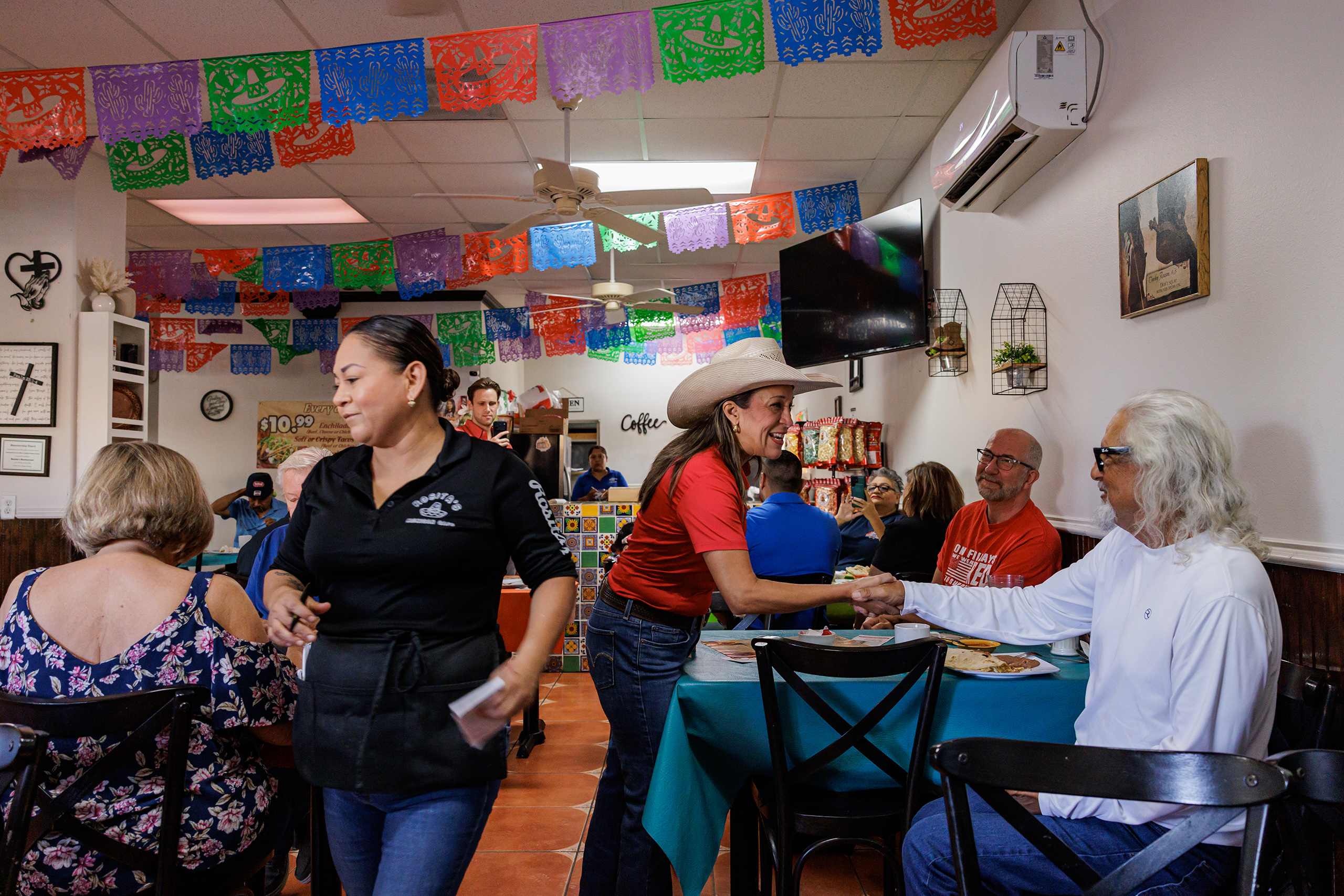
She also leads with her efforts as a “water warrior” to ensure Mexico meets its obligations to the region under the 1944 Water Treaty. And her ads have highlighted her defense of Social Security and Medicare — something she emphasized while addressing seniors in Spanish at an adult day care.
At the Progreso restaurant, supporters said they liked that De La Cruz came across as sincere — and that she was backed by Trump.
Pastor Eli Lara, who leads the nondenominational New Life Family Church in McAllen, believes De La Cruz, an Episcopalian, will benefit from the region’s religious fervor — a factor often cited as part of the foundation for the GOP’s recent gains there.
The Rio Grande Valley is traditionally Catholic but has experienced greater Christian diversification in recent years, as Pentecostal and Protestant churches, whose congregants tend to be much more Republican, grow.
“A lot of people got behind [De La Cruz] because she would talk about God, faith and religion. I still think she’s very strong here in South Texas,” said Lara, whose church averages 2,000 attendees per week and who is conducting a 21-day fast leading up to the election, a prayer practice he also employed in 2024.
De La Cruz has also emphasized Pulido’s liabilities — particularly his employment of an accordionist, Frankie Caballero, who is a registered sex offender. Pulido and Caballero worked together early in his career, and the two toured together as recently as 2021 — including performing at a middle school benefit concert in Edinburg in 2018, after Caballero had spent years in prison for indecent sexual contact with an 8-year-old girl.
Pulido has maintained that Caballero was a needs-based contractor whom his management company hired without a background check. And he said he did not know of Caballero’s status as a sex offender because the accordionist told him he had been in prison for harboring an immigrant who was living in the country illegally. Pulido’s management team let Caballero go in 2021, the singer said, after hearing that he had assaulted his wife.
Republicans have maintained his defense does not pass muster — and have booked millions of dollars worth of ads highlighting Pulido’s employment of Caballero and accusing him of downplaying the severity of child sexual assault.
De La Cruz’s path to victory involves running up the score in the northern counties of the district — where she has had to introduce herself given the new map — and keeping the margin in Hidalgo County as close as possible.
That includes retaining support from voters who backed her in past cycles yet still feel the strain of high everyday costs that have persisted under GOP-controlled Washington.
“Hispanics tend to have large families — which means more mouths to feed,” De La Cruz said. “And what happens at the gas pump, what happens at the cash register, that ultimately affects their vote. And I think as I’m going out and meeting people … they know how hard I’ve worked to drive down prices and also to support protecting Social Security and Medicare.”
Dagoberto Zavala was previously in the 34th Congressional District, which is represented by a Democrat, but was redistricted into the 15th District. He said De La Cruz brings new energy — despite being the incumbent in the race — compared to the mostly Democratic politicians who have represented the Valley “for an eternity.”

De La Cruz’s campaign feels “fresh compared to everybody else,” Zavala said, noting he plans to support her even as he is frustrated by high costs and the Iran War.
“I wish fuel would come down,” Zavala said. “Especially diesel. “‘Cause it’s hurting me.”
The immigration question
Republicans and Democrats alike believe that if South Texas swings back to the left on Election Day, it will be in large part due to the sharp uptick in Immigration and Customs Enforcement activity in the region. While voters in the Valley punished the Biden administration for its handling of the border two years ago, some in the GOP worry that Trump’s mass deportation agenda will now cost the party votes this November amid concerns about its humanitarian and economic impact.
Villalobos, the Republican McAllen mayor, said the administration has “overreached” on immigration enforcement.
“I think that’s the driving force, or one of the things, that is making the Republican Party lose a lot of the Hispanic community again,” Villalobos said. “It has nothing to do with economics, probably not even inflation or even the war. But, I think a lot of the Hispanic community sees it as against us — profiling in a sense.”
Pulido has leaned in on publicizing stories of ICE aggression in the Valley. One of his priorities in Congress, he said, would be comprehensive immigration reform, including codifying a pathway to citizenship. The economic reality of the region, Pulido says, demands a long-term solution.
De La Cruz has been willing to buck her party on immigration. She is a cosponsor of the bipartisan Dignity Act, which would grant legal status, though not citizenship, to long-term residents. And she has proposed legislation to streamline and expand the visa process for agricultural and construction workers. One of her ads features the wife of a DACA recipient whom De La Cruz helped release from detention.

“[People] believe here in South Texas that we should have a secure border,” De La Cruz said. “They also believe that we should have common-sense enforcement policy as well. And I’ve been extremely clear with leadership — enforcement should focus on the criminals and the cartels, not hardworking families that are trying to navigate the extremely complex immigration system.”
Her supporters say her framework is in line with what they’re looking for.
“I believe what Monica says — there has to be a pathway, so the good people can stay,” said Sylvia Ochoa, of Weslaco. “Not just open borders.”
But Pulido thinks De La Cruz, who voted in favor of the One, Big Beautiful Bill Act, which included tens of millions for ICE, has not done enough to push back against her party.
“The people down here want to feel that you’re willing to stand up for them against anybody,” Pulido said. “They need somebody that says, you don’t understand us. This is a different situation. But she’s been very meek about how she goes about it.”
And the excesses of ICE enforcement, particularly in key sectors like construction, has become a major economic issue in the Valley, where homebuilders say they can no longer find subcontractors and workers.
Guerrero, the South Texas Builders Association leader, says the Valley ping-ponged between extremes, from what he described as open borders under President Joe Biden to a level of chaos brought by ICE that he says is “un-American and racial.” He is among those dismayed by the shortage of subcontractors and workers confronting his industry, which he pins on the excesses of ICE.
The situation is so dire, Guerrero said, that he suspects voters who are frustrated with both parties will end up pulling the lever for Pulido and other Democrats.
“I think that right now, because of the enforcement that we’re seeing, even people that don’t want to vote are going to vote,” Guerrero said. “Because we need help.”
Disclosure: The University of Texas Rio Grande Valley has been a financial supporter of The Texas Tribune within the past five years. The Texas Tribune is a nonprofit, nonpartisan news organization that is funded in part by donations from members, foundations and corporate sponsors. Financial supporters play no role in our journalism. Find a complete list of them and more information about our financial and disclosure policies here.
This article first appeared on The Texas Tribune.