
A new Texas law declaws neighborhood groups that oppose housing projects
By Joshua Fechter, The Texas Tribune
August 26, 2026
When a shrinking church proposed to turn its property in a wealthy South Austin neighborhood into homes for lower-income families, neighboring homeowners revolted — petitioning the Austin City Council to halt the project.
Neighbors complained the 64-unit development — nestled in a desirable neighborhood just a block from the South Congress shopping district — would be out of character with surrounding single-family homes. The complex, they told city officials, would be too tall. The combination of new homes and a preschool planned for the site would jam up neighborhood streets with traffic, they argued.
“Just because there is a developer willing to cram an absurdly out-of-scale project onto this site does not mean it’s the correct or best project for this property,” one resident wrote to city officials.
In years past, their petition formally opposing the development — which had 29 property owners who signed it — would have made it difficult if not impossible for the city council to approve the project.
Instead, the proposed development sailed through. One key reason: a new state law that makes it more difficult for neighbors to stop new housing.
Among a suite of bills that passed last year to rein in the state’s housing costs, House Bill 24 effectively gutted a Jim Crow-era law that gave nearby property owners considerable leverage to prevent new homes from going up near them.
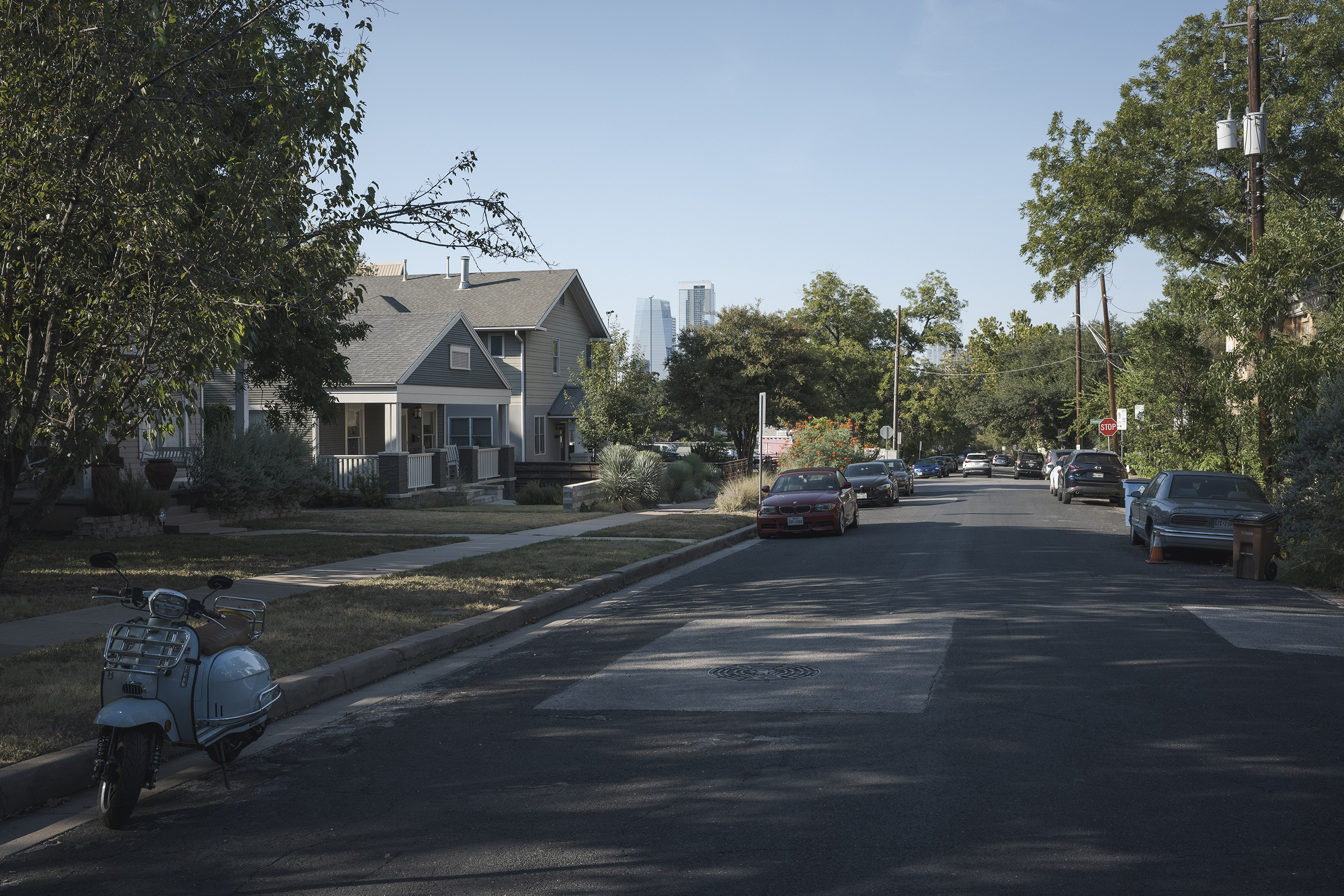
Texas faces a considerable shortage of homes, which has kept the state’s home prices and rents elevated as households compete for too few homes and apartments. Lawmakers largely sought to tackle the housing crunch by loosening local regulations and allowing more homes to be built.
HB 24 stands out among the suite of legislation because it’s aimed squarely at defanging “not-in-my-backyard” resistance from existing homeowners who often put pressure on local officials to prevent new homes from being built nearby.
HB 24 “takes down some of the barriers to development,” said Jamee Jolly, CEO of The Real Estate Council, an industry group that represents developers in North Texas.
Under the old law, if enough neighboring property owners formally petitioned against a project, the city council could only approve it by a supermajority — a high bar to clear. Even the idea of the petition triggering such a vote on the city council was enough to deter builders from pursuing much-needed housing.
“It became an implicit threat,” said Salim Furth, a senior research fellow who studies housing production at the Mercatus Center, a libertarian think tank based at George Mason University.
Sometimes, homeowners successfully petitioned against new housing. Two years ago, a proposed affordable housing development in San Antonio touted by Gov. Greg Abbott failed to get enough votes on the City Council to move forward after neighbors used the law.
Now, under HB 24, those efforts only need a simple majority to pass, no matter how many neighbors oppose it.
So far, it’s not clear how many developments have benefited from the law. But housing advocates, researchers and developers said it gives city councils more political leeway to approve individual developments or adopt broader, citywide zoning changes to combat the state’s deep shortage of homes.
‘Blood, sweat and tears’
South Austin Christian Church sits on a little less than an acre in Austin’s eclectic Travis Heights, a historic neighborhood with a funky mix of homes a short walk from South Congress. Its congregation had dwindled for decades, said Robin Stallings, the church’s treasurer, and had long been priced out of the neighborhood as South Congress transformed into a high-end shopping district. The typical home now goes for around $700,000, according to Zillow data.
“Historically our members came from the neighborhood,” Stallings said. “But gradually, the neighborhood got more and more expensive and we had fewer and fewer people actually from the neighborhood.”

Keeping the church open no longer made sense, Stallings said, so church leaders decided on a plan for the property they felt aligned with the church’s mission: sell the land to an affordable housing developer.
The church aims to sell its property to developer O-SDA, which plans some 64 apartments on the site, with a range of units from studios to three-bedrooms. The development will be 100% income-restricted with each unit set aside for households making less than the area median income. More than half of those units will be geared toward households who make 50% of the area median income or less, which for a family of four is $67,200.
O-SDA is also planning an onsite preschool to serve 25 to 40 children.
City officials like the proposed development, dubbed Rowen Vale. For the past several years, the City Council has pushed for newer, infill development for lower-income families in Austin’s urban core, where housing costs have grown inordinately expensive in the past two decades. Rowen Vale’s proximity to South Congress potentially means housing options for workers in shops and restaurants there they may not have had otherwise. The property’s also within walking or biking distance of an H-E-B, Stallings noted. What’s more is the property is close to a stop on Austin’s planned light rail line.
“We want people of all backgrounds and all income levels to be able to have the same Austin experiences,” said City Council Member Zohaib “Zo” Qadri, who represents the area where Rowen Vale’s slated to go. “If you want to live in Austin and you give your blood, sweat, and tears to the city, and you want your kids to be able to live in Austin and go to schools in Austin, you should be able to do that.”
Neighbors pushed back, unleashing a litany of complaints typically lodged against new housing: Parking from the development would spill over into neighborhood streets, the new homes and preschool would generate too much traffic and the development would be too tall for a single-family neighborhood and encroach on nearby homes. The development, which immediately neighbors single-family homes, will feature two buildings, one of them reaching four stories. The developer reduced one building’s height after talks with neighbors, but that did little to quell opposition.

“You can imagine what that’s going to look like out of somebody’s backyard,” said Anita Tschurr, a representative for the South River City Citizens Neighborhood Association, which includes Travis Heights.
Some argued that the development doesn’t make sense in a single-family neighborhood, and would be more suitable along a major thoroughfare. Others argued their home values would drop if affordable housing went up near them, they wrote to city officials — though researchers have found little if any evidence low-income housing craters neighboring property values. Others said they don’t oppose affordable housing, but objected to this particular development.
“I support affordable housing, including on this exact lot, but not at this incompatible scale,” one resident wrote to city officials.
Opponents of the development gathered enough signatures to file what’s known as a “valid petition,” which would have required the previous law’s supermajority support from the city council.
Under HB 24, the petition had no effect — and the City Council unanimously approved the project.
Dwindling NIMBY influence?
There’s some disagreement about whether HB 24 played a significant role in the Rowen Vale case. Stallings credits the law with defanging the opposition and helping the proposal get over the line.
But for the past four years, the Austin City Council has had a supermajority of council members that housing advocates deem “pro-housing.” After a group of Austin homeowners used the old law to convince a judge to kill a citywide zoning plan intended to allow more homes to be built, Austin activists worked to elect a “pro-housing” supermajority on the council that could withstand a challenge under the old law.
It’s likely that the current council would have approved the development no matter what, Qadri said. The law could come in handy in the event a less-development friendly council gets elected, he said.
Still, the law change may remove a hurdle to more housing. Developers and their lenders might now be more willing to take a chance on projects that add badly needed housing, Jolly said.
Under the new law, city councils across Texas also have more political leeway to adopt citywide zoning changes that automatically allow more homes across the board.
Still, neighbors have tools to oppose development in some places. In Dallas, a city ordinance allows property owners to delay a zoning case if they pay a $150 fee. The City Council considered last year whether to do away with the mechanism, but unanimously voted to keep it after pushback from residents.
The other route: exacting considerable pressure to make supporting more homes politically unpalatable for city council members. Homeowners in North Dallas have pushed back against city officials over a series of proposed high-rise developments there, effectively forcing a City Council member who supported one of the projects to not seek reelection and threatening to recall another.
Tschurr said that may be a path for Austin residents who object to the city council’s pro-development bent.
“They don’t give a shit what we say,” Tschurr said. “They don’t give a shit about who comes down and talks to them and says, ‘Hey, here are some really practical reasons why this is not a good idea.’”
Amid the state’s housing affordability woes, it’s not clear how politically viable opposing development will be. Cities and state officials alike are under pressure to rein in the state’s housing costs. And Abbott has signaled he wants lawmakers to do more to make it easier to build homes when the Texas Legislature convenes next year, including by declawing NIMBYs.
In the meantime, Stallings said the church plans to finalize the sale by the end of the year. It’s not clear when exactly the development would open. But he believes that neighbors who opposed the project will come to realize that it will enrich the neighborhood.
“Some of them will go to their graves being mad about it,” Stallings said. “But most of them will probably realize that it turned into a little bit better place.”

Disclosure: H-E-B has been a financial supporter of The Texas Tribune, a nonprofit, nonpartisan news organization that is funded in part by donations from members, foundations and corporate sponsors. Financial supporters play no role in The Texas Tribune’s journalism. Find a complete list of them here.
This article first appeared on The Texas Tribune.