RFK Jr. Swaps Vaccine Talk for Healthy Foods and Reading to Tots in Push To Woo Voters
By Amanda Seitz
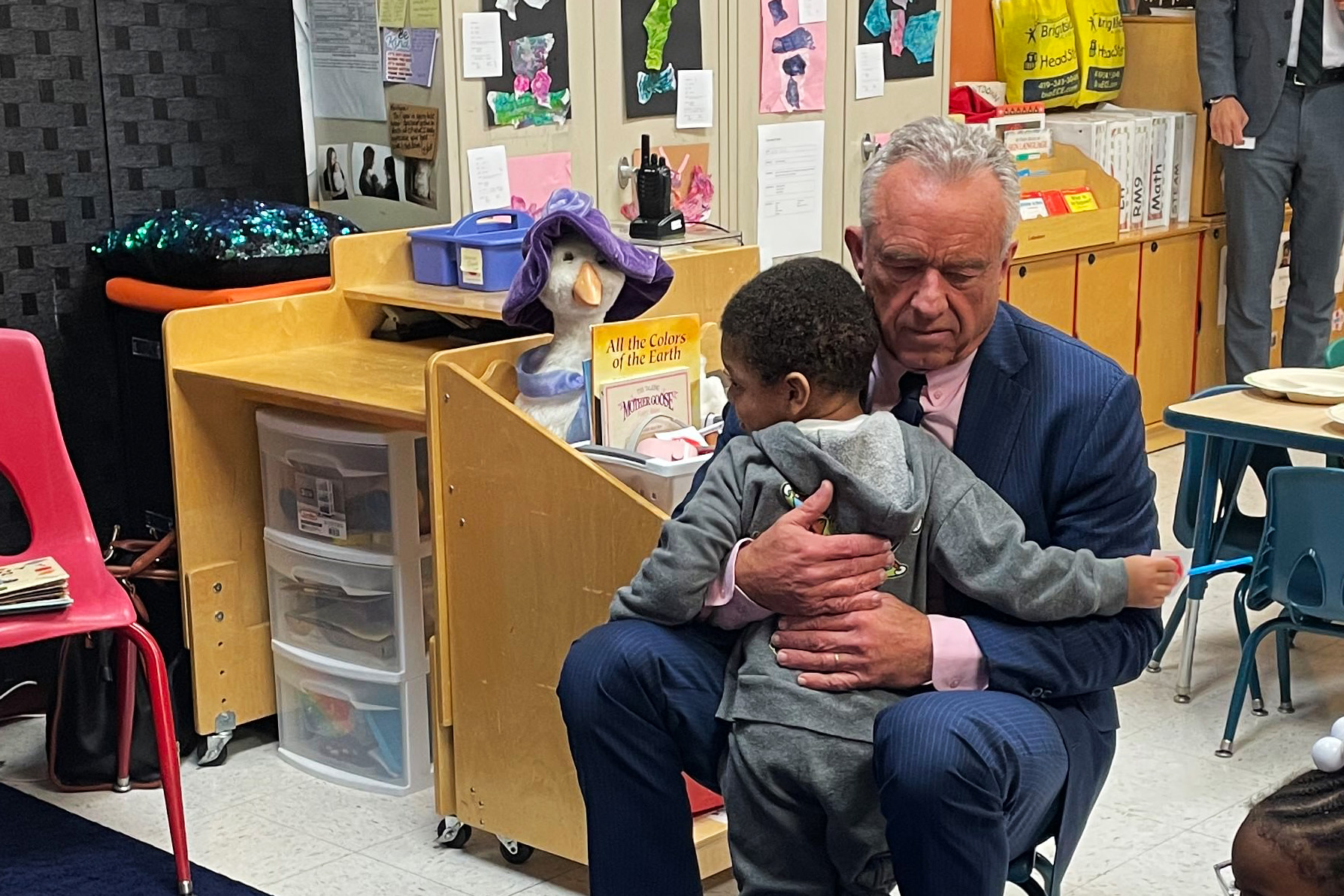
TOLEDO, Ohio — The little boy, dressed in a Toy Story sweatshirt, wrapped himself around the nation’s health secretary.
“What do you guys want to be when you grow up?” Health and Human Services Secretary Robert F. Kennedy Jr. asked a carpet full of preschoolers.
“A dinosaur!” the boy replied, squeezing tighter.
Just weeks ago, Kennedy sat before lawmakers on Capitol Hill and faced intense questions about a dangerous uptick in infectious diseases among American children.
Now, with midterm primaries underway, Kennedy was seated in a toddler-sized chair in Ohio, on a mission to change the subject.
Advised to stay away from the anti-vaccine rhetoric that rocketed him to political stardom, Kennedy has been dispatched by the White House to evangelize about the least controversial — and most popular — parts of his agenda. Republicans hope Kennedy’s “Take Back Your Health” tour will help them hang on to voters, many of whom are deeply unhappy with President Donald Trump.
So there Kennedy was in early May, crisscrossing a strip of northern Ohio that includes one of the few congressional districts that Republicans are confident they can flip in November, rotating through a wardrobe of blue suits and blue jeans.
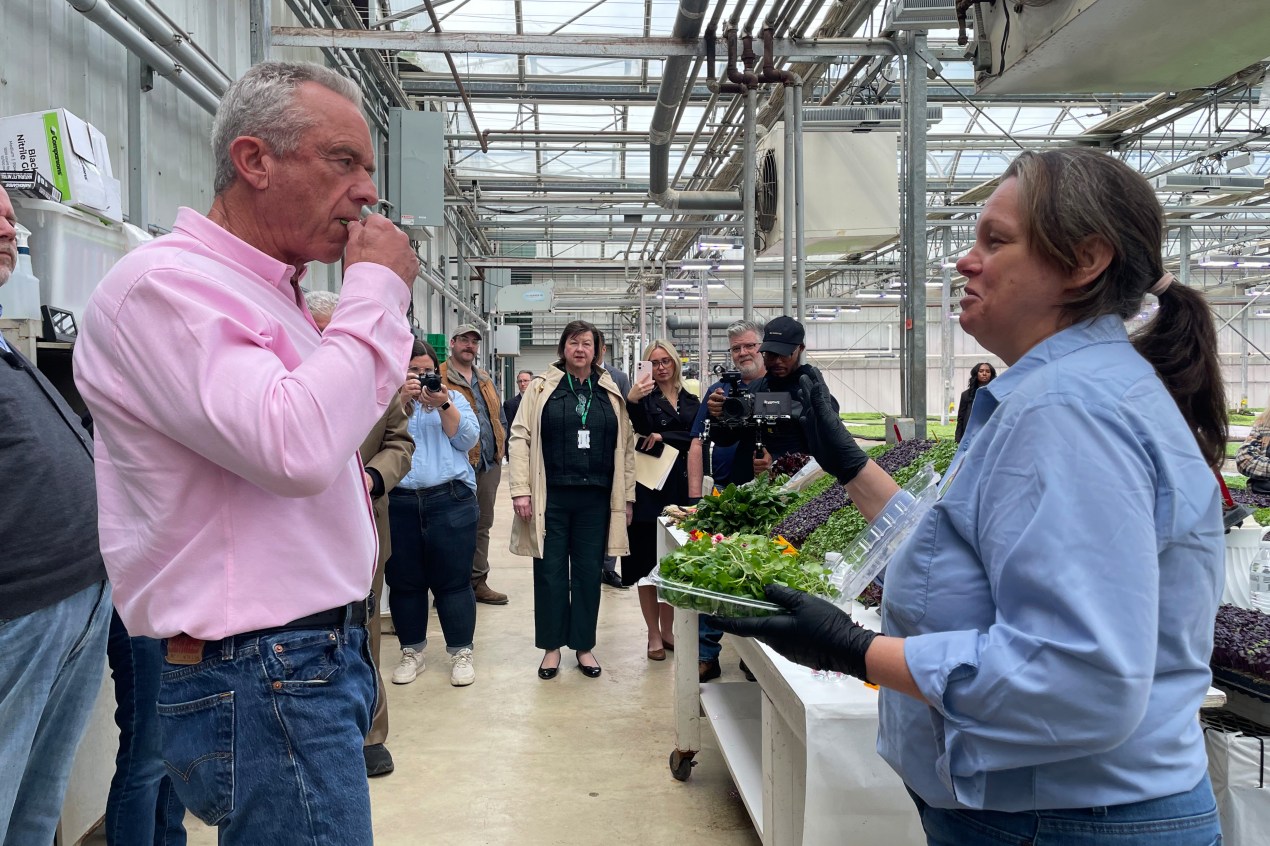
He inspected the kitchen of a Toledo daycare center, where hundreds of the city’s tiniest residents learn and play through the federally funded Head Start program. Under the careful watch of a surgeon, he briefly operated the renowned Cleveland Clinic’s robotic hands on a live patient splayed open for heart surgery. And he munched on pesticide-free squash blossoms from a 400-acre farm.
“I am dismantling a corrupt system and replacing it with something better, replacing it with something that actually addresses the declining healthy American population,” Kennedy said from the dining room table of a farmhouse during an exclusive interview with KFF Health News. He pointed to what he views as his biggest accomplishments over the past year: pressuring some companies to remove dyes from certain foods, updating nutritional guidance, and defining ultraprocessed foods.
“People are paying attention to what they eat, and the industry is listening; the industry is changing.”
But hundreds of miles from Washington’s partisan interrogations, Kennedy couldn’t escape the uncomfortable contradictions and consequences of the Trump administration’s policies.
Taboo Budget Cuts
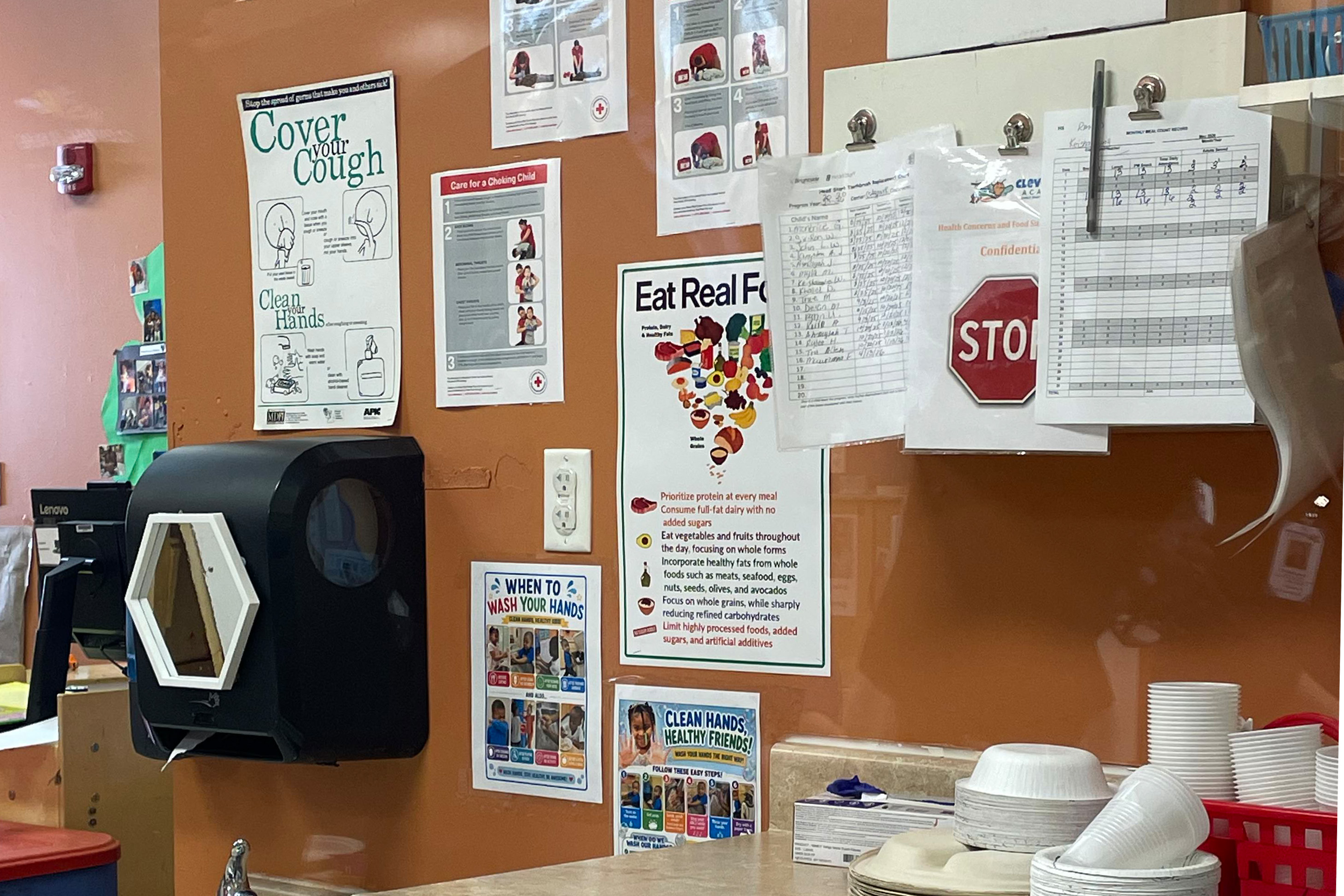
The classrooms of the Clever Bee Academy displayed freshly printed posters featuring Kennedy’s “Eat Real Food” slogan and the redesigned food pyramid.
Kennedy came with an offering, a $30,000 federal grant to help the center upgrade its kitchen and community garden.
Perched in front of staff and parents, he distanced himself from a White House push last year that could have been devastating to many of Clever Bee’s young students, most of whom live in poverty: the proposal to eliminate the $12 billion Head Start program.
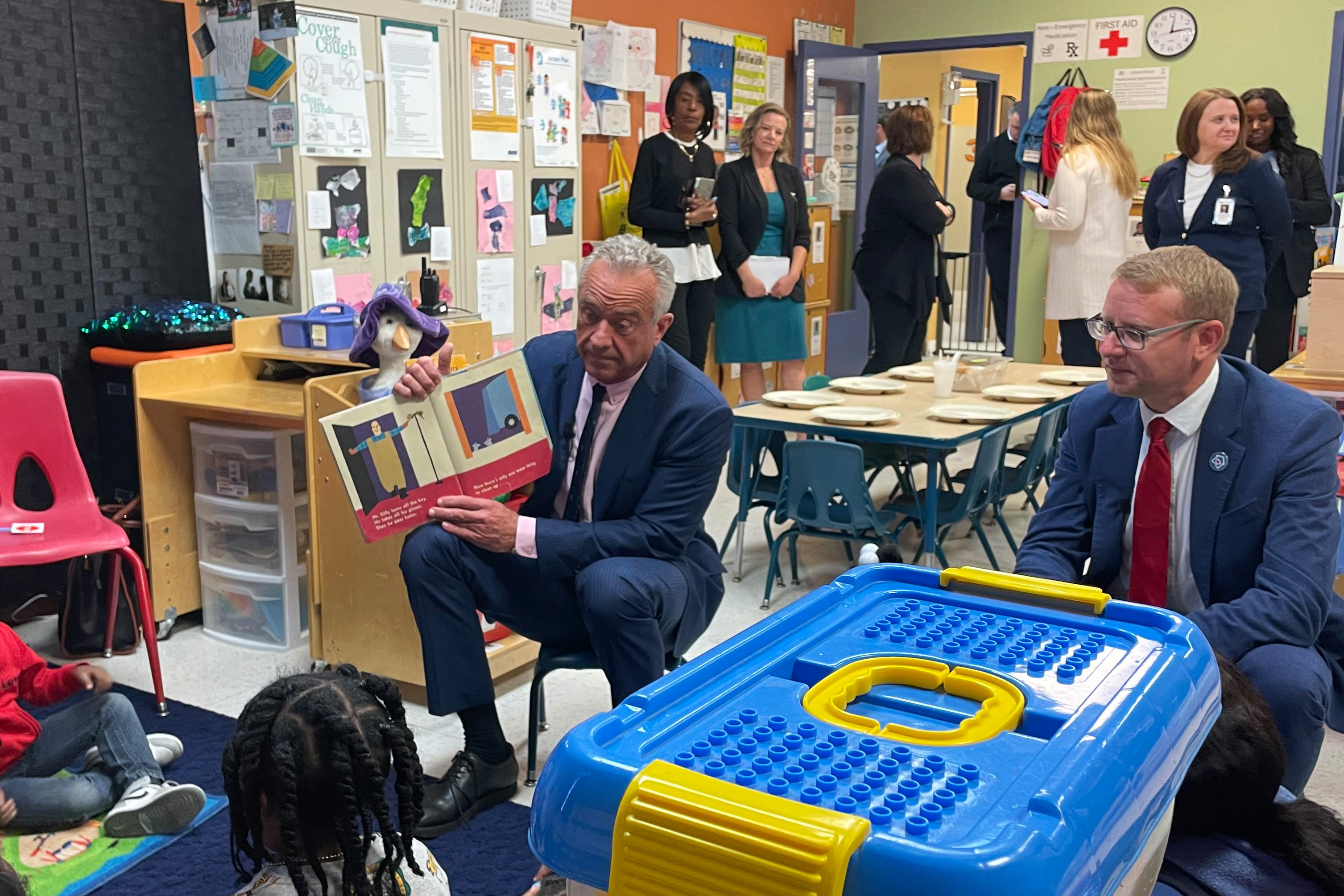
“We were asked to cut our agencies substantially,” Kennedy said. “The two programs that I went to the wall to protect, and find the money somewhere else, was the Indian Health Services, which is always starved for funding, and Head Start.”
The next day, Kennedy stood before goats on a farm in Medina, Ohio, cared for by people sobering up from drug or alcohol misuse at the Hope Recovery Community.
He was there to promise more investments from an administration that has steeply cut staff and budgets over the past year.
Kennedy, who still attends daily Alcoholics Anonymous meetings to cope with a heroin addiction that gripped him for 14 years, said he hopes to replicate the recovery center’s model nationwide, describing it as an “essential role of government to make sure those services are there.”
Broader access to addiction treatment is part of the Trump administration’s newly released National Drug Control Strategy. But recovery advocates are skeptical more people will get help, with millions expected to lose health insurance under Trump’s watch because of rising Affordable Care Act premiums and the nearly $900 billion in Medicaid cuts under the One Big Beautiful Bill Act.
Kennedy dismissed those challenges, pointing to a $100 million investment in addiction treatment services, including sober housing, announced this year.
“We’re trying to make it more accessible,” Kennedy told KFF Health News.
Trouble in MAHA Paradise
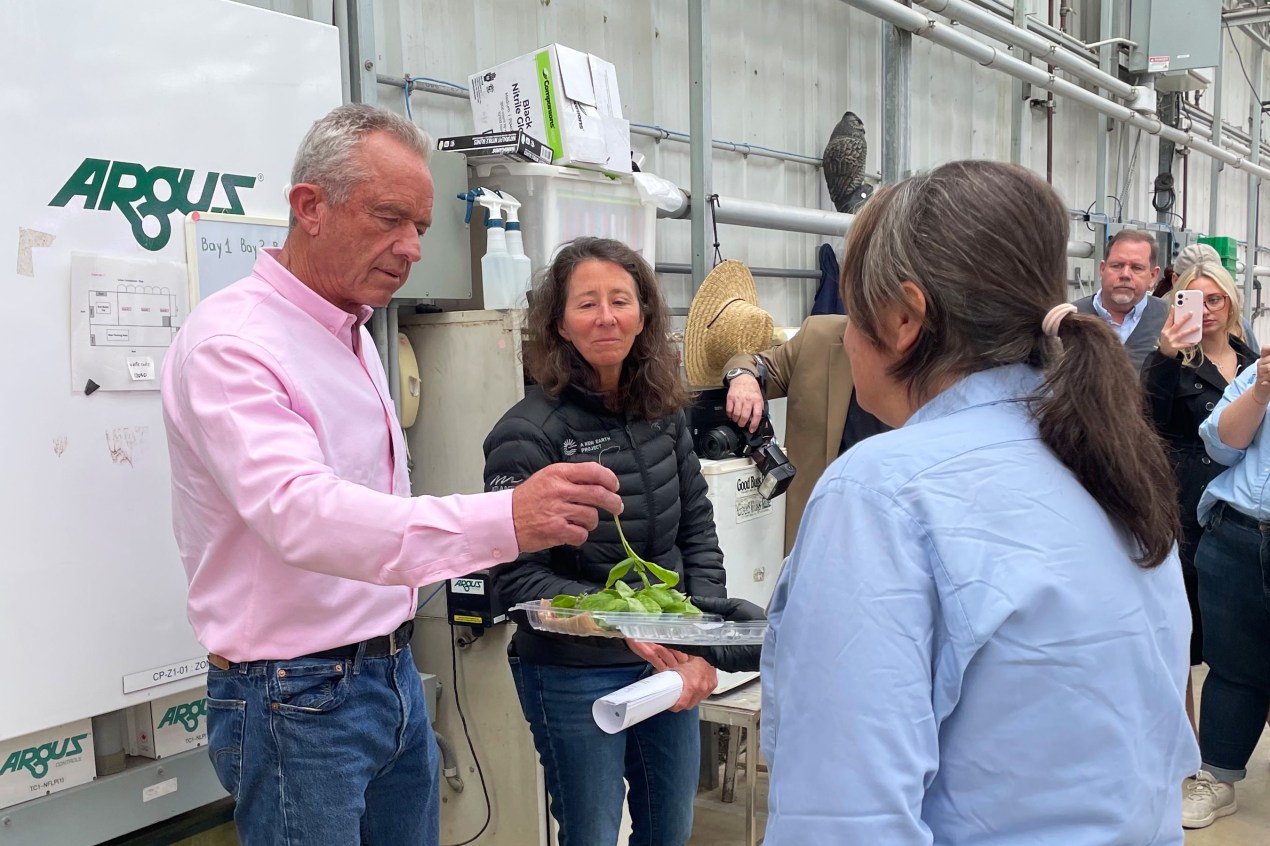
Rows of beds featuring green and purple microgreens awaited Kennedy at The Chef’s Garden, a Huron, Ohio, farm that rejects chemical use in growing its produce.
The health secretary plucked handfuls and tossed them into his mouth, quickly chewing before a new sample was brought before him.
“We are absolutely thrilled that someone at this level of government cares about how food is grown and where it is coming from,” said Bob Jones Jr., a co-owner of The Chef’s Garden.
Seeing more farmers produce chemical-free leafy greens has topped the wish list of those who support Kennedy and the Make America Healthy Again movement, and many who backed Trump in 2024. But in a move that’s threatening to fracture that constituency, Trump has pushed to protect the production of glyphosate, a weed-killing, potentially cancer-causing chemical commonly sprayed on crops and lawns.
Though the group MAHA Ohio extols Kennedy’s agenda and endorses candidates aligned with his movement, director Elizabeth Frost acknowledged tensions between MAHA and conservative policies.
The glyphosate issue is an example “where you have the conservative interests to look out for the interests of the industry, and you have your MAHA interest to be cognizant of the downstream health impacts,” said Frost, who volunteered on Kennedy’s presidential campaign.
Some prominent MAHA influencers have suggested that Trump’s White House staffers are stopping Kennedy from implementing more aggressive policies on certain issues, including further limiting vaccine use, a notion he dismissed.
“To say the White House has tied my hands — the only people who could say that are people who haven’t been paying attention for a year,” Kennedy said. “President Trump has let me do more than any HHS secretary in history.”
He added: “The only thing that people in the MAHA movement complain about is the president’s glyphosate order.”
Staying on Message
Republicans consider Kennedy an asset in the recently redrawn northern Ohio congressional district that Democrat Marcy Kaptur has represented for more than 40 years, and which is viewed as one of the most competitive in the nation.
Fresh off winning the Republican primary for the district last week, Derek Merrin smiled as he shook hands with Kennedy.
“We discussed protecting Lake Erie, strengthening rural hospitals, and our shared vision to improve food quality,” Merrin later posted on Facebook. “Let’s Make America Healthy Again!”
Still, even with Kennedy under advisement to avoid anti-vaccine rhetoric, the issue found him in Ohio. At a forum in Cleveland, family doctor Patricia Kellner said the best way to prevent hepatitis B is by vaccinating newborns — a recommendation that was dropped under Kennedy. She told Kennedy about treating patients with the disease.
“Some of them didn’t know because it can be asymptomatic. Some of them found out when they got liver cancer,” Kellner said. “So why are you opposed to a birth dose of hepatitis B?”
Kennedy responded by suggesting that the hepatitis B vaccine was not safe for babies and was necessary only for certain people.
“Hepatitis B is for high-risk groups like drug addicts or prostitutes, or for promiscuous homosexuals,” he added, eliciting gasps from the crowd.
While the risk of contracting hepatitis B is higher for those who inject drugs or men who have sex with men, the disease can be transmitted in other ways, including through contact with contaminated surfaces or childbirth.
Public health researchers have warned that dropping the universal hepatitis B recommendation will result in hundreds of new infections in children, costing millions of dollars in additional health care costs.
KFF Health News is a national newsroom that produces in-depth journalism about health issues and is one of the core operating programs at KFF—an independent source of health policy research, polling, and journalism. Learn more about KFF.
This article first appeared on KFF Health News and is republished here under a Creative Commons Attribution-NonCommercial-NoDerivatives 4.0 International License.