
Texas Republicans have a data center problem
By Taylor Goldenstein, The Texas Tribune
May 7, 2026
This story was supported by the Pulitzer Center.
The Republican Party has felt like home to Rena Schroeder since her teenage years when she joined a high school club for conservative Latinos. She cast her first presidential vote for Ronald Reagan. And she’s lost friends over her ardent posts on social media, some touting her anti-abortion views.
“I’ve always been committed,” said Schroeder, 62, of her allegiance to the GOP. That is, until she learned about a massive data center, part of OpenAI’s $500 billion Stargate project, going up south of her property.
The project has been championed by her party’s standard-bearers, President Donald Trump and Gov. Greg Abbott. But the more Schroeder learned about data centers popping up across the state, the more she became convinced her party was corrupted by industry lobbyists, seemingly brushing off what she saw as an existential threat to rural Texans like her.
So in late March, at a GOP precinct meeting in Falls County, Schroeder suggested they propose a data center ban at the upcoming state Republican convention, which sets the party’s priorities.
“They started screaming and yelling, and you would have thought I started World War III,” Schroeder said. “They said, ‘We won’t accept that, Rena. You’re gonna have to revise it to regulations.’”
She threw her hands up in the air and said, “The only thing that I’m gonna revise, right here, right now, is my commitment to the Republican Party. Goodbye.”
Now, Schroeder identifies as an independent, and she exemplifies the growing divide among Texas Republicans over data centers.
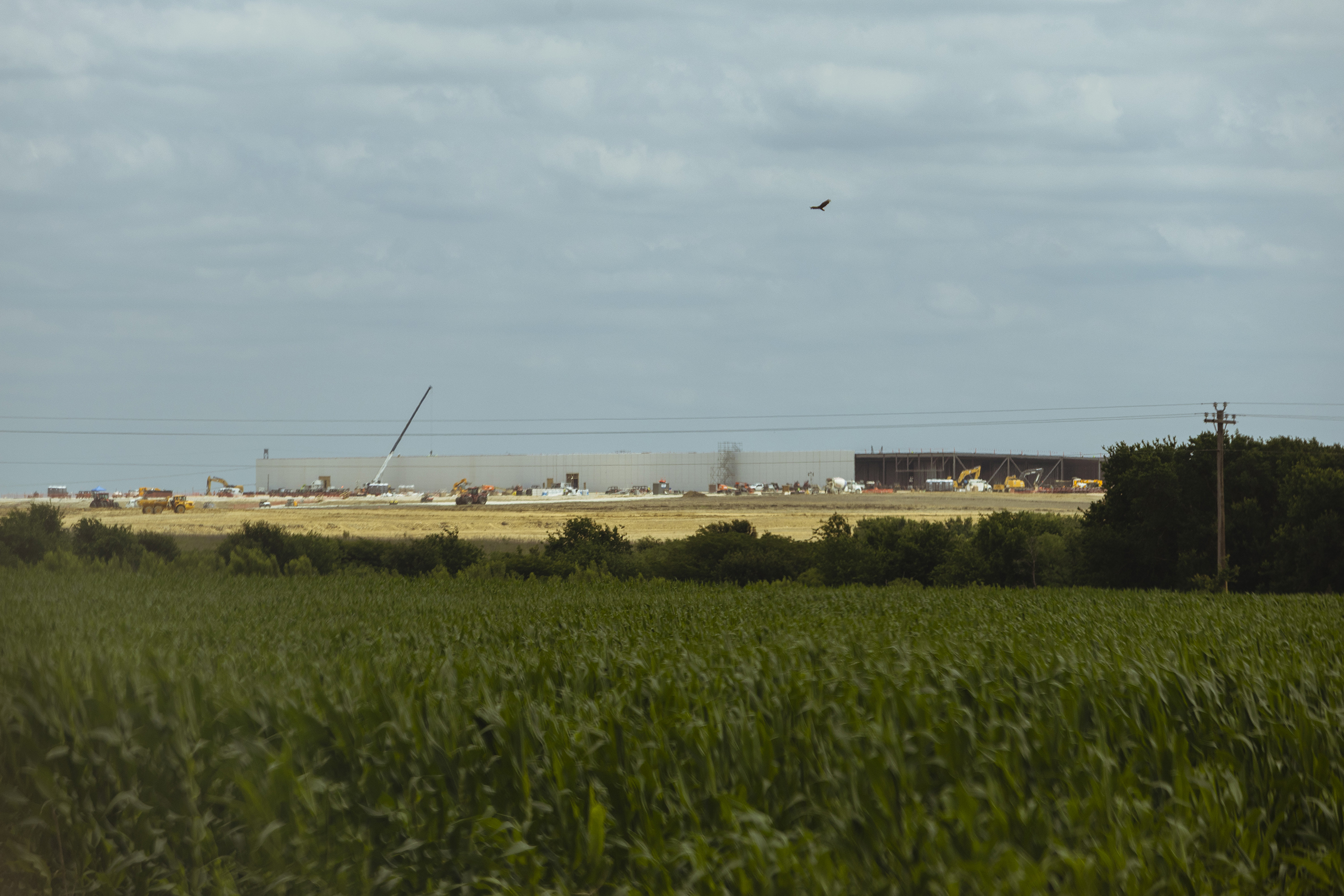
As the massive, digital information-processing facilities proliferate, Republicans are caught between a zealous president and governor bent on Texas becoming the next global data center hub, and outraged constituents, like Schroeder, in red and rural districts where a majority of them are being proposed.
According to a Texas Tribune analysis, at least 82 data centers, or nearly 60% of those that are either planned or under construction, are in state House districts that voted for President Donald Trump and elected a Republican state representative in 2024. Meanwhile, a March Quinnipiac poll found that 65% of Americans oppose the building of an AI data center in their community.
Republican state lawmakers — caught in the middle — have offered mixed opinions about data center development amid calls from city and county leaders to give them more freedom to regulate the facilities.
Altogether, the thorny politics could hurt Republicans ahead of this year’s midterm elections — especially in a cycle when they hold the White House, a dynamic that typically favors the opposing party.
In Washington, Trump has removed federal red tape to spur faster data center expansion, framing it as key to protecting the country from cyber attacks and ensuring economic dominance over foreign adversaries like China. Congressional proposals to require greater transparency from operators and protect ratepayers have stalled and Sen. Ted Cruz, R-Texas, is moving to block states from regulating artificial intelligence nationwide.
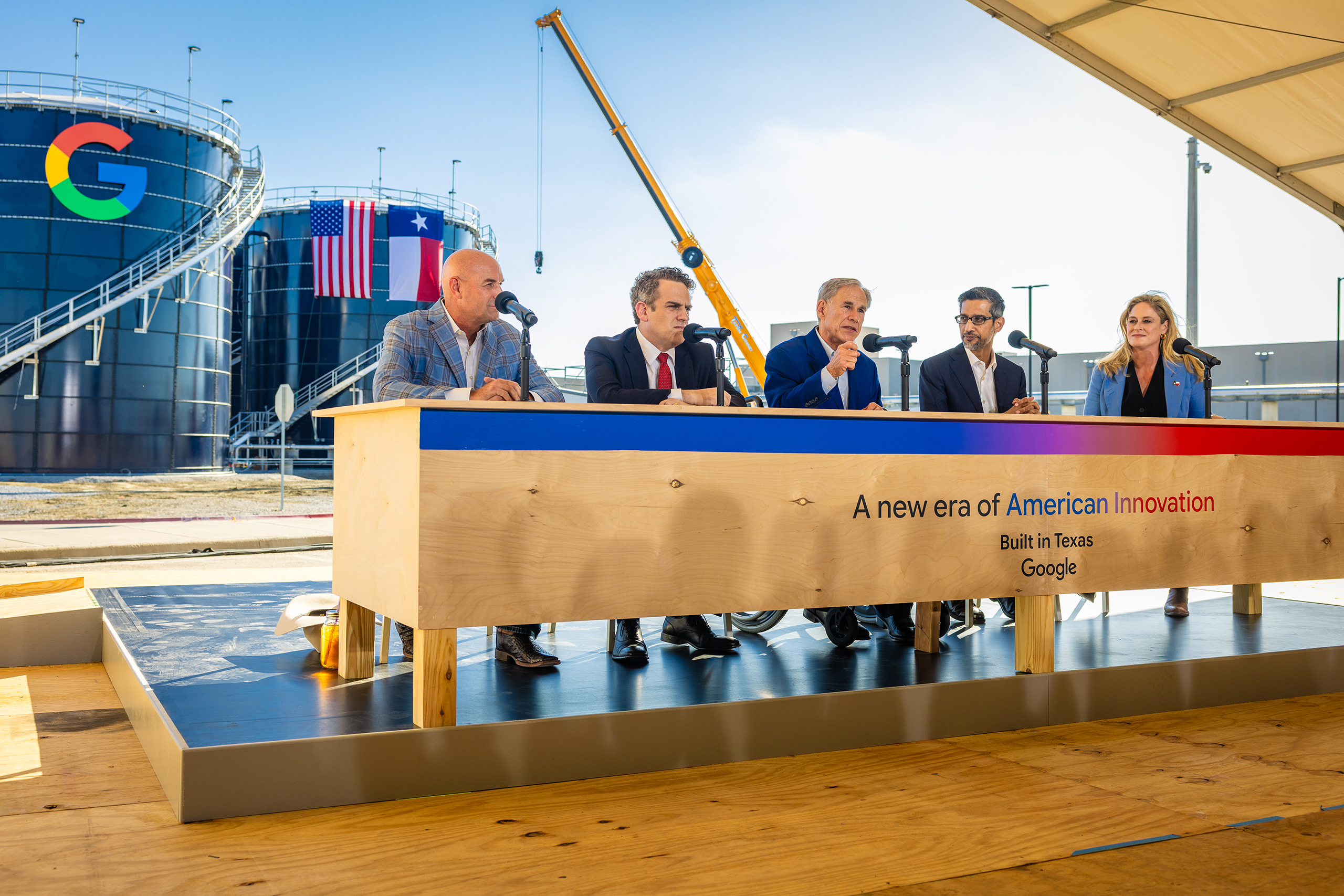
Meanwhile, Abbott has touted Texas as the “epicenter” of artificial intelligence development, including in November when he announced, alongside Google CEO Sundar Pichai, the company’s $40 billion investment in Texas in the form of three new data centers in West Texas and the Panhandle.
The issue is set to be a major focus when lawmakers return to Austin in January, with both House Speaker Dustin Burrows and Lt. Gov. Dan Patrick, who leads the Texas Senate, having highlighted it multiple times within their priority lists.
Both directed their chambers to balance the economic development benefits of the facilities with their potential impact on Texas communities and their water and power infrastructure. Patrick also asked senators to look into the state’s sales tax exemption for the projects, which The Tribune reported earlier this month will cost the state $3.2 billion in revenue over the next two years.
The data center industry has recently mobilized, unveiling a campaign to promote the benefits of the facilities, and ramping up its political donations during Texas’ GOP primaries. It’s also expanding its lobbying shops to win over Republicans priding themselves on being anti-regulation and pro-business as they pitch billions in investment and thousands of jobs.
AI-aligned super PACs spent about $4.2 million in Texas this primary cycle, with all but $150,000 going to Republicans, according to the Tech Oversight Project, a Washington, D.C.-based nonprofit that supports regulations on data centers.
Companies that own, operate or rent from data centers collectively added at least 15 more lobbyists between the 2023 and 2025 sessions, according to a Tribune analysis, and have already started gearing back up for next year’s session.
James Dickey, the former Texas GOP chairman who is now a political consultant for data centers, said lawmakers may have reasonable questions but ultimately he expects Republicans will line up to support the industry.
“I think the vast majority of our legislators understand and agree with the White House that artificial intelligence is both an economic and national security concern, and that the best place to grow for the future is in Texas,” he said.
A delicate balance
About 50 miles southwest of Galveston in coastal Brazoria County, which features a mix of rural and urban areas, the Republican county executive Matt Sebesta was blunt with his constituents at a commissioners court meeting on March 10. The court was about to vote down a tax abatement for a proposed, 620-megawatt data center and accompanying natural gas plant, but he wanted a roomful of angry residents to know that beyond that, counties have virtually no tools to stop the development.
“When folks look at me and say, ‘We don’t want this,’ I point them to our state reps and say, ‘Go talk to your state rep. Go talk to your senator,’ because they don’t trust us to make those decisions,” Sebesta said in an interview, underscoring his desire for the Legislature to give counties that authority.
He added: “County government is an extension of state government, but we’re the redheaded stepchild. We’re the ones that deliver the services, but they treat county government like shit.”

State Rep. Cody Vasut, R-Angleton, who showed up to the Brazoria County meeting, said he filed legislation last session to give counties regulation authority over large developments like data centers that have the potential to impact health, safety or noise levels, though it did not make it to the House floor. He committed to bringing similar legislation in 2027.
“When you develop in the county, it’s been viewed kind of as the Wild West, but I think as time has gone on, more and more projects are being developed near residences in the county, and that’s something we need to look at changing,” Vasut said at the meeting.
Not all Republicans are on board with the idea of empowering local governments with more oversight.
“These should be statewide, top-down guidelines,” state Sen. Paul Bettencourt, R-Houston, said in an interview. “You can’t have 254 different counties and 1,000 cities all coming up with different answers. Stuff would never get built.”
The debate is beginning to reveal geographic fault lines among Republican legislators, with rural lawmakers like Vasut tending to raise more concerns about data centers while those from urban areas like Bettencourt have generally been more supportive — or at least quieter.

At a House committee hearing on the issue in March, for example, outgoing state Rep. John Smithee of Amarillo worried aloud about the state’s long-term water supply, while state Rep. Will Metcalf of Conroe openly pitched an executive on bringing a data center to his district.
Metcalf had just asked about the benefit of data centers to the local community, and Dan Diorio, a vice president of the Data Center Coalition, an industry membership association, pointed to new jobs and the significant property tax revenue they bring that goes back into schools, infrastructure and public works. In Virginia, the largest data center market in the world, Diorio said, for every dollar a center spends in services, it gives back $26 in revenue.
“Let’s visit in the future,” a smiling Metcalf said to Diorio. “Because Conroe Technology Park has a great location that this might fit well in.”
“Immediate Pause”
In March, state Rep. Helen Kerwin, a Republican who represents rural Glen Rose, penned a letter to Abbott calling for an “IMMEDIATE PAUSE” on new large-scale data center developments to allow for impact studies, particularly on water availability and grid capacity. Somervell County, which falls entirely in her district, has a tax abatement deal with Amazon for a 600-megawatt data center. Kerwin said she knows of at least five other potential applications in her district.
“The AI revolution is advancing at a pace that exceeds the industrial and technological revolutions that came before it, and its impact on humanity will likely be even greater,” she wrote in a letter she also posted to social media. “Because of this, it is imperative that we get the foundational policies right from the beginning.”
Three days after posting the letter, Kerwin was part of a group of nearly 100 Texas Republican legislators invited to the White House to meet with President Trump and his cabinet. There, Trump officials discussed a number of policy issues, including the administration’s desire to expand data center development in Texas.
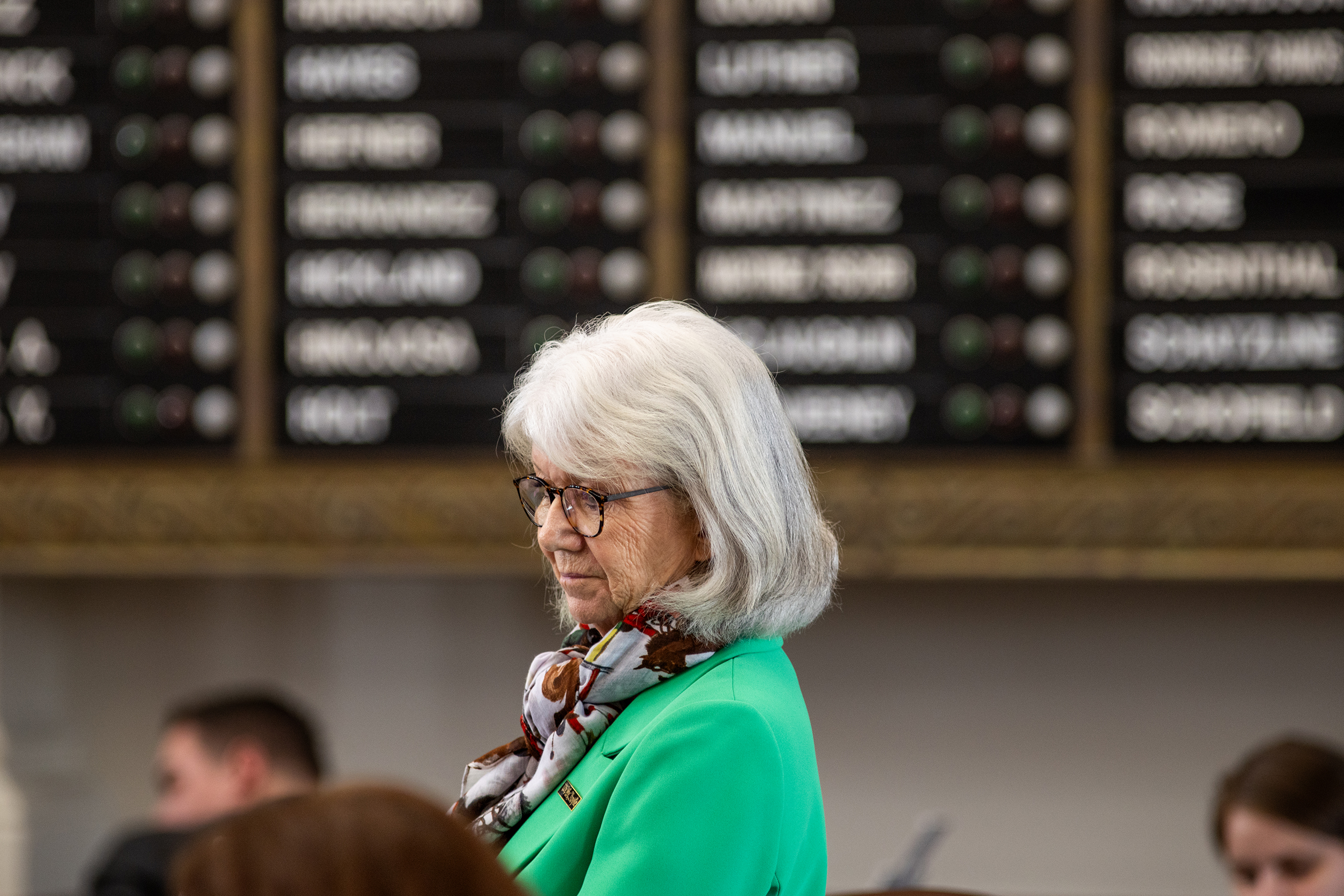
Bettencourt was in the cohort and found the administration’s arguments persuasive. He said he believes opponents are being short-sighted because they fear change.
“The future of having growth is what’s key to keeping the Texas miracle alive, which is more jobs, rising wages, a good place to raise and educate children,” he said. “All the opportunities that the Texas economy brings everyone is a much better solution than no growth.”
State Rep. Wes Virdell, R-Brady, wrote on Facebook that he and other members warned the Trump officials that the state lacked the resources for a data center influx, and he also described his constituents’ concern that new high-voltage transmission lines will “destroy the Hill Country.”
“I left with the impression that our concerns fell on deaf ears,” wrote Virdell, in a rare break for the deeply conservative MAGA Republican. “It looks like it is up to us (the people) to fight against data center expansion in Texas.”

In an April interview about her letter, Kerwin said it was “misunderstood initially” as her calling for restrictions on the industry and she stressed that she is not against data centers or artificial intelligence.
“All I’m asking the governor to do is just, let’s just pause – not stop. I don’t want to halt,” she said. “We all know we have to embrace this, or we’re going to be left behind, and we may already be behind with China, who knows? – but we have to do it right, and we have to protect our water, our aquifers, not for decades but for generations.”
The North Central Texas representative stopped short of saying she supports “regulation,” though she raised the possibility of the Legislature considering a “guideline” that would limit developments to closed-loop cooling systems, which tend to use less water.
“The word ‘regulation’ scares me, as a grassroots conservative,” she said. “I don’t want to use the [word] regulation right now until the study, if we can get one, determines that might be needed.”
A PR campaign in its infancy
Sensing that anti-data center sentiment was worsening in Texas, the governor’s office called meetings with top data center representatives. The San Marcos city council had recently denied rezoning for a $1.5 billion data center over concerns about water and other local boards were entertaining anti-data center proposals.
An Abbott staffer gave them a stern warning that they needed to step up their public messaging or risk losing political support, according to three people with knowledge of the conversation not authorized to speak publicly.

“There is bad press after bad press after bad press,” one of the sources paraphrased the governor’s aide as saying. “Elected officials are getting beat up for this, and y’all are doing absolutely nothing. I mean, it was almost a ‘What are y’all thinking?'”
Within weeks, a new nonprofit dedicated to educating Texans about the data center industry rolled out an outreach campaign touting the benefits of the facilities. Its first advertisement video, entitled “Built for Texas,” highlighted that the centers house critical data like medical information and business payrolls, create “high-paying jobs” and pay “billions” in taxes, all while promising that the centers will consume “minimal water” thanks to new technology.
The nonprofit, Texas Connects, mirrors a similar effort in Virginia, whose parallel group, Virginia Connects, both of which were put together by the Data Center Coalition.
The Virginia campaign cost at least $700,000 in the last fiscal year, according to Fast Company. Statewide political campaigns in Texas, home to several major media markets and more than three times as many residents as Virginia, have to raise significantly more money to have a similar reach here.
The coalition did not respond to questions about where in Texas they plan to air the videos or how much they expect to spend.
Kate Goodrich, an attorney at K&L Gates and lobbyist for data centers, said the industry “has taken a bit to get everyone moving in the same direction” on its public messaging, but that’s been changing in recent months.
“There is currently an industrywide endeavor to do a better job at clearing up any misconceptions,” Goodrich said. “Any new emerging technology is scary. Even when airplanes were created, people were like, ‘What is this? This is going to change everything.’ So there’s just a need for education.”
With the amount of public outcry over the subject, Goodrich and her colleague Austin McCarty, said it seems inevitable that lawmakers pass some kind of regulation in the upcoming session.
“The issue at hand is to make sure that an overly burdensome regulatory environment doesn’t kill an opportunity,” McCarty said. “I mean, this is the new gold rush. Another economic opportunity like this will not come along in our lifetime or maybe even our children’s lifetime.”
Meanwhile, the tech industry is already lavishing donations across the capitol.
Abbott has received over $2 million from people and companies linked to the tech and AI industries since last year. Meta plans to give $65 million this midterm cycle to state politicians who support the AI industry, both in Republican- and Democrat-led states, through new super PACs, according to national reporting.
The one aimed at Republicans, Forge the Future, spent over $1 million in Texas this year boosting Republican state-level candidates during this year’s primary, including nearly $174,000 supporting the campaign of state Rep. David Cook, who easily defeated Schroeder this year when she ran in the GOP primary for an open Senate seat.
Schroeder says she won’t support Cook because she doesn’t believe he’ll stand up to data centers.
Cook, in a Feb. 26 statement, said he rejected Meta’s support and “their efforts to build in an area where the citizens have spoken out in strong opposition.” The Mansfield Republican’s attorney sent the company a cease and desist letter that same day, demanding it stop voter outreach on behalf of Cook because he had never spoken to anyone at the Meta super PAC before and “does not want any help.”
That same month, Cook said he agrees with Trump that data centers are “critical to national security.” Yet he also voiced support for setting guardrails on the industry and letting counties pass moratoriums on construction of the facilities. He has committed to filing legislation that gives counties “reasonable authority” to regulate data center development and protects against water depletion and power rate increases.
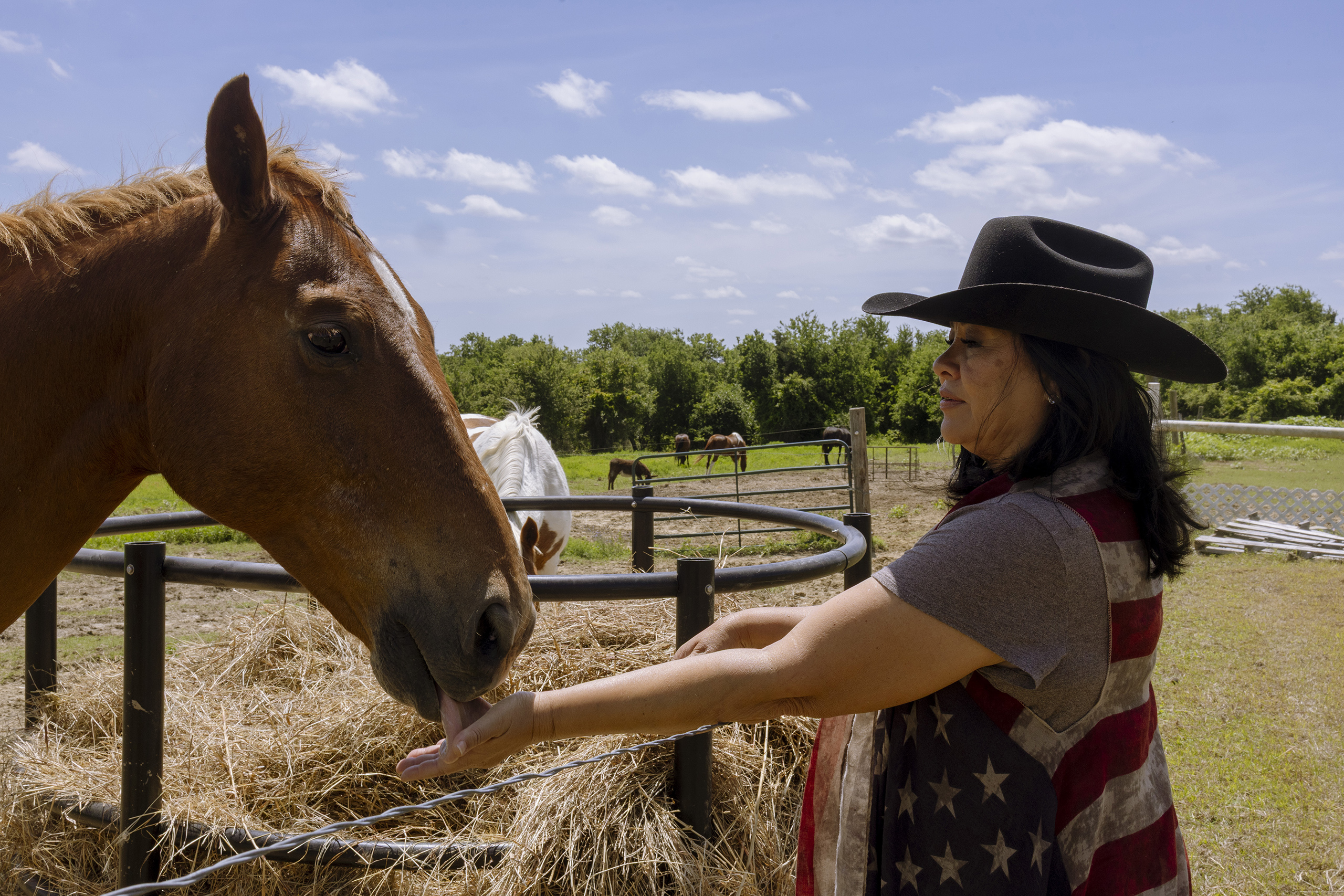
Activists like Schroeder aren’t letting up. She plans to continue her involvement in a grassroots, social media-originated group called the Texas Coalition Against Datacenters and has her sights set on running for office again.
“I have to fight for Texas land because if I don’t, where’s my daughter gonna go?” Schroeder said. “This is her inheritance right here. And I’m speaking for every rural Texan, where’s our grandchildren and our children’s inheritance gonna go?”
Apurva Mahajan contributed to this reporting.
This article first appeared on The Texas Tribune.