
Tarrant County Republicans, stung by defeat, are soul-searching and finger-pointing
By Zach Leggio, The Texas Tribune
November 20, 2026
Matt Krause has spent his entire political career in conservative majorities.
In five terms in the Texas House, he co-founded the Texas Freedom Caucus and served during the height of Republican power in the Legislature. In two years on the Tarrant County Commissioners Court, he’s been a key part of a 3-2 Republican majority led by conservative firebrand county Judge Tim O’Hare.
Now Krause, like many Republicans across the state, is preparing for life in the minority — the last Republican commissioner on a court that, thanks to recent redistricting, was supposed to have a 4-1 GOP advantage.
It’s a splash of cold water for a political party that held the county judge seat for 40 years but lost all 17 contested countywide races in this year’s midterm election.
That new reality struck Krause, the only Republican on the commissioners court who wasn’t on the ballot, early on election night as the first inkling of the statewide blue tsunami became apparent in Tarrant County.
Early voting results dropped five minutes after polls closed at 7 p.m., and for Krause, anticipation turned to shock.
“I saw that [U.S. Senate candidate Ken] Paxton had lost the county by 20 points,” Krause said. “I thought: ‘That’s gonna be a short night.’ I don’t know how you outrun that.”
Only two Republicans had lost Tarrant County in recent election cycles — U.S. Sen. Ted Cruz in 2018 and 2024 and President Donald Trump in 2020 — each by less than 1 percentage point.
The 2026 midterms flipped the script, with every statewide GOP candidate losing the county by more than 11 points.
Krause described the election as a “wake-up call” for his party, and the heavy losses have led to soul-searching by Republican factions that didn’t see eye to eye before the election and have grown more vocal in the weeks since.
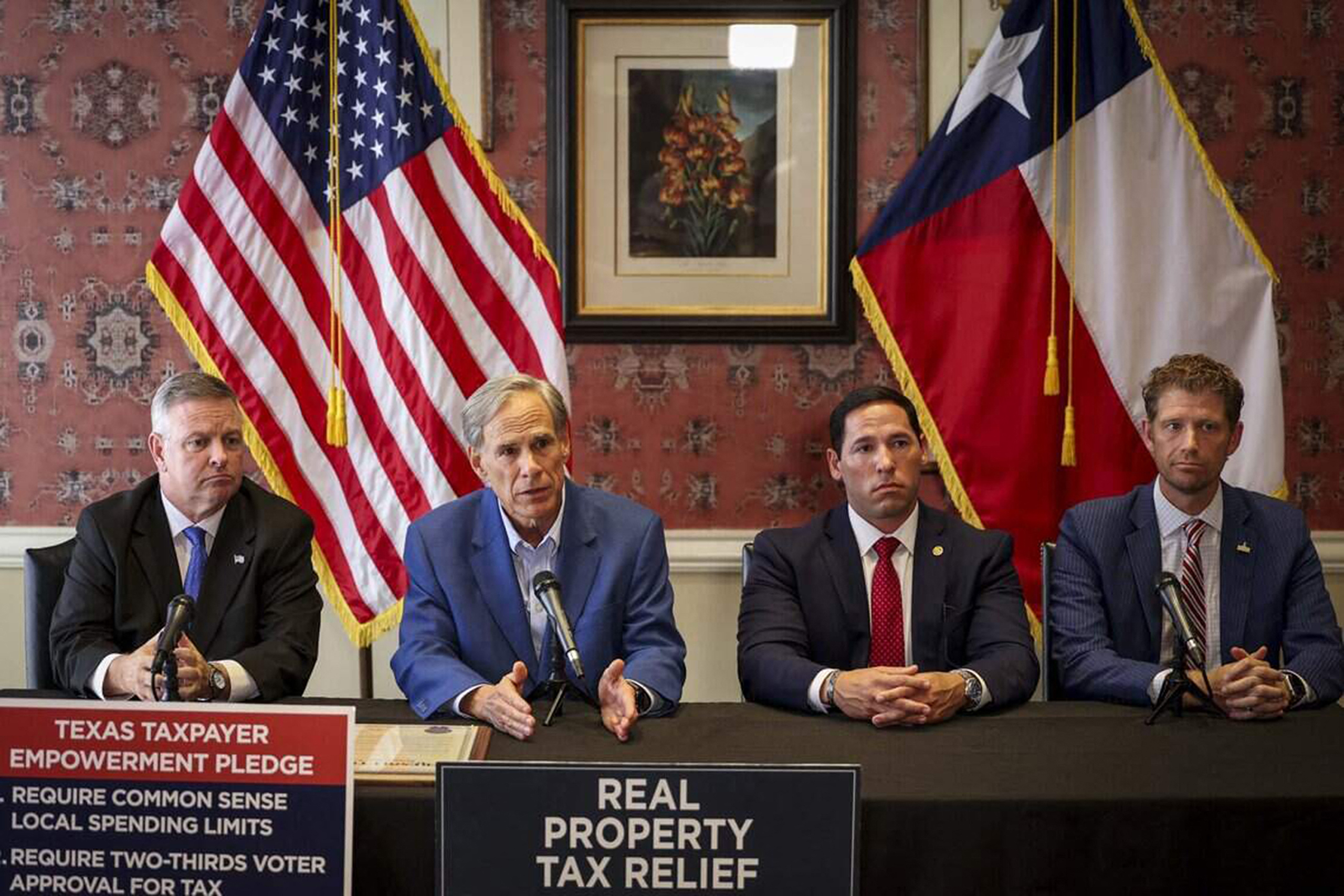
The opening salvo came from the moderate wing in a Nov. 11 open letter that blamed the county party’s leaders for alienating voters.
“We need to get back to restoring a culture of service, civility, and principled conservative leadership,” said the letter signed by 18 Republicans, including former Fort Worth Mayor Betsy Price and former Southlake Mayor John Huffman.
“We cannot build the future of our party by continuing to push away the very people who should feel welcome within it,” they wrote.
In an interview, Huffman said the party’s leaders let Republicans down, not the volunteers, donors and Election Day workers who prevented “far worse” losses.
“The rejection the GOP received from the voters should have sparked accountability and introspection,” he said. “It did not, and that is disappointing.”
Two days later, 76 Republican leaders and volunteers published their own open letter in support of the county’s GOP leaders, saying they were responsible for record get-out-the-vote efforts and fundraising.
“The path forward is to promote that conservative winning record, recruit strong candidates, grow the party, and win the next cycle — not to engage in a circular firing squad against the current leadership,” they wrote.
Krause sees the back-and-forth as a hopeful sign that opposing sides of the Tarrant County GOP can better communicate moving forward.
They better, he said, because Republican unity will be crucial in the 2028 elections.
“Infighting is a luxury you can have when you’re winning,” Krause said. “Now, we have to make up a lot of ground. … We don’t have that luxury anymore.”
Meanwhile, Krause is preparing to work with the court’s four Democrats beginning in 2027, including Alisa Simmons, a commissioner who will succeed O’Hare as county judge. Simmons recently accused Krause of “unmistakable political grandstanding” by presenting a resolution thanking a World War II veteran for, among other things, fighting socialism.
“It’s kind of new territory for me,” Krause told The Texas Tribune. “Certainly won’t be able to stop many things or lead on too many issues, at least from a partisan perspective.”
Krause hopes to find common ground with fellow commissioners on issues including transportation, data centers and programs for prison rehabilitation and reentry.
Transportation, he said, is not a partisan issue.
”That’s a county issue that’s been a huge focus of our office these first two years,” Krause said. “I think we’ll find some agreement with the other court members on the need for continuing to improve transportation and infrastructure in our fast-growing county.”
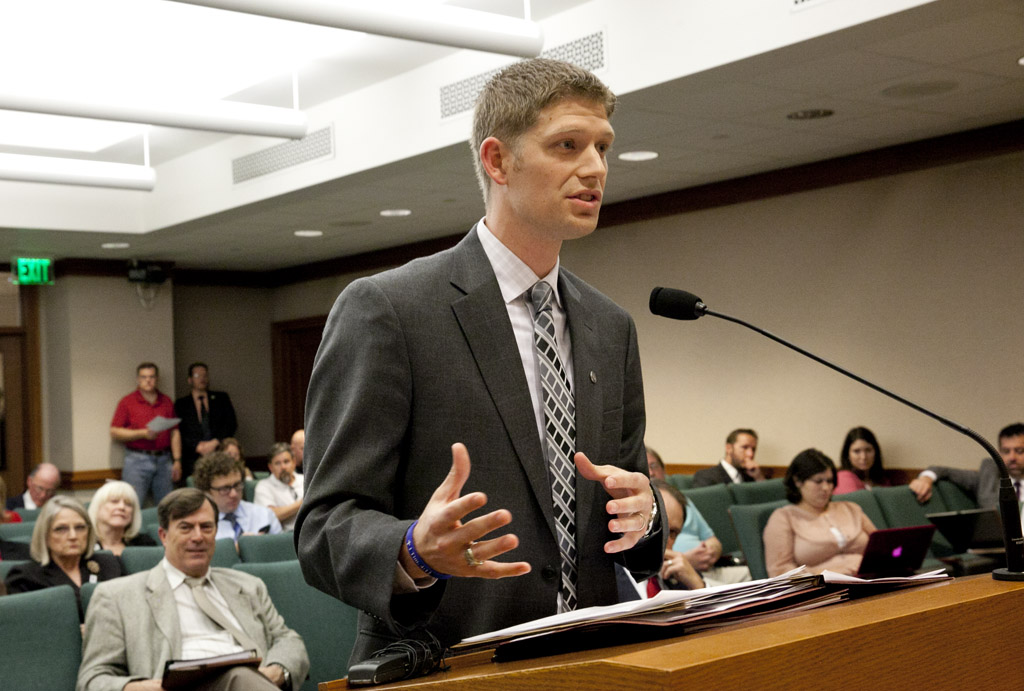
Serving in the Texas House from 2013 to 2023, Krause was a prominent conservative voice who championed limits on abortion, letting parents opt out of childhood vaccines and investigating school library books on race and sexuality. He also mounted an unsuccessful primary challenge to Attorney General Ken Paxton in 2021 after Paxton was indicted for securities fraud.
Since joining the commissioners court in 2025, Krause often voted with his fellow Republicans, including last year’s controversial redrawing of the court’s districts.
“My entire goal, my entire purpose, my entire intention, is to allow Tarrant County to go from three Republicans, two Democrats on the commissioners court, to four Republicans, one Democrat,” Krause said during deliberations in May 2025.
The redistricting backfired, but Krause doesn’t believe the effort played a role in the Nov. 3 election and has no regrets.
“I don’t think that had any impact at all on people going to the voting booth,” Krause said. “If redistricting had been a huge issue, you would have seen a lot less votes for the county judge as a kind of punishment for that. We just didn’t see that.”
As the Tarrant County Republican Party charts a path forward, Krause said finding common ground and shared purpose will be essential.
“I’ve got good friends who signed one letter and good friends who signed other letters,” Krause said. “If we can get people to buy in, continue to buy in on our vision while expanding our network and communication with folks across the Republican spectrum, I think that’ll make for a formidable effort going into 2028.”
This article first appeared on The Texas Tribune. 