
A conservative senator reshaped Texas colleges. He wants the rest of the country to follow.
By Jessica Priest, The Texas Tribune
October 29, 2026
LUBBOCK — Nearly a year into his tenure as Texas Tech chancellor, Brandon Creighton was still making the case that he was the right man for the job.
To convince the crowd at a recent Lubbock Chamber of Commerce luncheon that his loyalties now lay with scarlet red and black, not the burnt orange of his alma mater, the former Republican state senator touted his political connections and the growing influence they bring to Texas Tech.
Lt. Gov. Dan Patrick, the powerful politician with a hand on the state’s purse strings, is donning Red Raider gear at the Capitol. The university is establishing a high-profile partnership with chipmaking giant Nvidia. Other colleges, Creighton boasted, are following Texas Tech’s lead in scrutinizing what professors teach and whether their lessons prepare students for high-paying jobs.
Creighton said his own struggle to pay for college made him empathize with students facing similar financial pressures.
“I wanted to make some kind of difference in their lives, paying it forward,” Creighton told The Texas Tribune.
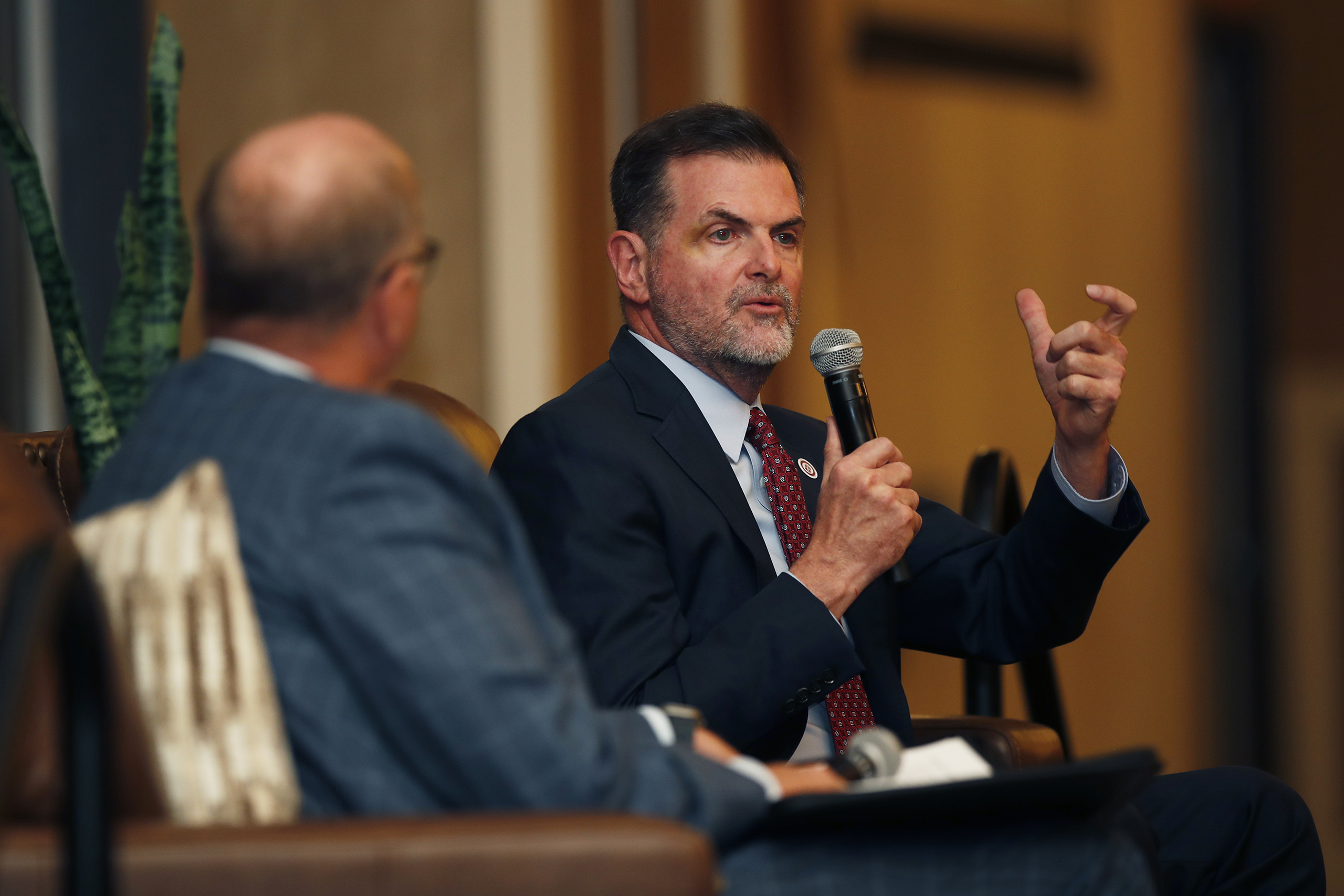
As chair of the Senate Education Committee, Creighton spearheaded laws aimed at curbing what GOP leaders saw as liberal influence on campuses and making college degrees worth their cost — an overhaul his supporters say is unmatched by other states.
The laws he championed have been far-reaching, and leaders in other states are paying attention.
Diversity, equity and inclusion offices that provided mentoring and support to students of color, women and LGBTQ+ students closed. University administrators gained more authority to fire professors with tenure, which is meant to protect their freedom to teach and research controversial subjects. Governor-appointed regents took greater control over university leadership and required courses.
Now, from inside one of the university systems he once regulated, Creighton is going further than the laws he wrote require, positioning Texas Tech as a model for other universities. One of Creighton’s first acts as chancellor was to require faculty across Texas Tech’s five universities to seek approval before teaching lessons involving gender identity, sexual orientation or certain ideas about race and sex.
John Colyandro, a longtime conservative policy advisor who worked for Gov. Greg Abbott, said universities had become too ideologically one-sided and pointed to employers dropping degree requirements for some jobs as evidence that they were losing value.
“Chancellor Creighton waded into that with a really focused purpose of resetting and reviving higher ed so the public could say, ‘Yes, that investment is worth it,’” he said.
Critics say his policies come at a cost, including universities overcorrecting to comply.
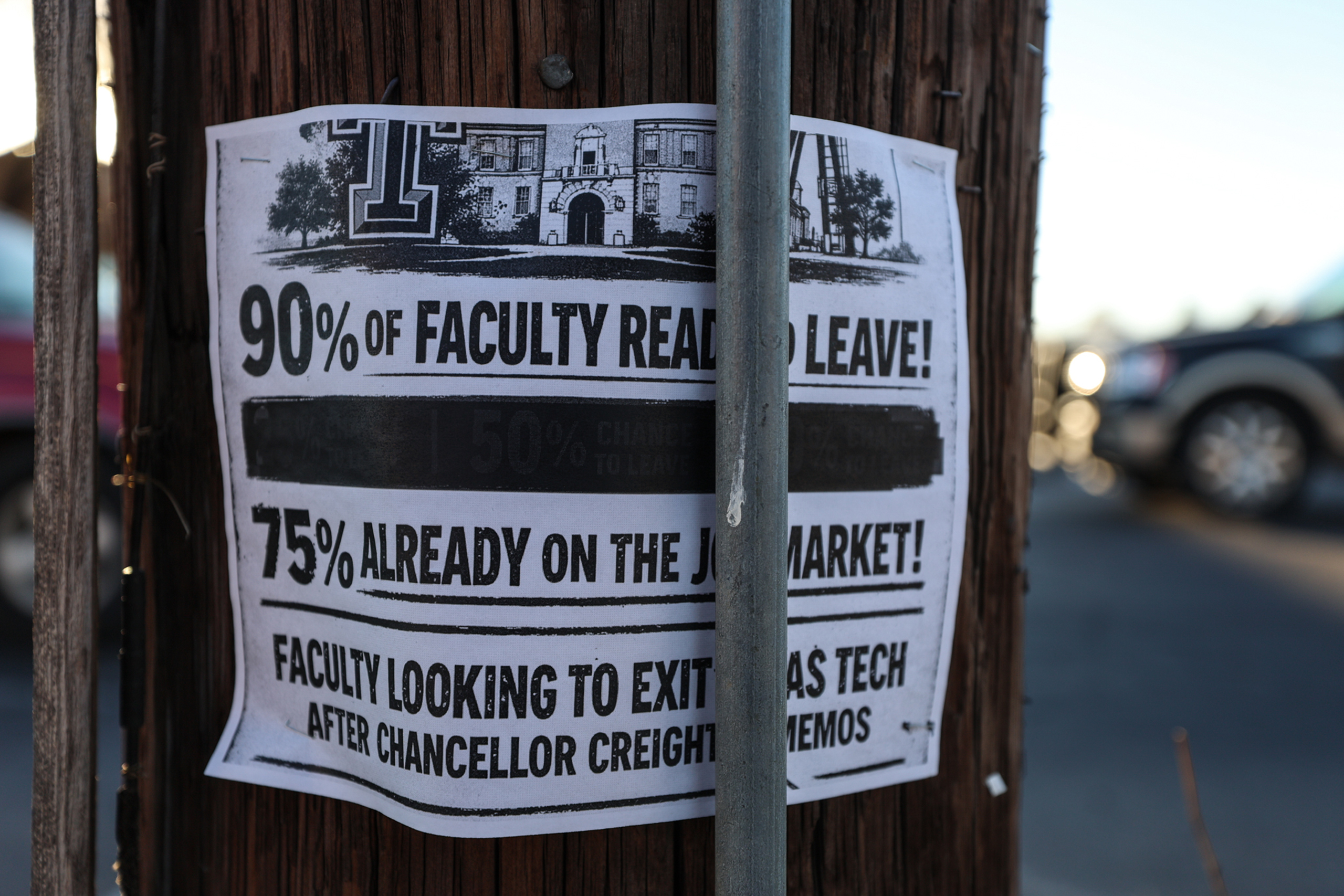
Leaders of the Texas conference of the American Association of University Professors say professors face fresh limits on what they can teach, driving talented faculty out of the state.
“I want to think the best of people, but I am really concerned that the impact he’s had on higher ed will be a long lasting one that we won’t be able to get out of for a while,” AAUP Texas President Teresa Klein said.
Several Tech professors announced departures since Creighton’s restrictions, saying they couldn’t give students a complete education. More than half of the university’s faculty who responded to a survey said they were looking for jobs elsewhere.
Faculty groups are suing Creighton and the regents, alleging unconstitutional censorship that’s forced professors to remove foundational texts such as Plato’s Republic, omit historical facts about the Holocaust and cut lessons on treating transgender patients and differences in health outcomes among racial and ethnic groups.
James Snoddy, a Texas Tech student who helped organize a spring protest outside a Tech board of regents meeting, sees the fight over academic freedom as bigger than his university.
“I like to say we’re patient zero when it comes to academic infringement and that if we don’t stop it here, it will spread further and further,” he said.
Other universities were making sweeping changes, too.
Texas A&M regents restricted what professors could teach about race, gender and sexuality. University of Texas regents required their schools to ensure students could graduate without studying what they called “unnecessary controversial subjects.” And at the University of Houston, some deans asked professors to certify that they “teach, not indoctrinate.”
With about five minutes left at the recent chamber luncheon, the moderator turned to Texas Tech’s controversial course review, describing it as Creighton enforcing a law he wrote. But Senate Bill 37 only requires periodic reviews of all courses undergraduates must take. It does not prohibit teaching any particular topic.
Creighton emphasized to the luncheon’s attendees that only “a very small percentage” of classes in the system were changed through the process, though he acknowledged courses may have been altered before they reached the regents. Then he returned to the case he had spent the day making about Texas Tech’s influence.
Creighton named four of Texas’ six other public university systems that he said had followed Tech’s lead in reviewing what professors teach.
“We’re not going to wait on others to do it for us,” he said. “We’re going to lead. Some of it will be uncomfortable.”
Creighton’s higher ed rise
Creighton grew up on a ranch outside of Conroe and spent time working as a pipe fitter and electrician’s helper at a chemical plant before enrolling at the University of Texas at Austin. His father had suffered financially during the economic downturn of the 1980s.
A family friend loaned him $50,000 for college. Creighton also took out student loans and worked full time, first as a messenger at the Capitol and later delivering medicine and selling real estate on weekends. He said he repaid the friend after earning his law degree from Oklahoma City University.

When Creighton arrived at the Texas House in 2007, higher education wasn’t his major focus. Then a 36-year-old real estate attorney and rancher, he would not pass his first education-related bill until a decade later.
But the lawmaker seized opportunities and pushed legislation gaining broad support from powerful conservatives. A resolution he sponsored early in Democratic President Barack Obama’s first term asserted that Texas did not have to comply with mandates that exceeded the federal government’s constitutional powers.
He authored a 2011 tort-reform bill championed by Texans for Lawsuit Reform that made it easier to dismiss lawsuits deemed baseless. Ahead of the 2014 election, he launched a campaign for agriculture commissioner but quickly abandoned that run when his district’s state Senate seat unexpectedly opened.
When Creighton arrived in the upper chamber, Amarillo Republican Kel Seliger was overseeing the Senate Higher Education Committee. But in 2017, Seliger voted against two of Patrick’s legislative priorities: a bill restricting local government’s abilities to increase property taxes and the creation of education savings accounts, which allows taxpayer funds to subsidize private school tuition.
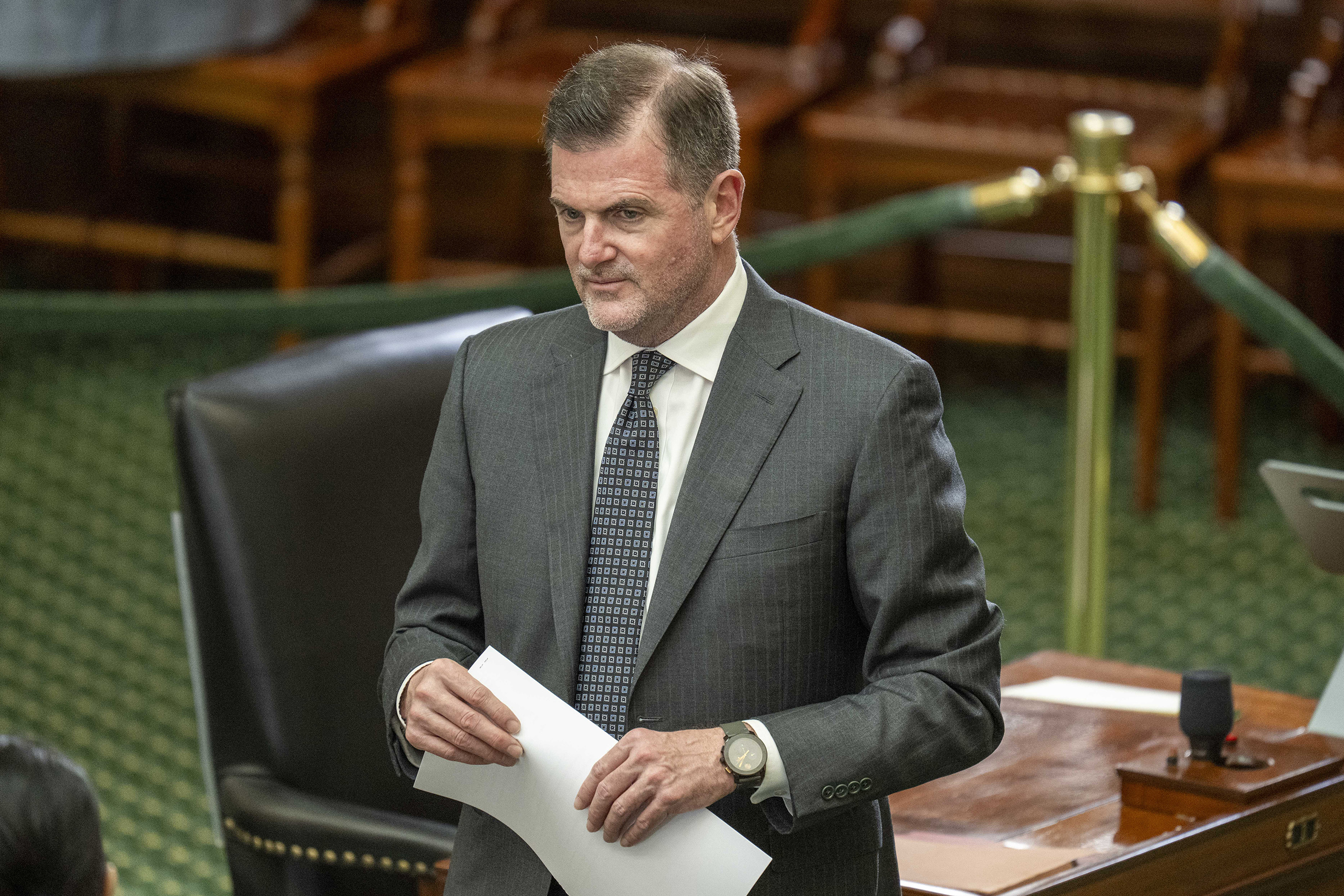
Patrick stripped Seliger of his chairmanships in the 2019 session, tapping Creighton to lead the Higher Education Committee.
Seliger recently described Creighton as someone who “did as directed by the lieutenant governor” in a “workmanlike fashion.”
Sen. Sarah Eckhardt, an Austin Democrat, described him as charming and personally engaging but fiercely loyal to Senate leadership.
“He was under very specific orders, and he was going to execute on those orders,” she said.
However, Creighton recalls Patrick giving him a “blank canvas” to establish his own agenda.
Harrison Keller, a former state higher education commissioner, said Creighton was more familiar with business but threw himself into the work.
The two discussed how workforce demands were changing, whether degrees were leading to good jobs and the financial challenges facing community colleges. Their conversations helped shape a 2023 law that tied more state funding for community colleges to student outcomes.
As Creighton settled into the chairmanship, Patrick increasingly turned his attention to what he saw as liberal influences on college campuses.
After UT-Austin faculty defended professors’ right to teach about racial justice and critical race theory, Patrick called for ending tenure. Creighton took up the cause, carrying a proposed tenure ban through the Senate. The final law preserved tenure but broadened the grounds for firing tenured professors.
Another fight that session began at Texas Tech. A Wall Street Journal opinion piece detailed how the university’s biology department required job applicants to submit diversity statements describing how they foster inclusive environments. Creighton authored the law banning diversity, equity and inclusion offices, statements and other related practices at Texas public colleges.
The law disrupted at least 131 scholarships in the months after it passed, according to The Dallas Morning News. At the University of North Texas, administrators stripped references to race, gender and equity from more than 200 course titles and descriptions even though the law exempted classroom instruction and research.
At a Senate hearing the following year, Creighton acknowledged that the law did not prohibit professors from teaching DEI-related material but said such course content “contradicts its spirit.”

Then in 2024, pro-Palestinian demonstrations broke out at colleges across the country. At UT-Austin, then-President Jay Hartzell called in state troopers to respond. Faculty criticized him after 136 people were arrested.
Creighton returned to Austin the next legislative session ready to rein in campus protests and the influence professors had over university decisions.
One successful bill gives college administrators more authority to restrict outsiders’ demonstrations, ban encampments and limit amplified sound. A federal judge has temporarily blocked key provisions of the law at UT system schools. The case is pending before the 5th U.S. Circuit Court of Appeals.
The other, Senate Bill 37, goes much further. It abolished existing faculty senates unless they complied with new state rules limiting their size and requiring some members to be appointed by university presidents. The law allows regents to overturn the hiring of deans and vice presidents and requires them to review courses all undergraduates must take, with the authority to overrule campus decisions about those requirements.
Creighton didn’t get everything he wanted. During final negotiations, lawmakers removed language that would have restricted what professors could teach in required undergraduate courses.
Sen. Paul Bettencourt, R-Houston, who helped negotiate the bill, said Creighton studied Florida’s Stop WOKE Act, which restricted college instruction about race and sex before a federal court blocked it. So Creighton avoided overly prescriptive guidelines but was adamant that regents be handed authority over university decisions, Bettencourt said.
The final legislation created an office to investigate complaints that universities didn’t adhere to certain higher education laws. Unresolved violations could ultimately put state funding at risk.
Sherry Sylvester, a senior fellow at the conservative Texas Public Policy Foundation, said Creighton stood out for his effectiveness. TPPF provided research to support his legislative efforts, including information questioning whether diversity programs improved outcomes for students of color and whether university accreditors required the programs lawmakers wanted to eliminate.
“He saw the chessboard in a much broader way than many of his colleagues,” she said.
Sylvester said representatives from about a dozen states have contacted her seeking information about the higher education laws Creighton championed.
“Everybody is looking to Texas,” she said.
Creighton comes to Texas Tech
In July 2025, Creighton was preparing to return to Austin for a special legislative session in which Republicans planned to redraw congressional districts when Texas Tech Chancellor Tedd Mitchell announced his retirement.
Creighton said he sought the job after the search for a replacement was well underway. Regent Clay Cash recalls the senator describing in his interview how Texas Tech could set a national standard.
“We didn’t hire Brandon simply to manage our system,” Cash said. “We hired him to help define what it will become.”
In written responses to the Tribune’s questions, regent Tim Culp said the board saw Creighton’s legislative experience and political relationships as assets that could turn the system’s goals of producing degrees of value and strengthening research into reality.
George McMahan, a longtime Texas Tech supporter and Lubbock businessman, wasn’t sold on the pick. He joked that he didn’t want to shake hands with a “tea sipper,” an old insult for a UT Longhorn. Two days after the hiring announcement, the former senator called McMahan at home.
Creighton explained that he had grown up partly on a ranch in nearby southern New Mexico, had relatives in Lubbock, planned to move his family there and had supported Texas Tech as a senator.
Creighton helped establish the Texas University Fund, a $3.9 billion state endowment created in 2023 to support research at Texas Tech and three other public universities. He also backed the system’s efforts to establish a veterinary school in Amarillo and a dental school in El Paso.
McMahan took to Facebook to tell other skeptics that Creighton had “totally won me over.”
Last fall, less than two weeks after formally taking over, Creighton issued his first major directive to professors across the system. He ordered faculty to review courses they planned to teach that spring for content involving sexual orientation, gender identity and certain ideas about race and sex.

The directive went beyond one Mitchell had issued earlier that year requiring faculty to comply with state and federal policies recognizing only two sexes, male and female, when teaching students.
Breanna Harris, who taught biology at Texas Tech for 13 years, had already cut lessons on how biological sex develops from her endocrinology course after Mitchell’s directive. Under Creighton’s restrictions, she waited more than two months for approval to teach the material, only to receive conflicting instructions and, ultimately, to be told to teach the course without material considered politically charged, including definitions of sex and gender from using the American Medical Association.
In April, Creighton and the regents prohibited sexual orientation and gender identity content from core and lower-level undergraduate courses. Programs centered on those subjects would be phased out; and future graduate students would be barred from centering theses or dissertations on those topics.
Creighton told attendees at Texas Public Policy Foundation summit in Austin that Texas Tech had used AI to review syllabi, readings and lesson plans and was prepared to close courses containing “indoctrination type content.” Universities across America had taught “quite a bit of garbage,” he said.
Creighton’s restrictions followed years of Republican campaigns against transgender rights. During the 2024 election, Republicans sought to energize voters by making transgender athletes and gender-affirming care prominent campaign issues, while the national GOP platform called for withholding federal funding from schools promoting what it called “radical gender ideology.”
Antonio Ingram II, an attorney representing faculty groups suing Texas Tech, said the restrictions appear driven by political opposition to certain viewpoints rather than academic considerations.
In an interview with the Tribune, Creighton defended the restrictions as a way to ensure publicly funded universities offered classes that prepared students for the workforce. He said courses on sexual orientation or gender identity were not the best use of students’ tuition dollars.
“Some of that is misunderstood to be very political in nature, and I just see it as common sense tied to the data and the metrics that we’re reviewing,” he said.
Creighton said universities should not feel limited to what state law requires.
“We don’t have to use state statute as a ceiling,” he said. “We just have to make sure that we’re compliant, and we launch from it.”
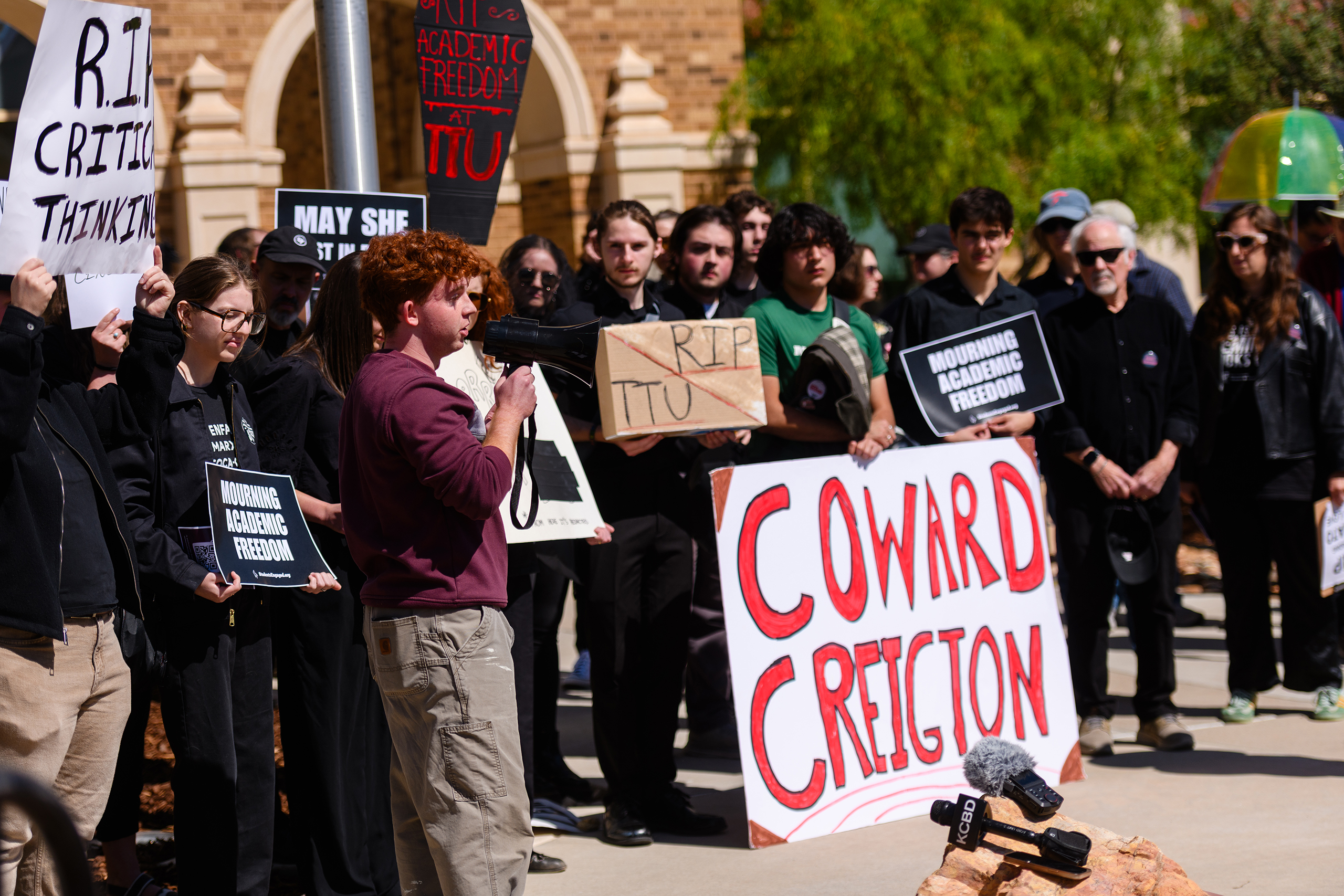
During the May regents meeting, about 200 gathered outside to protest the restrictions with a mock funeral. Dressed in black, some students and professors taped their mouths closed as they followed a horse-drawn black hearse.
“We cannot, on one hand, say we support our education and with the other, cover the mouths of our professors,” student Aaron Texidor told the board. “I love Tech enough to hold it accountable.”
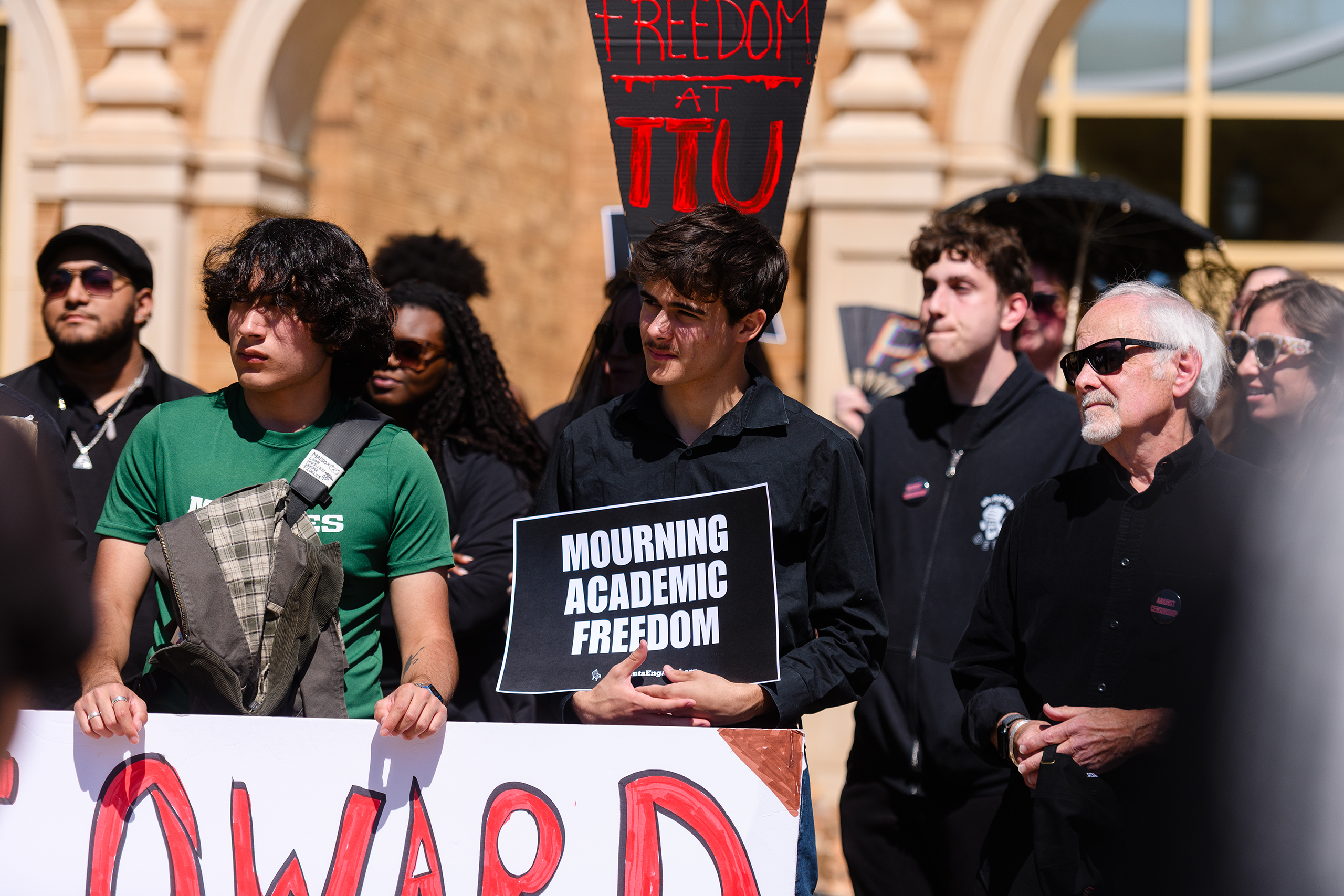
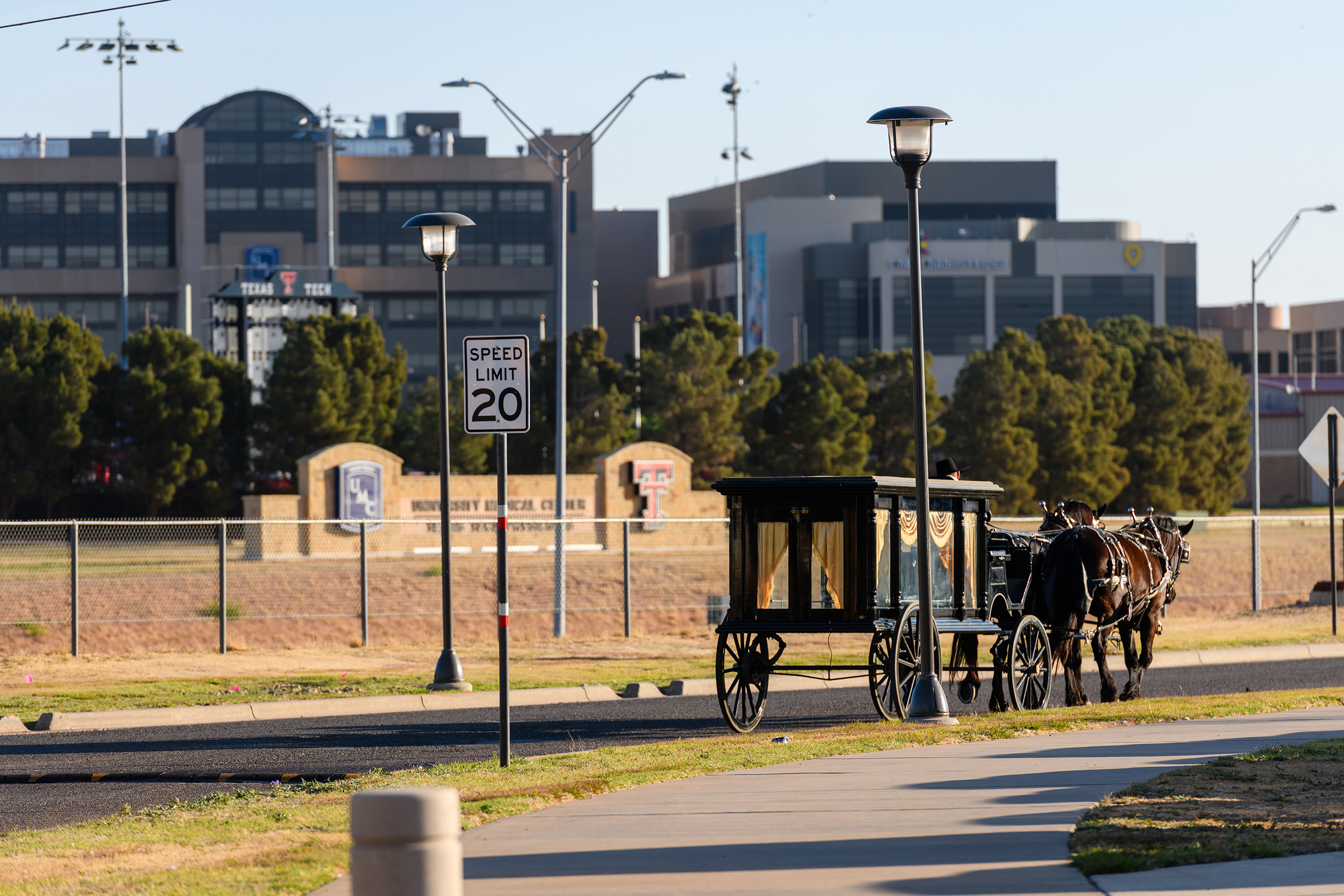
LeeAnn Bowman was among the students protesting that day. Her master’s thesis in human development and family sciences examined how Texas restrictions on transgender people, including a ban on gender-affirming medical care for minors that Creighton coauthored, affected their families.
After Creighton became chancellor, her adviser warned that the topic could become a problem. She considered changing it but continued after faculty encouraged her.
Five days after the regents meeting, Bowman presented her thesis proposal to a faculty committee. Rather than question her research, the committee members focused on her use of common writing software, she said. She left in tears.
Weeks later, Texas Tech found Bowman responsible for plagiarism, citing her use of AI-powered tools, including Grammarly Pro and an Adobe Acrobat summarization feature, as well as failures to properly attribute words and ideas, according to a university letter she provided to the Tribune. The university suspended her for six months and barred her from campus. Bowman disputes the finding and believes her focus on transgender Texans played a role.
Bowman said she learned about Grammarly through Texas Tech’s writing center. She questions why university leaders could use AI to review professors’ course materials while disciplining her over her use of AI tools.
Two credit hours shy of her master’s degree, Bowman withdrew from Texas Tech and enrolled at Arizona State University, where none of her graduate credits transferred.
She grew up in Lubbock supporting Texas Tech and spent eight years studying there.
“I’ve run around in red and black my entire life,” she said. “Now I’m throwing everything I own that’s red and black in the trash.”
Creighton’s two worlds collide
Texas Tech records show 78 faculty separations from the Lubbock campus between Creighton’s arrival in November and mid-August, compared with 65 during the same period a year earlier. The departures include retirements, completed contracts and professors who left for other jobs.
Harris, the biology professor, was among the resignations. After teaching nearly 3,000 students and helping bring in more than $2 million in research grants, realizing university leaders no longer valued her work “really felt like a slap in the face,” she said.
The Atlantic reported that Texas Tech’s provost acknowledged that the university was receiving 20% to 25% fewer applicants for teaching jobs on average.
Creighton said he was not concerned about faculty recruitment. Asked whether it would trouble him if professors were leaving or choosing not to apply because of his academic restrictions, he said the university was attentive to such concerns.
“It doesn’t change our mission and our charge to make sure that our students ultimately get what they’re paying for,” he said.
During a summer Senate hearing, Creighton received a warm reception from his former colleagues who sought his advice on how to strengthen SB 37.
Creighton suggested lawmakers revisit the Senate version he authored that would have given the attorney general authority to take action against universities that failed to correct violations.
While at the hearing, senators praised a signature deal of Creighton’s first year at Texas Tech: the system’s work with Nvidia, the chipmaker at the center of the artificial intelligence boom. Texas Tech said it is investing $25 million in Nvidia computing technology to expand AI research and training.
Creighton sees the deal as a way to attract leading researchers and expand Texas Tech’s work in healthcare, energy and national security. The project could cost as much as $40 million, and the university is counting on state grants and other funding sources, some of which have not been secured.
Details of how the partnership will work, though, are scarce. Texas Tech officials have not released the agreement to the Tribune, instead asking the attorney general to determine what information can be withheld. Nvidia did not respond to requests for comment.
Creighton and two regents — Culp and Don Sinclair — reported owning Nvidia stock in their most recent personal financial statements to the Texas Elections Commission. But Creighton and Erin Wilson, a Texas Tech University System spokeswoman, said all complied with the disclosure law. Creighton said the size of Texas Tech’s deal would not substantially change the $5.3 trillion company’s bottom line enough to meaningfully benefit his investment.
Now the chancellor wants $8 million in public funds to pursue more corporate partnerships and to enforce higher education reforms across the system. He also wants $28 million to spur university research into commercial products and startups as well as $100 million for a facility to house the initiative, which he likened to “Shark Tank.”
Meanwhile, the academic restrictions he imposed face a federal lawsuit. Texas Tech’s defense takes a sweeping position: The public university controls what professors teach, and their classroom instruction is their employer’s speech, unprotected by the First Amendment.
“Coursework that indoctrinates students with left-wing theories and gender ideology rather than educates them with useful knowledge is not in the public interest,” Texas Tech’s lawyers wrote in court filings.
This fall, a record 46,296 students enrolled at the Lubbock campus.
Students packed classrooms and food lines, scrambled for parking and filled the football stadium. They talked excitedly about their majors, performances and what they hoped to do after graduation. Creighton’s restrictions had become part of that busy campus life, altering some students’ classroom experiences while barely registering with others.
Beyond the Panhandle, the approach Creighton championed in Texas was taking hold in other states. At Auburn University in Alabama, trustees gave themselves ultimate authority over curriculum and eliminated the faculty senate, even though a new state law requiring similar changes at public universities did not apply to Auburn.
Creighton celebrated the decision on social media.
“It is great to see other states following Texas’ lead,” he wrote.
The Texas Tribune partners with Open Campus on higher education coverage.
This article first appeared on The Texas Tribune. 