High Fertility Costs Push Americans Abroad for IVF Treatment
By LJ Dawson

In the summer of 2024, Emilie and Justin Solomon found themselves on a top-secret mission in Greece.
Their family and friends thought the adventure-loving couple was on another jet-setting vacation, but they were keeping something else under wraps: They had turned off their phone locations to hide visits to a Greek clinic where they were trying to get pregnant.
The Solomons are among the growing numbers of Americans looking abroad, particularly to Greece and Spain, to escape the high cost of fertility treatments in the U.S., where such procedures are often not covered by insurance. The treatments include in vitro fertilization, which involves ovulation stimulation, retrieving the eggs, fertilizing them in a lab, and transferring the embryos into the uterus. Other less intensive medical therapies also address infertility.

President Donald Trump has made fertility, and IVF in particular, a focus of his administration’s agenda after he promised total coverage for women during his 2024 campaign. His administration proposed a rule in May intended to make it easier for employers to offer fertility coverage, although it has yet to be finalized. So far, the most concrete result has been lower costs for some IVF medications through TrumpRx, a site where cash-paying patients can find some discounted medicines through participating pharmacies. The White House projected that patients could save up to $2,200 per IVF cycle.
While significant, those savings are up against a 90% rise in IVF medication costs since 2014, according to GoodRx, a prescription discount service. A study of insured Americans released in July by Axene Health Partners and the Women’s Reproductive Health Foundation found that the overall cost for a cycle of IVF was over $29,000 — or 35% of the median annual household income in the U.S. Genetic testing, embryo storage, pregnancy care, and delivery costs can push the total over $54,000 per IVF-conceived birth, according to the study. An average patient needs two to three cycles to successfully have a child, so the costs for many patients would be even higher.
Infertility affects nearly 7 million people in the U.S., but only an estimated 24% of treatment needs are met, because of those high costs and limited insurance coverage, according to the American Society for Reproductive Medicine. The condition is believed to be rising partly because of people having children later, as well as environmental factors such as pollution.
Still, more than 100,000 babies were born via IVF in the U.S. in 2024 — a record, according to the Society for Assisted Reproductive Technology. An increasing share of people hoping to be parents are seeking help in Europe: The number of Americans choosing European clinics grew by more than 37% last year, according to Jakub Dejewski, the chair of the European Fertility Society, a group that tracks data on fertility treatment in Europe.
The Solomons knew IVF was their only chance to have children together biologically, because Justin had testicular cancer in his late teens. What the college sweethearts had not expected was the cost — and they learned early in their IVF journey that their insurance would not cover their treatment. While some states have passed laws to require insurers to pay for some fertility care, the coverage varies widely.
When the couple first explored IVF in Florida, where they live, they were quoted $40,000 for one round of treatment. The price shocked them, and Emilie said the clinic’s offer of a spring discount for an embryo transfer felt “off-putting.”
“They just kind of prey upon your hopes and dreams to be parents,” Emilie said.
Treatment Plus Island-Hopping Tours
The price of IVF and uncertainty around proposed personhood legislation in Florida, which the Solomons feared could jeopardize their control over their embryos, sent them to the Pelargos IVF Medical Group in Athens. There, in the first of two trips, Emilie underwent ovulation stimulation and egg retrieval.
Including medication, fertilization, storage, and the ultimate embryo insertion, the total treatment cost about $12,000, not including travel, according to the Solomons, a fraction of what they might have spent in America. That affordability drew the couple abroad, but so did the allure of sightseeing and experiencing a new country.
On that first trip, they spent a weekend between doctor appointments exploring the Greek island of Milos. Between Emilie’s hormonal injections, they rented a boat to explore the island. Their video from the trip shows them climbing the island’s striking white volcanic cliffs, and Emilie floating in the turquoise water of the Aegean Sea. Despite the emotional and physical toll of the IVF process, the couple remembers being in a little bubble, away from everyone, exploring a beautiful place.
“It was one of the best summers that we’ve had,” Emilie said.
When they traveled back to Greece for their embryo transfer in October 2025, they spent two days in Croatia.
IVF in Greece using a patient’s own eggs typically costs around $3,000 to $4,000, not including medication, so even with travel, it is often a fraction of what patients pay in the U.S.
“Americans choose Greece because they can access treatment that is more affordable, faster to begin, and well supported for international patients,” Dejewski said.

Patients in Greece do face some legal restrictions: Embryo storage is time-limited, donor anonymity is standard, sex selection and embryo-transfer numbers are restricted, surrogacy access is limited for nonresidents, and patients must carefully consider documentation requirements if they plan to move embryos between Greece and the U.S.
Penny Ampatzi said she is clear about these legal differences when Americans consult with her clinic in Athens. Serum IVF offers to schedule airport pickup for patients, as well as island-hopping tours. Ampatzi, the co-founder and clinic director at Serum IVF, said the main draw for the dozen or so American patients her clinic sees each month is the personalized fertility treatment plans. Affordability is close behind. A cycle at her clinic costs just under $6,000, not including embryo freezing. Almost all of Serum’s patients are foreigners, according to Ampatzi.
“You consider that you have a good possibility of success, plus you don’t pay that high amount of money, and you also have combined the treatment with holidays — so it’s a ‘Why not?’” she said.
Not Without Risks
IVF costs in the U.S. have been driven up by a mix of inflation, a shortage of embryologists, a surge in demand after pandemic backlogs, and private equity ownership, Dejewski said.
William Kiltz, vice president of marketing and business development at U.S.-based CNY Fertility, said that the costs are becoming too far out of reach. “IVF is almost a treatment that only the top 1% can afford reasonably,” he said.
Kiltz said CNY’s model — offering IVF for around $8,000, not including embryo storage, at its 18 locations across the country — brings just enough profit to “keep the lights on” and open new locations while keeping its costs lower. “We’re trying to deliver this care at the absolute bare-minimum cost,” he said.
More than half of CNY’s patients travel from out of state in search of those lower-cost options, Kiltz said.
He said he hopes the IVF market will eventually settle out, as happens with many new technologies. But nearly five decades in, that normalization hasn’t come. Kiltz believes that’s because the market is so emotionally driven.
“People will do just about anything,” Kiltz said. “There’s certainly some risk in something like that, where the demand and the desire from a single individual is so strong that they could be taken advantage of.”
Tarita Pakrashi, the head fertility doctor at the CNY location in Norfolk, Virginia, pointed to the difficulties of trying to vet a clinic overseas when one doesn’t speak the language or understand the local IVF regulations. It also can be challenging to transport temperature-sensitive medication back home.
“It’s almost like a full-time job trying to play regulatory expert and inspector all at the same time, while you’re a patient,” Pakrashi said.
She said she also has had patients who sought treatment abroad return to her clinic struggling to transfer records or understand a diagnosis they received overseas. They often have to repeat tests.
And going abroad for IVF is still out of reach financially for many Americans.
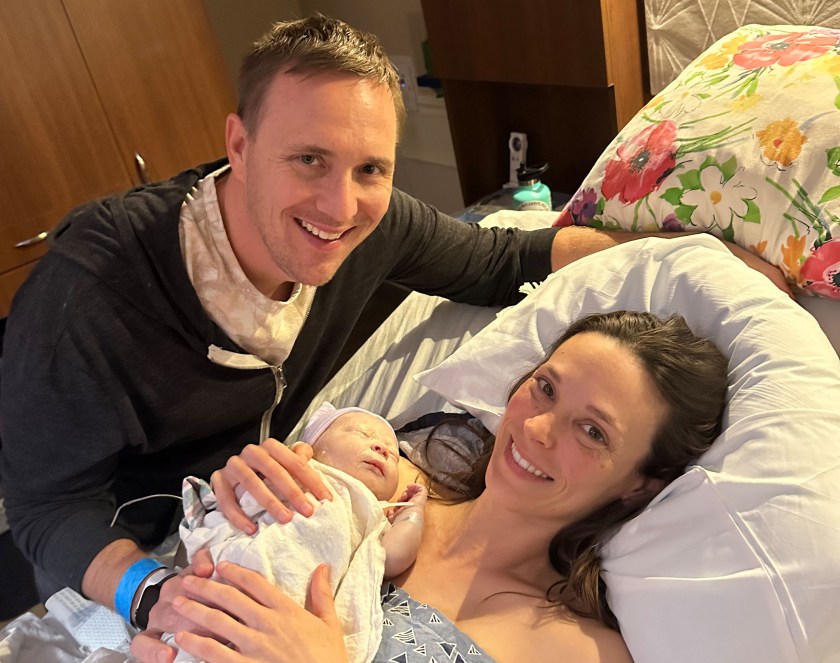
The Solomons said seeking treatment overseas takes a certain type of adventurous spirit, too. But for them, all the logistics and travel were worth it. Their one cycle of IVF and two trips to Greece allowed them to welcome a healthy baby boy this summer.
KFF Health News is a national newsroom that produces in-depth journalism about health issues and is one of the core operating programs at KFF—an independent source of health policy research, polling, and journalism. Learn more about KFF.
This article first appeared on KFF Health News and is republished here under a Creative Commons Attribution-NonCommercial-NoDerivatives 4.0 International License.