
Black-majority schools in Texas receive more Fs than A ratings, leaving parents with tough choices
By Jaden Edison, The Texas Tribune
August 10, 2026
Jaleel is attending his first day of classes this month at a middle school opening its doors for the first time that specializes in air traffic control, commercial drones and engineering.
His parents decided not to send him to the majority-Black, F-rated campus closer to their home in Fort Bend ISD. Still, they fear their sixth grader may lose out on the community and support that come with receiving an education alongside kids in his neighborhood.
“This is a very difficult thing,” Mikole Montgomery, Jaleel’s mother, said of the choice to bypass Missouri City Middle School. “I don’t take the decision lightly.”
Black children attend schools labeled as failing by the Texas Education Agency at a far higher rate than any other racial or ethnic group. Majority-Black schools are the least likely to achieve the state’s highest academic rating.
Of the roughly 300 such campuses last year, 20 received an A. By contrast, 105 scored a D or an F.
On Aug. 14, Texas releases the next round of school accountability ratings, largely based on how well students perform on the STAAR exam. Those ratings, promoted as a tool to identify and hold underperforming schools accountable, also serve as an annual reminder of Texas’ struggles to provide Black students a high-quality education, parents say.
That leaves families like Montgomery’s weighing whether to enroll their children in schools where they may benefit from rigorous academic opportunities but see fewer kids and teachers from their communities — or keep them on high-need campuses lacking in resources but abundant in love and understanding.
About 60% of majority-Black schools scored a C or better last year, which Texas defines as acceptable performance. By comparison, nearly all majority-Asian schools met that threshold, as did 91% of majority-white schools and 79% of majority-Hispanic schools.
Texas public schools educate north of 700,000 Black children — more than any other state in the country. And negative outcomes among a disproportionate share of majority-Black schools means thousands of kids could leave without the knowledge they need to thrive, even as state leaders often say that “demographics do not equal destiny” and have passed laws restricting the consideration of race in education policy.
Education Commissioner Mike Morath acknowledges that academic gaps between Black children and their peers have long existed in the state. However, he points to the preeminent national exam showing Black students in Texas scoring higher than those in most of the country.
“That being said,” he added, “the results are still unacceptable.”
Texas must improve the quality of schools and support for all children — not just some children, Morath said.
“This is where the A-F indicators are important,” he said. “The state’s investment in this is to make sure that our local school districts are changing practices as rapidly as possible to improve these learning outcomes.”
Meredith Anderson, a native Texan who researches K-12 education for the United Negro College Fund, sees the racial disparities in the state’s accountability ratings as “alarming.”
Majority-Black schools tend to suffer from inadequate local and state funding, as well as from limited access to rigorous courses that help raise student expectations and learning, Anderson said. Schools broadly also do not employ enough Black teachers, which research shows can improve learning for all children, she added.
“We often think about it as more so academic gaps when we just look at the accountability ratings, without looking at some of the underlying causes that contribute to them and widen those gaps,” Anderson said. “Even if we have these bright spots, overwhelmingly the state isn’t serving our Black students well.”
When Black parents choose not to enroll their kids in neighborhood campuses as a result, that could also mean the students who remain end up worse off.

Texas funds schools based on attendance, which means they lose money to pay for academic supports as families leave. That also often means the loss of involved parents and students who otherwise could help usher in improvements. Meanwhile, negative perceptions of majority-Black schools can contribute to a broader narrative that students at such campuses do not deserve positive attention or investment, parents and advocates say.
“I certainly recognize the value in these kids,” Montgomery said. “I recognize me sending my son to the other side, it says something about how I feel about the kids as well — whether it’s intentional or not.”
Pressure to improve
The Texas Education Agency evaluated more than 9,000 campuses last year, with roughly 15% of schools receiving the lowest grades.
Of the 302 majority-Black schools in Texas, 35% scored a D or an F, by far the largest share of any racial or ethnic group. No majority-Asian schools received such ratings, while 8% of majority-white schools and 19% of majority-Hispanic schools did.
Texas grades schools based on three primary measures, including how well the campuses perform compared to those with similar percentages of low-income students. Schools typically receive a D or an F if only about a third of students or worse meet grade level on the State of Texas Assessments of Academic Readiness, or STAAR.
Alongside the reality that Black students in Texas are those most likely to face discipline and drop out and the least likely to graduate from high school, many parents see the ratings as further evidence that the education system is failing their children.
“I don’t think it takes rocket science for folks to figure out,” said Tyrone Howard, a UCLA professor who studies race and education. “It’s the fact that the original sin of this country has always been around race — structural racism — and all its remnants still remain in place.”
When a school receives five consecutive F ratings, Texas’ education commissioner must either replace the school district’s elected trustees and superintendent or close the campus. Schools that predominantly educate low-income, Hispanic and Black students trigger takeovers most often.
Morath, the state’s education chief, believes that schools consistently receiving unacceptable ratings reflects a failure by local district leaders to sufficiently focus on student learning. The A-F rating system allows his agency to identify those districts and initiate reforms where necessary, he said.
Morath views Houston ISD as evidence that it matters who runs local schools, as Black students have posted large test score gains since he intervened in 2023. Critics of the takeover often accuse HISD’s commissioner-appointed superintendent of overemphasizing test scores. The critics question the sustainability of the gains given unusually high numbers of teachers and students leaving the district, especially Black children.
Eight of Texas’ A-rated, majority-Black campuses serve children in the state’s largest district.
Morath sees the academic gains as signals that state intervention works.
“In many cases, our schools are doing very well,” he said of Texas public education. “But our schools need to get better, and they need to get better as fast as possible.”
The Texas Tribune interviewed two Black former principals of D- and F-rated schools who shared details of their challenges on the job. The administrators asked to remain anonymous because they still work in Texas education and feared retaliation for speaking candidly.
The leaders acknowledge they sometimes failed to focus enough on student instruction and helping teachers improve. But that’s because they often had to extinguish other fires, such as abrupt staff departures, funding cuts and depleted morale.
Compared with predominantly white, Asian and more affluent campuses, the Black school leaders felt they lacked autonomy to make decisions that would improve learning. They say they missed out on community business partnerships, wealthy parent-teacher groups and instructional materials that reflected their students’ interests. They also dealt with students enrolling and leaving at high rates throughout the school year, making it difficult to maintain consistent standards.
There’s also pressure to improve ratings, not necessarily to ensure learning growth but to avoid state penalties, they assert. The Black campus leaders say their schools focused heavily on students most likely to improve their test scores, which meant little time to prioritize the academic growth of children who came to school hungry or without a jacket when it was cold.
“Externally, it looks like you’re a poor leader,” said the former principal of an F-rated, majority-Black elementary school. “All you’re trying to do is serve your kids.”
School officials can make a difference by listening to their local communities and, more importantly, fostering spaces where Black parents feel they can engage, education researchers say. That includes scheduling events at times when most families can participate.
Still, even the best school systems cannot overcome unsupported teachers or a lack of money to fund the initiatives students need, the experts note. Texas leaders must also recognize that addressing racial inequality cannot happen without honest conversations about race, the researchers say.
Legislators recently passed laws targeting diversity, equity and inclusion efforts in education. Republicans approved such measures out of a belief that schools focused more on gender and race than merit and instruction.
But some who study education contend that the unwillingness to address historical racism hurts Black students the most. Research repeatedly shows they benefit from having teachers who look like them, while many Black families place high importance on their children seeing themselves reflected in the books they read.
“That’s where I think the frustration is for a lot of parents, like, ‘OK, how can I not name what I might believe to be the primary factor in why some kids don’t get opportunity?’” said Howard, the UCLA professor. “It’s just, to me, outright tragic that that’s where we are.”
More than ratings
Having raised three children and volunteered in the community for more than two decades, Stephanie Brown considers Missouri City Middle School “the best-kept secret” in Fort Bend ISD.
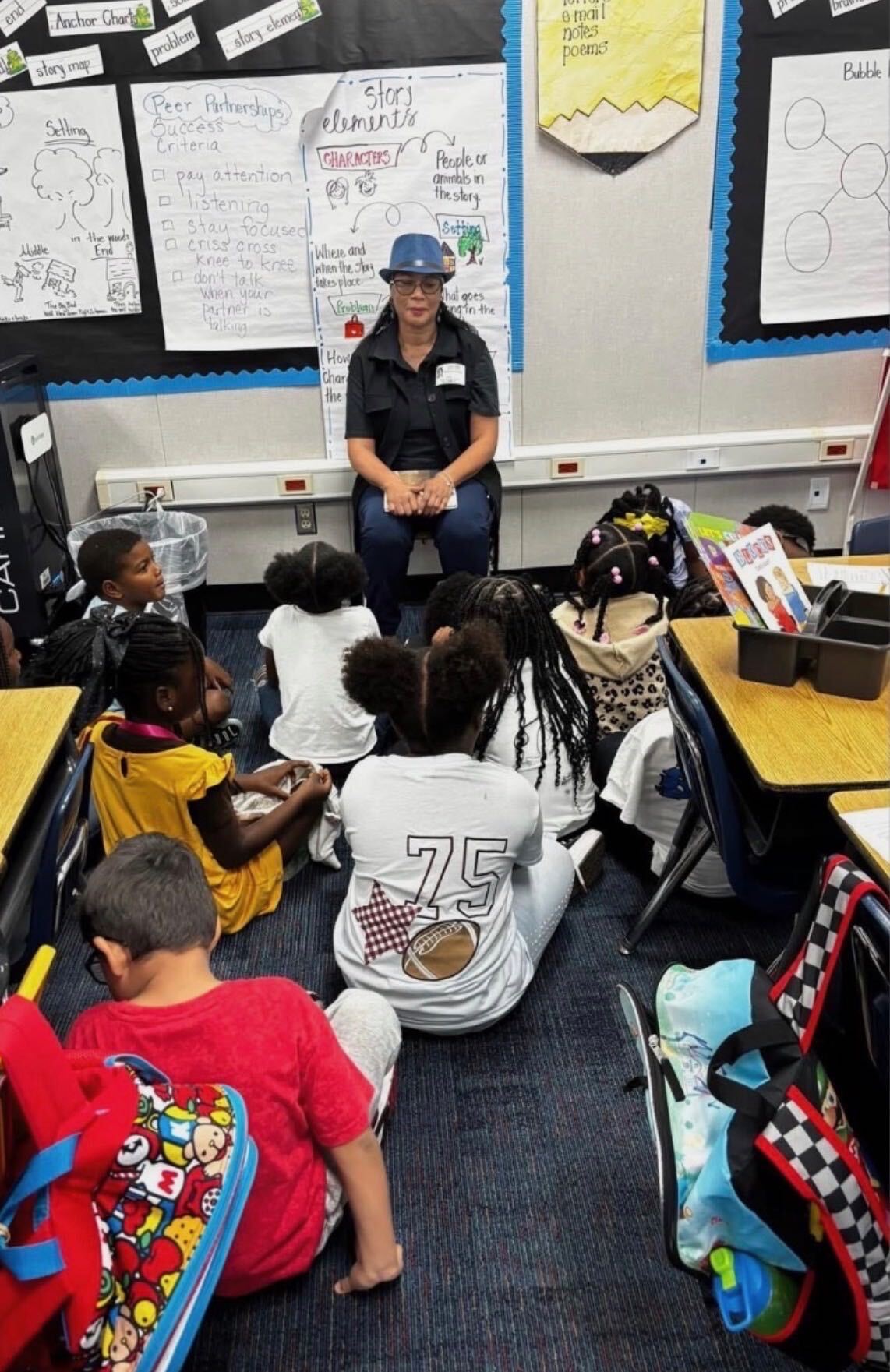
What it lacks in resources, it makes up for in dedicated teachers and administrators, she said. Brown believes that if district leaders granted students access to benefits such as commercial drone classes or before- and after-school programs that other children in the district receive, Missouri City Middle School would see similar results.
Brown wants students to know that they are more than standardized tests and accountability ratings.
For the last two years, she has helped organize summer trips to a free engineering camp at Prairie View A&M University, where high school students and middle schoolers stay in dorms and learn about robotics and computer science. She wants to show Black families that they do not need to leave to find a quality education. And the community needs to realize that sometimes, it is not “better on the other side,” Brown added.
“Whatever the data is showing that we’re lacking, it needs to be on our campuses,” Brown said. “We should not have to seek outside resources in order to get it if this data has been showing this all over the country. Because think about it: God didn’t make one race smarter than the other. So what is really going on here? Where does it start?”
In a statement to the Tribune, Fort Bend ISD officials said students at all of their campuses deserve access to a high-quality education, as well as the opportunities and support necessary to succeed, regardless of race, ethnicity, socioeconomic status or ZIP code.
“The district continually evaluates student needs, academic performance and campus resources to identify where additional support and intervention may be needed,” district officials said. “Fort Bend ISD remains committed to providing equitable educational opportunities for all students and will continue working alongside our educators, families and community to strengthen student achievement across the district.”
The district, located southwest of Houston, educates about 78,000 students — 28% of whom are Black. In 2025, Fort Bend ISD moved up one letter grade to a B and had fewer D- and F-rated schools than in the previous year. Missouri City Middle School was 1 point shy of a D.
When state lawmakers debated the A-F system more than a decade ago, Sen. Royce West worried that it would disproportionately penalize schools that lacked sufficient resources to achieve an acceptable rating. That aspect of the system continues to bother him, West said.
Given that Texas has fewer than two dozen A-rated, majority-Black campuses, the Dallas Democrat agrees with families who say the education system is failing Black children. But he disagrees with those who say Black parents should keep their children in schools that do not serve them.
“If they believe the best thing is to take them across the street, then fine. Let them take them across the street,” West said. “Unfortunately, the downside is that a lot of kids’ parents can’t take their kid across the street, and they’re left in a desperate situation.”
Local school leaders and teachers must do everything they can to provide a quality education for those kids, West added.
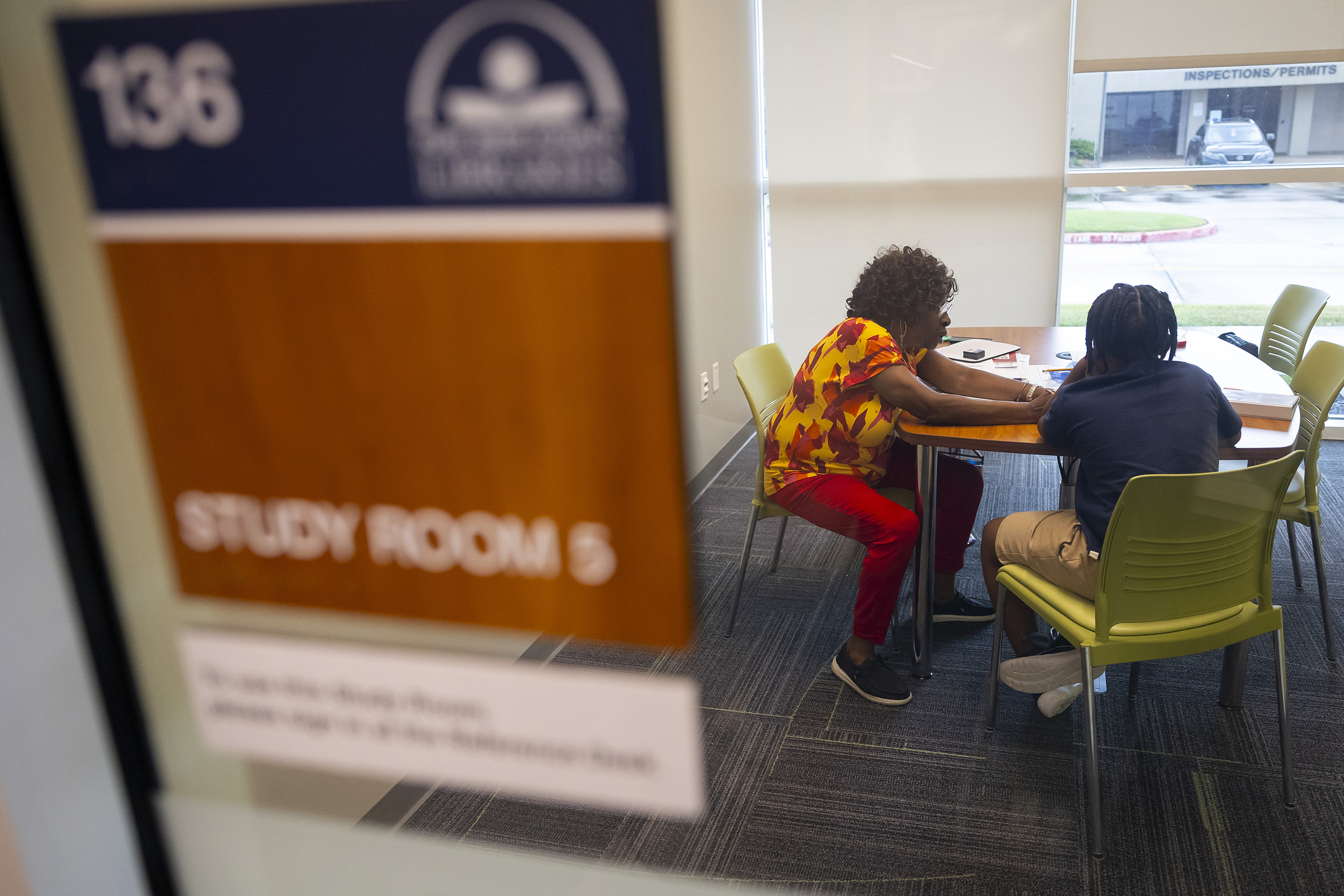

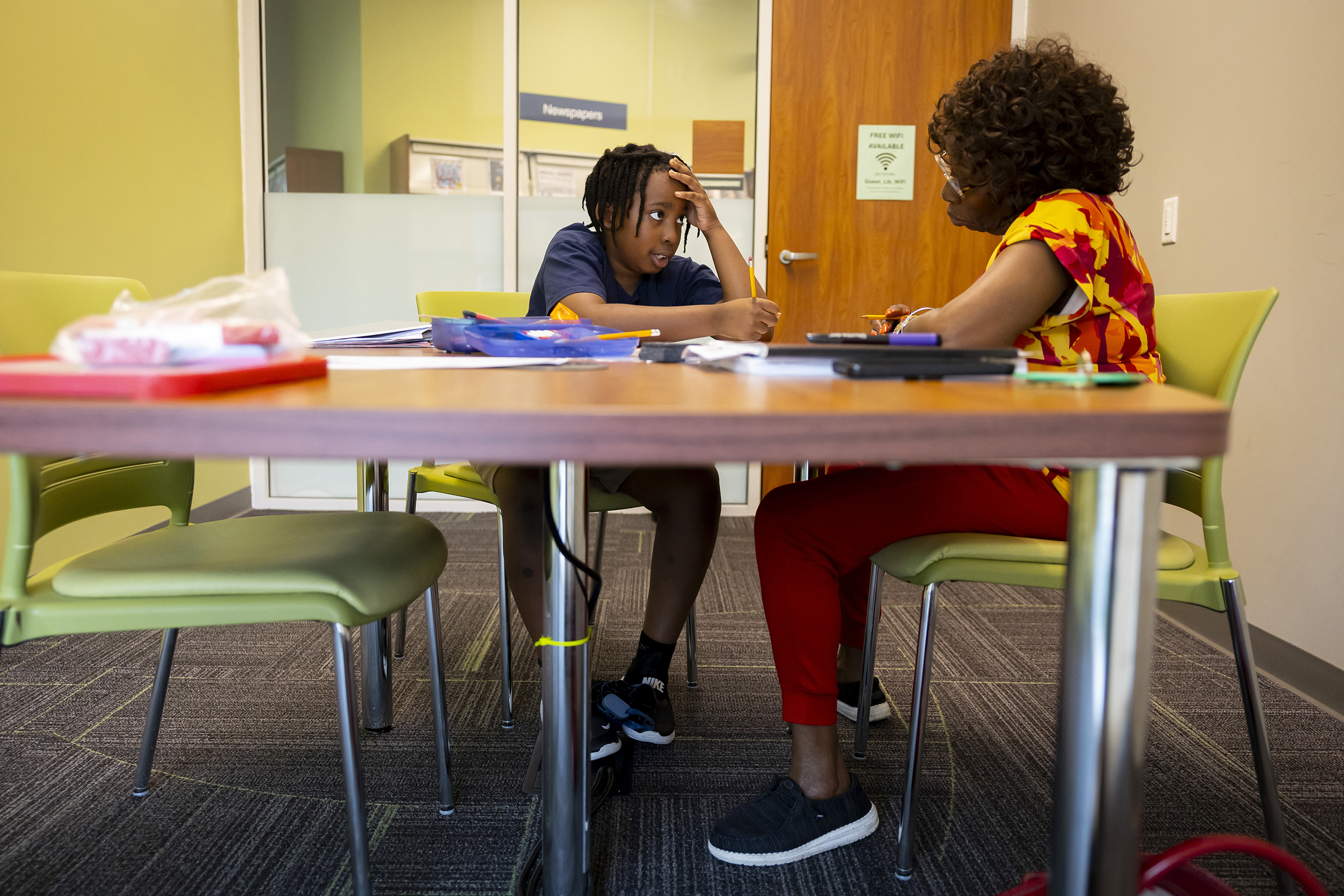


As for the failures of Texas public education, Montgomery said, “I think the goal is to keep our kids uneducated.”
That belief fueled her family’s decision for Jaleel to attend the new Amy Coleman Middle School farther away from their home. She believes Missouri City Middle School employs passionate educators who care about children, but she is concerned about how Fort Bend ISD officials distribute resources.
For example, Coleman has an aviation and aerospace program while Missouri City has one focused on first responders. Those are admirable professions, Montgomery notes, but kids already interact with police officers and firefighters. The disparity in offerings communicates to Black kids at Missouri City that they should not dream bigger, she said.
Montgomery witnessed a fight and misbehaving children while volunteering at the F-rated middle school last year, which she admits factored into her decision to enroll Jaleel elsewhere. But she also recognizes that Jaleel benefits from tutoring, summer programs and field trips that his parents can afford and have time to provide. Not all children in the community experience the same privileges, she noted.
And while Jaleel leaving his neighborhood causes her significant concern, her decision centered on providing him what she is convinced state leaders do not want him to have.
“When we think about our son’s education, we think about moving out of Texas,” Montgomery said. “I don’t think that these people have my son’s best interests.”

Disclosure: Prairie View A&M University has been a financial supporter of The Texas Tribune, a nonprofit, nonpartisan news organization that is funded in part by donations from members, foundations and corporate sponsors. Financial supporters play no role in The Texas Tribune’s journalism. Find a complete list of them here.
This article first appeared on The Texas Tribune.