
Battered and bruised by the election, Texas Republicans reckon with a blue Texas
By Zach Leggio, Jess Huff, Colleen DeGuzman and Carlos Nogueras Ramos, The Texas Tribune
November 9, 2026
Prayer and music filled the cafeteria of Lee Lewis Campbell Elementary School in Austin on Sunday.
At the makeshift home for Mercy Culture Austin, a branch of a growing network of the politically inclined mega churches that started in the Dallas-Fort Worth area, attendees raised their arms above their heads in worship. They fell to their knees or lay on the floor. They passed around tissue boxes to those who wept, overcome by the spirit.
Pastor Isaac Hector stood in front of the congregation and grappled with the election results.
Hector opposed state Rep. James Talarico, the Austin Democrat who won the Senate race against Attorney General Ken Paxton, who used his office to crusade for the Christian right and their causes. With the election behind them, Hector said he will pray for Talarico, and he encouraged others to do the same. Worry less about the political party affiliation and more about societal ills, such as pornography and addiction, he said.
“Y’all gotta find a little greater resistance in you,” Hector said. “What are you resisting? Political parties? No, you’re resisting the demonic forces that are coming against us at this time.”
Conservative voters at that Sunday service and across the state spent the better part of last week processing the Republican Party’s staggering losses. Once inconceivable, the GOP lost its grip on the Lone Star State in a single evening. Like any loss, there have been stages to their collective grief, voters say: disbelief, anger, fear. Maybe, one day, acceptance. And now, the party — from everyday voters to leadership — must now find a way to exist in a new, unrecognizable Texas, and fight its way back into power.
Politics is a core part of the Mercy Culture network’s identity. Former state Rep. Nate Schatzline, once one of the Texas legislature’s most conservative members, is a pastor for the church in the Fort Worth area.

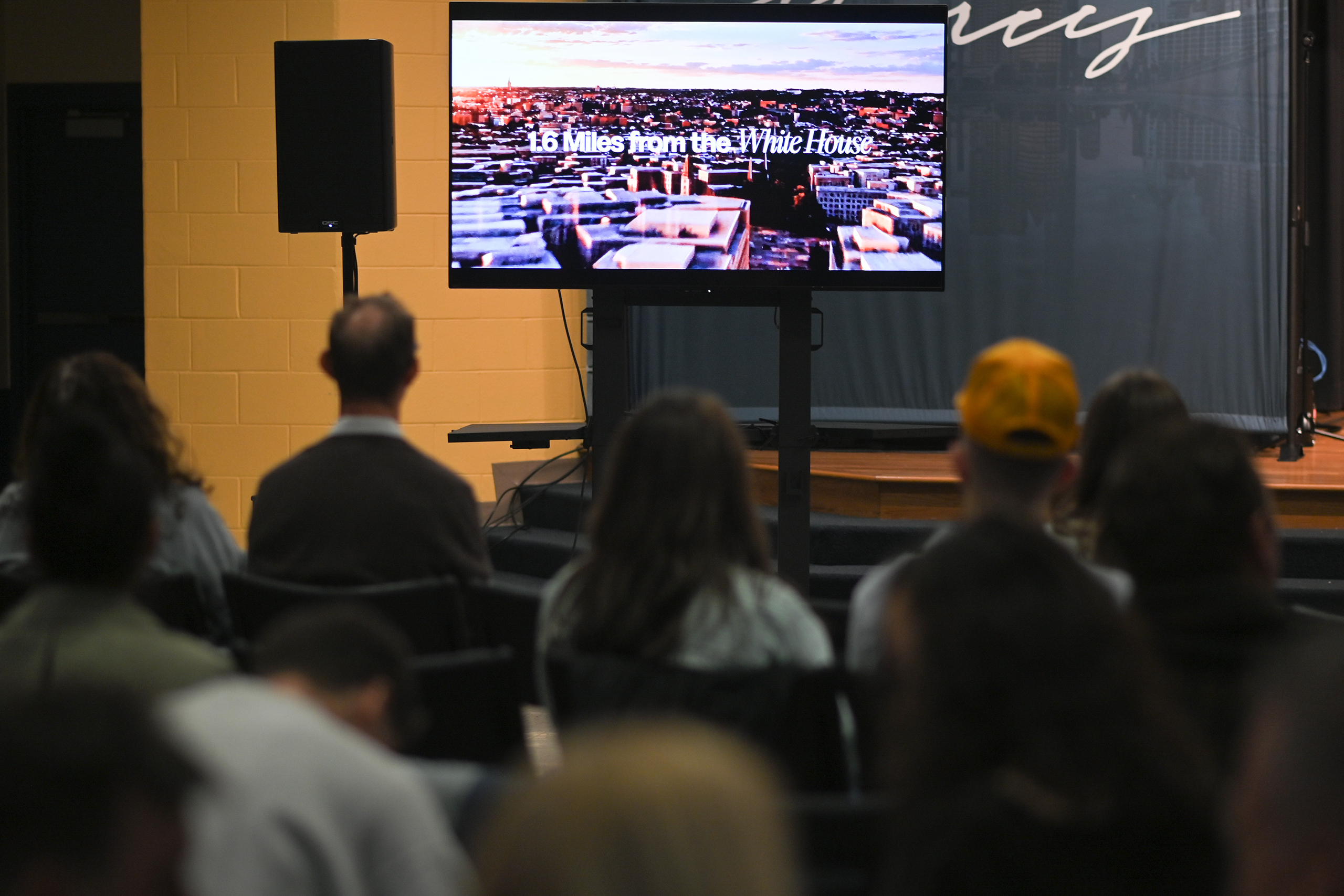
Members of the church routinely pray at the Capitol, and the church’s political arm, For Liberty & Justice, advocates for conservative policies and supported dozens of Republican candidates in the 2026 midterms. The church encourages members to engage in “spiritual warfare,” with an emphasis on voting.
Erin Stetson, a member of the congregation, moved from California to Texas in 2016, seeking a lower cost of living and more choices for education. The 42-year-old voted for Republicans down the ballot because the party put in place a private school voucher program, which Stetson uses to home-school her children. She’s worried Democrats will roll back that program.
“I come from a long line of teachers. My grandfather was the principal of a public school,” she said. “I’m all for good education, but it’s that freedom of education that I’d like to have.”
Future policy decisions aside, Hector’s sermon resonated with Stentson, who said she’ll stay focused on her faith.
“It doesn’t matter what Democrats decide they want to do — our faith isn’t in what politicians are doing,” Stetson said. “We know that Jesus is the highest authority. We know that we get the reward in the end.”
“I think they hate us”
The political earthquake was felt in every corner of the state, including a diner in Burke, an East Texas town with no more than 700 people. Republicans lost ground in every county, but less so in rural areas.
Jack Phillips is one of those voters who stuck with the Republican Party last week. Like Stetson, he moved to ruby red Texas from his home state of California, which he said was trapped in the clutches of socialists.
And then Texas turned blue.
“Our taxes are going to go through the roof,” Phillips said. “I think you’re going to see taxes on fuel. I think you’re going to find that you now have a higher property tax. They’re gonna find a way to just tax anything you need or want.”
Phillips sat near the back of the Airport Cafe, where customers dine, catch up and watch small airplanes come and go. The next four years, Phillips said, will be rife with political shenanigans. He fears Democrats will attempt to redraw the state’s political maps in their favor and destroy the state’s oil and gas industry. And he’s worried about what they’ll do to the healthcare system, especially as he fights cancer.
Some two hundred miles southwest of Burke, Rhonda Gannon was window shopping in downtown Bastrop along the Colorado River. That’s when she ran into her friend, Kari Sneed. Both small-business owners, the women voted for Republicans on Tuesday, and are now worried that the Democrats in power do not have their best interests.
“I think they hate us,” Gannon said.
Like Phillips, Gannon, 55, is worried taxes will go up.
“Nothing is for free,” Gannon said. “They act like taxes aren’t being paid by the rich. That’s a lie.”
“I feel like Democrats don’t like rich people,” Sneed said.
Sneed, 60, said she’s also worried that more LGBTQ issues will be addressed in schools.
“I’m concerned about the boys in sports, girls’ sports, I don’t like it,” she said. “I don’t think it’s fair, the trans agenda. I don’t like the drag stuff myself.”
Both women say, despite their misgivings, they’ll give Gov.-elect Gina Hinojosa a chance, especially on her promise to improve public schools.
“I have hopes for Gina, I’ve heard some of the things she says, I’m trying to keep a really open mind and hope that she does do some of the things that she’s saying,” Sneed said. “She doesn’t have all bad ideas. I don’t totally disagree with a lot of the things she’s saying.”
“I still do not understand”
Republican Party leaders in West Texas were still reeling from the election’s reverberations on Monday.
Donna Kelm, the Ector County GOP chair, said the results were horrible for the state.
“I did not expect that to happen,” she said. “And I still do not understand how it could happen.”

Kelm, who has been involved in the party’s advocacy and recruitment efforts for at least six years, said voters could have been better informed about the issues that drove them to the polls, such as the Iran war and tariffs. A drag on Republicans now will have long-term benefits, she said,.
Voters “don’t look at the longevity,” Kelm said. “They look at the short result, and that was the thing with this war. They’re only looking at what’s happening right this moment. What happens in the long run: We don’t have a nuclear bomb hit us.”
Candidate quality also dogged Republicans’ chances of winning, she said. Odessa residents would shut the door on her when she canvassed across town. She also heard from Republicans who sat out the election because they were not fond of the nominees.
A few miles east on Interstate 20, Midland County GOP chair James Beauchamp said the party must have difficult conversations about issues voters care about and candidate quality.
The campaigns failed to reach those disaffected voters, said Beauchamp, who has led the party for nearly 20 years. And, he said, the party took too much for granted.
“I don’t think there was any real outreach,” Beauchamp said. “And I think part of that’s because Republicans were in power so long that they just kind of forgot about that, and just assumed those people were with them and they were going to break for them … like they had in previous years.”
Local party leaders across the state must start talking to voters about the economy to rebuild trust, he said.
Back in Austin, young Republicans are also ready to get to work.
Benjamin Shrader, 28, chairman of the Austin Young Republicans, said the election is a wake-up call for Republicans and already has his eyes set on 2028
“We have the opportunity to win Texas back in two years,” he said. “If we don’t win it, then Texas may very well be a blue state forever.”
He’s particularly worried about the loss of Republican infrastructure, built up over the last three decades in power.
“It is the institutional knowledge loss that is the most catastrophic failure of Nov. 3,” Shrader said. “That is something that the party will take decades to recover from, even when we return to power.”
But Thien Nguyen, 20, president of the College Republicans at the University of Texas at Austin, sees the losses as a chance for fresh leadership.
“My biggest hope: big changes for the party,” Nguyen said. “We need to reform it to focus on the citizens and from there, we retake Texas.”
Disclosure: The University of Texas at Austin has been a major financial supporter of The Texas Tribune. The Texas Tribune is a nonprofit, nonpartisan news organization that is funded in part by donations from members, foundations and corporate sponsors. Financial supporters play no role in our journalism. Find a complete list of them and more information about our financial and disclosure policies here.
This article first appeared on The Texas Tribune. 