
Democrat Jon Rosenthal joins GOP-led Texas Railroad Commission with ideas, but faces an uphill fight
By Carlos Nogueras Ramos, The Texas Tribune
November 9, 2026
Jon Rosenthal ran on a platform of overhauling the state’s oil and gas regulator, offering a spate of policies that further scrutinize, and in some cases dramatically change, how oil companies run their operations.
He’ll be lucky to pass any of them.
A four-term legislator from Cypress and a two-decade-plus oil field engineer, Rosenthal became the first Democrat in more than 30 years to join a three-member council leading the Texas Railroad Commission.
When his six-year term begins Jan. 4, though, he will be outflanked 2-1. Aside from the Texas Senate, the state’s highest courts and U.S. Sen. Ted Cruz, the Texas Railroad Commission remains one of the last surviving bastions of state GOP power.
In November, Rosenthal defeated Republican Bo French amid a national shellacking for the GOP, ushering in a Democrat at an agency that has viewed his party’s policies as a threat to the oil and gas industry. On the other side are watchdog groups, observers and regulatory analysts who have portrayed the agency’s commissioners as cheerleaders for the industry they were elected to regulate. Rosenthal, experts said, offers a fresh perspective — and a megaphone — for issues surrounding the state’s enormous oil industry.
“I think expectations might be that there would be a massive change in the way oil and gas infrastructure, pipelines and surface mining might be addressed,” said Ramanan Krishnamoorti, vice president for energy and innovation at the University of Houston. “These concerns will see more of the light of day because of the fact that you’ve got a pretty clear-minded third person on the commission, but I don’t expect fundamental changes in what actually happens.”
Rosenthal’s plans include sweeping changes to the commission, including eliminating the practice of burning excess gas in hopes of encouraging operators to sell it instead. Rosenthal also proposed banning campaign donations from fossil fuel companies, making public the commission’s progress on sealing derelict oil and gas wells, and charging companies for disposing wastewater underground, with the fee funding the commission’s work elsewhere.
Passing his agenda will be challenging. The commission’s makeup remains majority Republican and his colleagues — commissioners Wayne Christian and agency chair Christi Craddick — are staunch conservatives who have characterized such policies as radical.

Christian, a former state representative who joined the powerful agency in 2017, slammed green energy policy as climate alarmism. And Craddick, whose family amassed wealth from the oil business and who has served on the commission for 14 years, has said climate initiatives led by the Biden administration threatened the industry.
In a statement to The Texas Tribune, Christian congratulated Rosenthal and said he hoped to keep the commission focused on responsible regulation, affordable energy and protecting jobs.
“Governor-elect Hinojosa has promised to focus on affordability and move beyond the culture wars,” Christian said. “I hope that means putting Texas families and their pocketbooks ahead of the political climate crisis crusade against fossil fuels that threatens good-paying jobs, public education funding, and energy affordability.”
Craddick did not respond to a request for comment.

To be sure, Rosenthal laid the groundwork to appeal to industry on the campaign by highlighting the industry’s contributions to the economy.
“I think sometimes this industry is unfairly villainized,” he told the Tribune in September, “so while there are certainly repeat bad actors that wrongly pollute, I think the vast majority of these businesses are good community partners, and this might actually be an opportunity to highlight their stewardship and partnership.”
Rosenthal also called his campaign “an opportunity for me personally to dispel the negative narrative that’s around Democrats sometimes, where people just want to claim that Democrats want to destroy the oil and gas industry.”
Industry experts told the Tribune that while they don’t expect immediate changes to the commission, Rosenthal’s presence may be felt in other ways.
Yogashri Pradhan, petroleum engineer and founder of the industry consulting firm IronLady Advisors, said the commission will benefit from Rosenthal’s experience in the oil fields, as well as the Democrat highlighting companies that hold themselves to strict environmental standards.
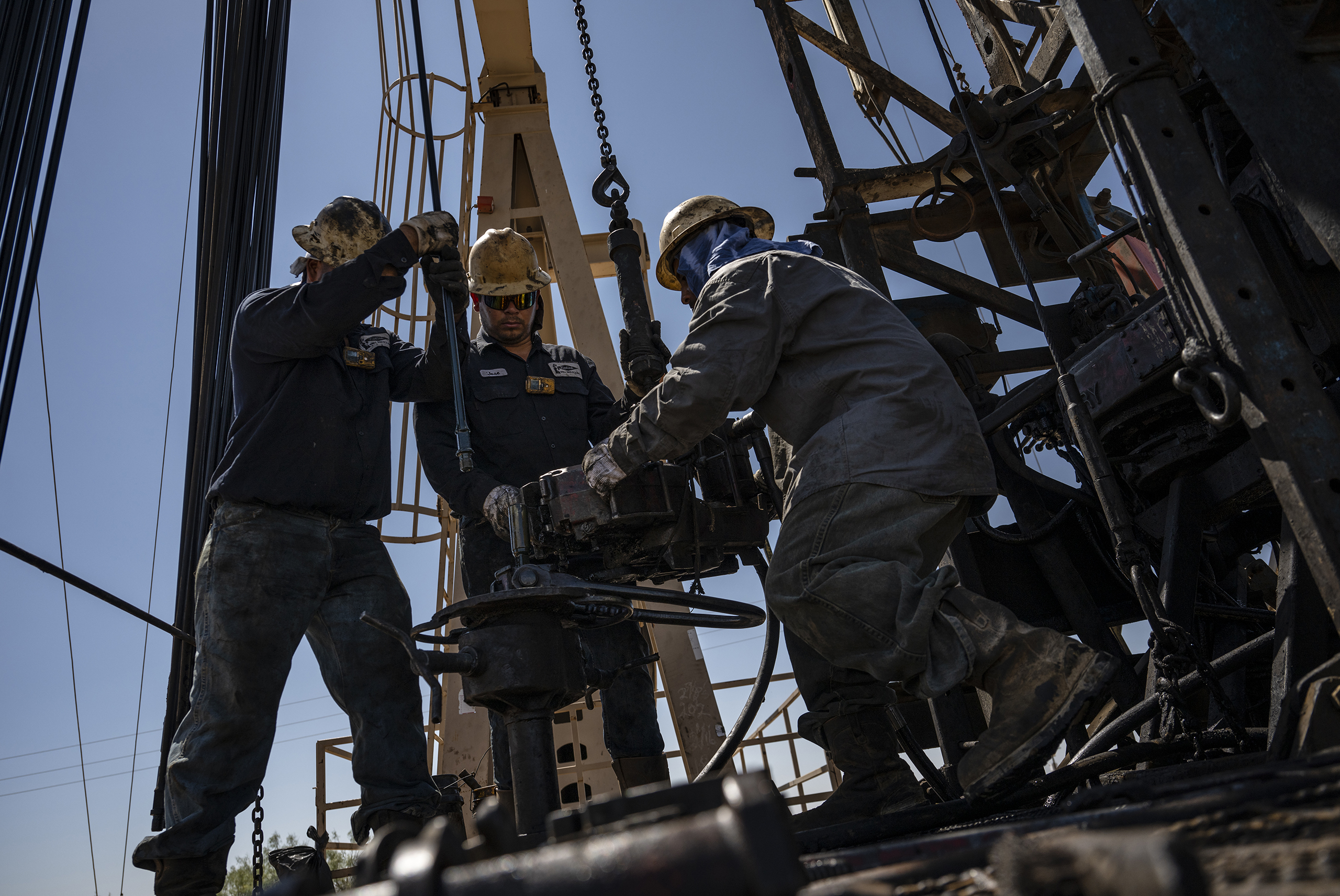
“I see Jon Rosenthal as less of a threat to the oil and gas industry because he comes from the oil and gas industry,” Pradhan said. “While Jon Rosenthal gives the impression that he’s going to add more regulations, I think he will be more open to listening on the technical aspects of [oil and gas] operations. So while there may be a perceived risk of more red tape, I believe there can be more perspective … because of his experience.”
Rosenthal can also shed light on issues that commissioners have hesitated to air publicly, said Mark Jones, a political scientist at Rice University. Even if he can’t make key decisions if the Republicans unite, Jones said, he can shed light on energy issues as the Democratic Party’s watchdog on oil and gas activities.
Even as a minority voice on the commission, Rosenthal will have the backing of willing Democratic partners at nearly every level of statewide government.
“It’ll be a far different dynamic,” Jones said. “It’ll be within a state where Democrats are calling the shots, not Republicans, meaning the past, or at least the preferential treatment that the oil and natural gas industry is used to receiving, it may not receive to the same extent.”
Disclosure: Rice University and University of Houston have been financial supporters of The Texas Tribune within the past five years. The Texas Tribune is a nonprofit, nonpartisan news organization that is funded in part by donations from members, foundations and corporate sponsors. Financial supporters play no role in our journalism. Find a complete list of them and more information about our financial and disclosure policies here.
This article first appeared on The Texas Tribune. 