
Democrat Nathan Johnson pitches back-to-basics attorney general’s office after 12 years under Paxton
By Eleanor Klibanoff, The Texas Tribune
October 8, 2026
To learn more about Republican nominee Mayes Middleton, read our profile of him from the GOP primary.
In 2018, a little-known Dallas lawyer named Nathan Johnson took on a well-funded, far-right state senator and won, flipping a district that had been in GOP hands for 30 years.
Eight years later, Johnson is trying again, this time on a statewide stage, as he vies to be Texas’ next attorney general.
It’s an uphill battle: The last time a Democrat was elected as Texas’ top lawyer, Forrest Gump was in movie theaters. In the years since, national conservatives have come to rely on the state agency as a launchpad for partisan legal battles, and Johnson’s opponent, fellow state Sen. Mayes Middleton, has a vast oil and gas fortune he could call on to keep the seat red.
In this down-ballot race between two lesser-known candidates, Johnson is hoping to attract independents and moderate Republicans by eschewing partisan fighting, emphasizing his respect for the rule of law and promising to take seriously what he calls the “noble” bureaucracies the office is responsible for.
“I’ve tried to run a very serious, substantive campaign from the very beginning, because I think people are hungry for very serious, very substantive work from their elected officials,” he said in an interview with The Texas Tribune.
Johnson is betting there’s a bloc of voters who are so fed up with the agency’s embrace of culture war fights — a hallmark of outgoing incumbent Ken Paxton’s tenure — that they will throw off the shackles of party loyalty to vote for the guy promising a back-to-basics approach.
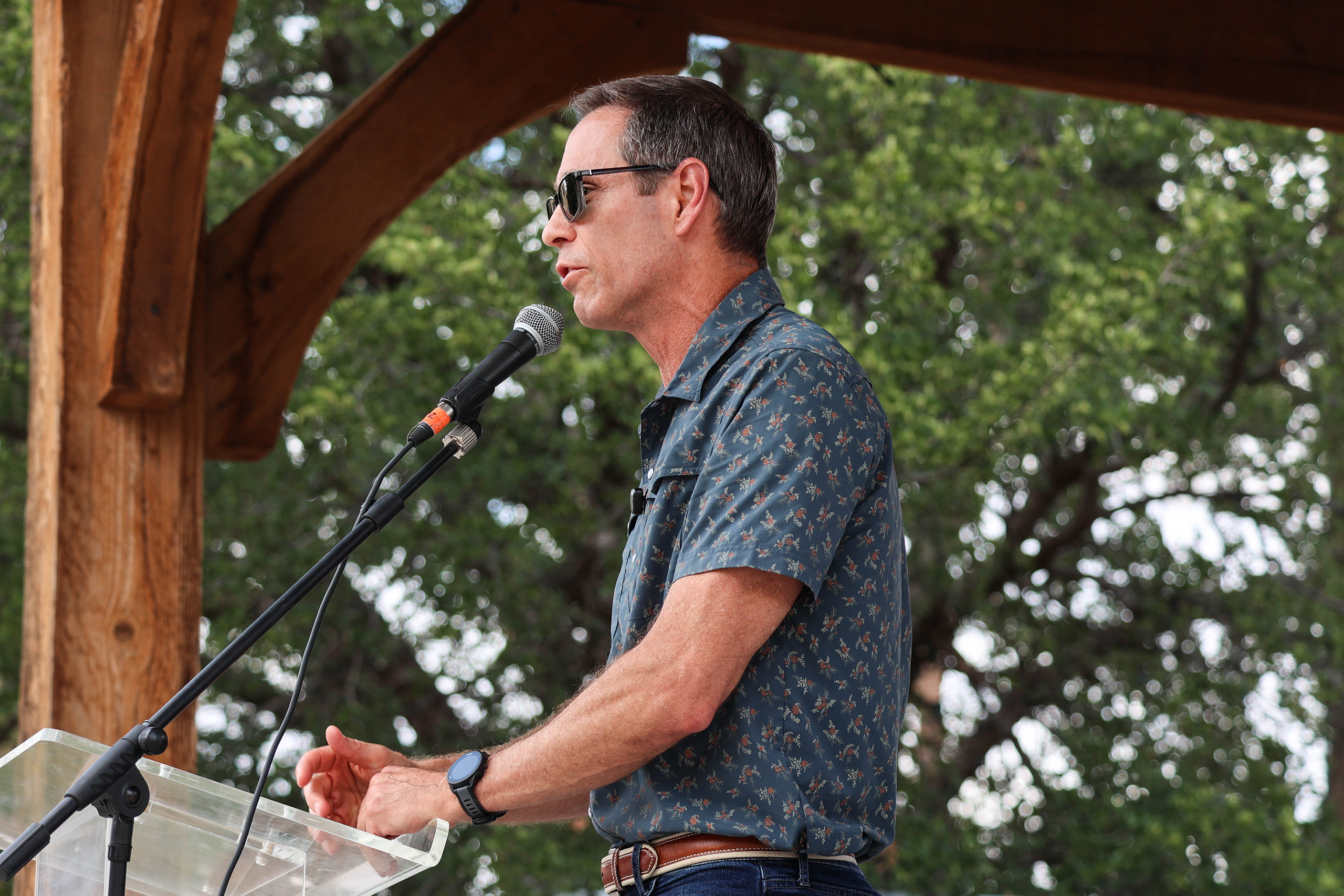
It’s an idea that’s been tried, unsuccessfully, in this year’s GOP primary and in general elections past. Even with headline-grabbing Paxton in the office, the attorney general race has long been overshadowed and, to some degree, shaped by what’s happening at the top of the ticket. With a potential blue wave gathering on the horizon, Johnson sees another chance to flip a GOP seat this fall, with some polls showing him within arm’s reach of Middleton.
“I read something in the electorate [in 2018] and I’m reading the exact same thing statewide now,” he said. “After eight years of culture wars and base drum-beating bravado, people are anxious about their lives, they’re anxious about costs, they’re anxious about employment … and the arguments and tricks of the Republican Party have worn out.”
A Dragon Ball Dem
Before Johnson was a corporate litigator at Thompson Coburn in Dallas, he was, of all things, a composer for the anime television show Dragon Ball Z.
Johnson, a classically trained pianist, fell into the job while looking for a way to make money as a musician, but he came to appreciate the show’s larger message the longer he worked on it.
“You have episodes that deal with a set of very different kinds of people — sometimes different species and people from other planets — but they have to work together,” he told the fan blog, Dao of Dragon Ball, in 2018. “Sometimes we find that a person who was formerly your opposition is now your ally.”
He scored 67 episodes and four movies, and then, seemingly overnight, the job market dried up as technology changes made studios less reliant on in-house composers. That sudden shift helped shape his politics, he said.
“You realize that sometimes the world just changes, and you get hit by a tidal wave,” he said. “We in government should try to make sure that people can get back on their feet and help buffer those winds of bad luck.”
That attitude eventually propelled Johnson to run for office. Senate District 16, stretching into the fast-changing Dallas suburbs, had long been represented by John Carona, an old-school Republican known for his maverick stances on gay rights and gambling. When a Tea Party wave swept through in 2014, Carona was ousted by Don Huffines, a conservative activist with a name recognizable from car dealerships around the Dallas-Fort Worth area.
As Huffines’ constituent, Johnson felt the fringe, libertarian ideas he was pushing didn’t match the district’s profile. Johnson took note when Democratic presidential nominee Hillary Clinton outperformed Republican Donald Trump in the district in 2016.
“She was not popular, so I figured if people were choosing a qualified Democrat that they didn’t necessarily like over an unqualified right-wing Republican in the presidential race, why wouldn’t they do the same thing in a Senate race?” Johnson said, explaining why he signed up to challenge Huffines knowing he would be vastly outspent.
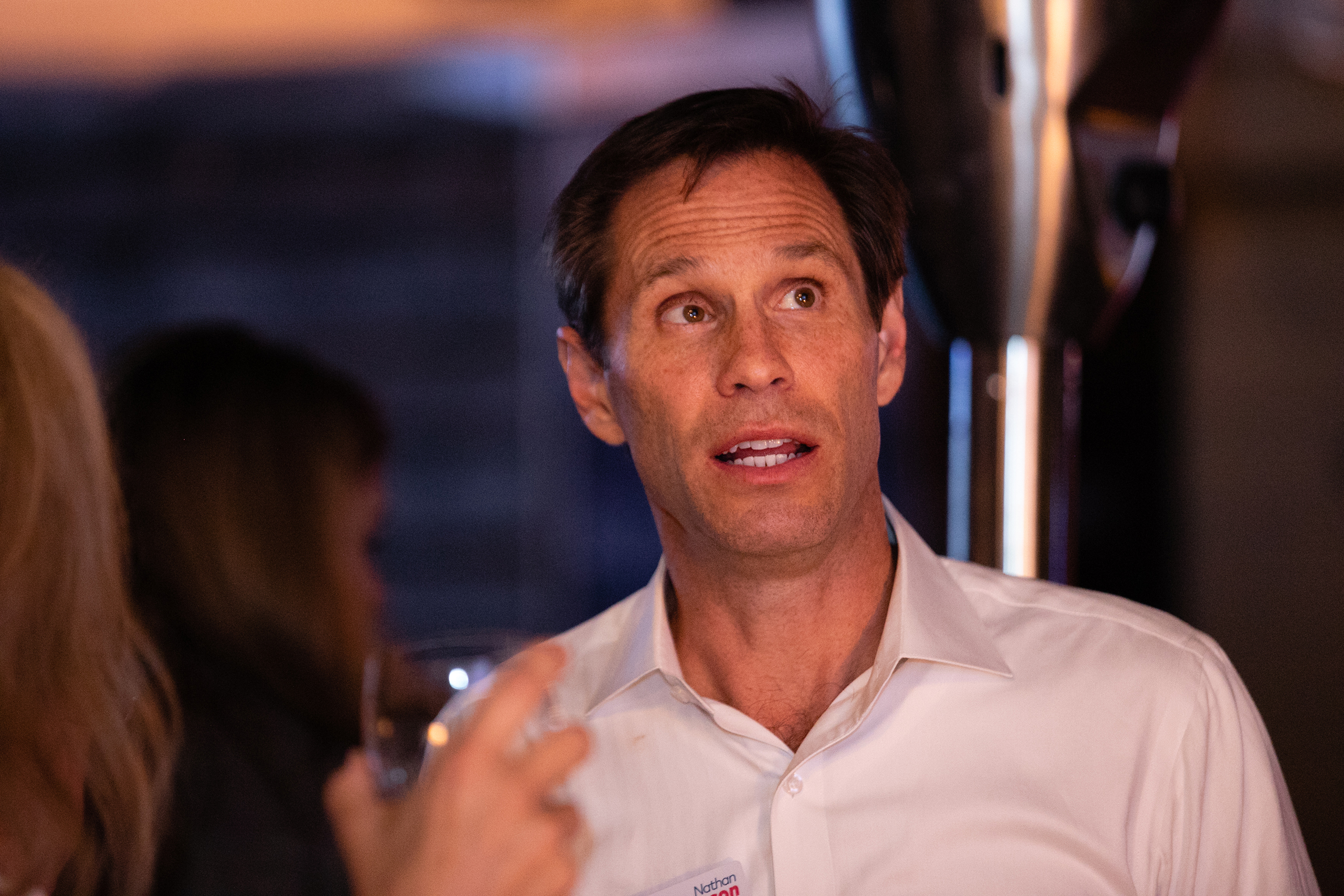
Not unlike this cycle, 2018 was a midterm year that served as a referendum on an unpopular Trump presidency and the GOP that had enabled him. Energized by former El Paso Congressman Beto O’Rourke’s challenge of U.S. Senator Ted Cruz, Democrats turned out in droves, and some moderate Republicans held their noses and crossed party lines.
Johnson ran what he described as a positive, issues-focused campaign. And he racked up a few endorsements from dismayed Republicans, including former state Sen. Bob Deuell, who said Huffines’ “lack of leadership and accomplishment” forced him, a conservative Republican, to side with Johnson despite their differences on guns and abortion.
Attorney general bid
Johnson beat Huffines by eight points, a seismic upset in a year of big flips for Democrats. But despite the blue team’s performance, the Texas Senate remained a Republican-dominated space. Houston Sen. Carol Alvarado, who entered the Senate alongside Johnson, recalls that he was serious about getting things done and avoiding partisan flamethrowing.
“He’s worked across party lines, which if you want to get anything done at the Capitol, you have to, especially in the Senate,” she said. “He quickly demonstrated that he was willing and able to hear both sides of issues … and work with people that you’re maybe not politically aligned with.”
Most senators come to the upper chamber “House trained,” as Alvarado put it, but Johnson was brand new to legislating. His first session, he passed fewer bills than all but one of his Democratic colleagues, the Center for Effective Lawmaking found. By the end of his third session, he was vying for the top spot.
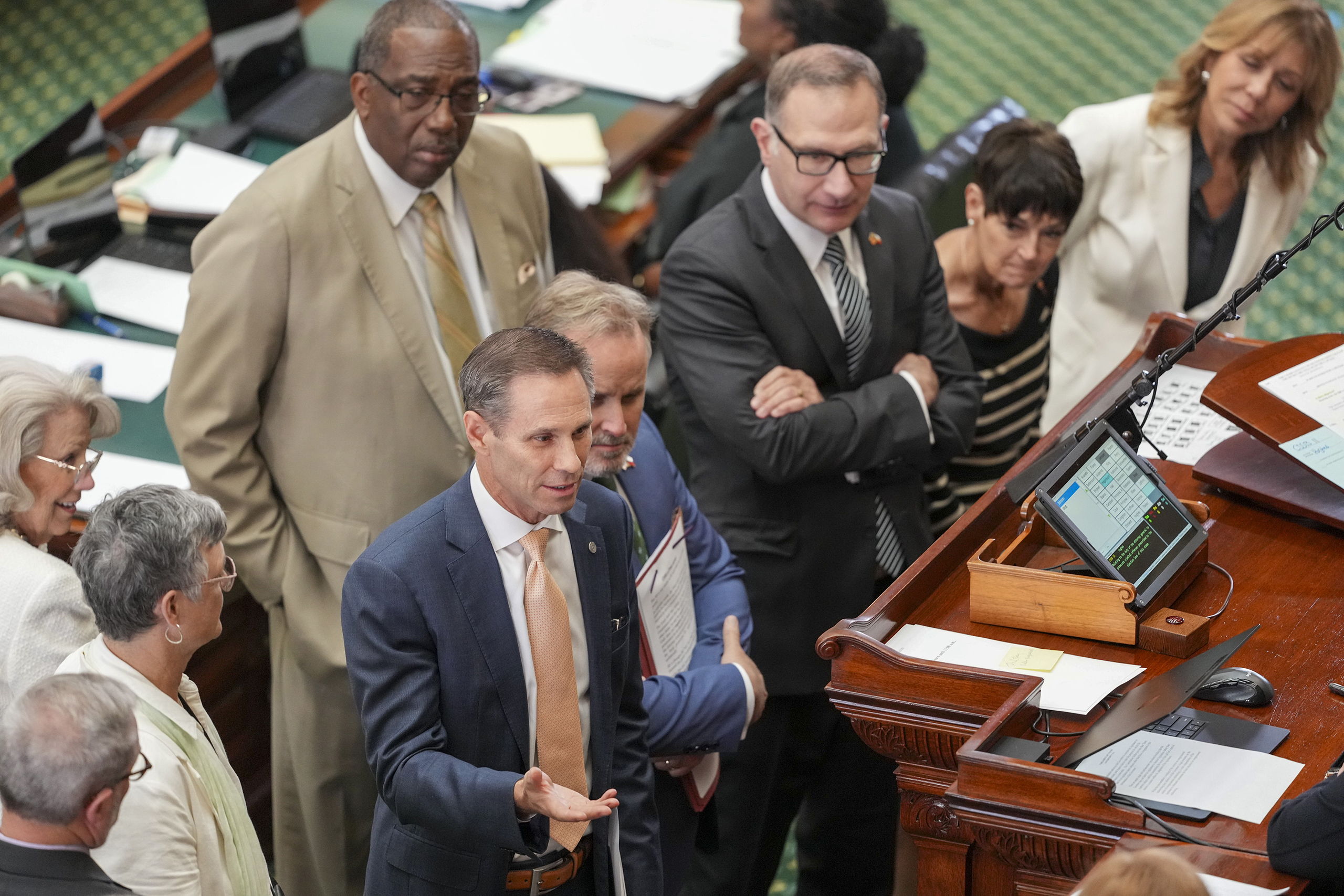
Over the last eight years, he has passed 134 bills focusing on water, the power grid and healthcare, with the Dallas Morning News editorial board deeming him “one of the most effective Democratic legislators in Texas.” In 2023, Middleton, now Johnson’s opponent, signed on as cosponsor of one of his bills to create stronger consumer protections for commercial genetic testing.
Johnson didn’t entirely eschew the polarized fights that animate the chamber, however, filing bills to restore abortion access and expand Medicaid, and clashing with GOP colleagues, including Middleton, on the Senate floor during debates about LGBTQ rights, redistricting and the specter of election fraud. At the Texas GOP convention earlier this year, Middleton called on some of these fights to portray Johnson as a “radical leftist.”
It was in the Senate chamber in 2023 that Johnson first began thinking about the role of attorney general. He and his 30 colleagues had been summoned back to Austin, months after the legislative session, to vote on whether Paxton should be removed from office for allegedly using the agency to benefit a donor.
After the impeachment trial, Johnson voted with the rest of the Senate Democrats to oust Paxton. Middleton was reportedly one of the GOP holdouts who considered voting to convict Paxton before ultimately siding with the majority to acquit him of all charges.
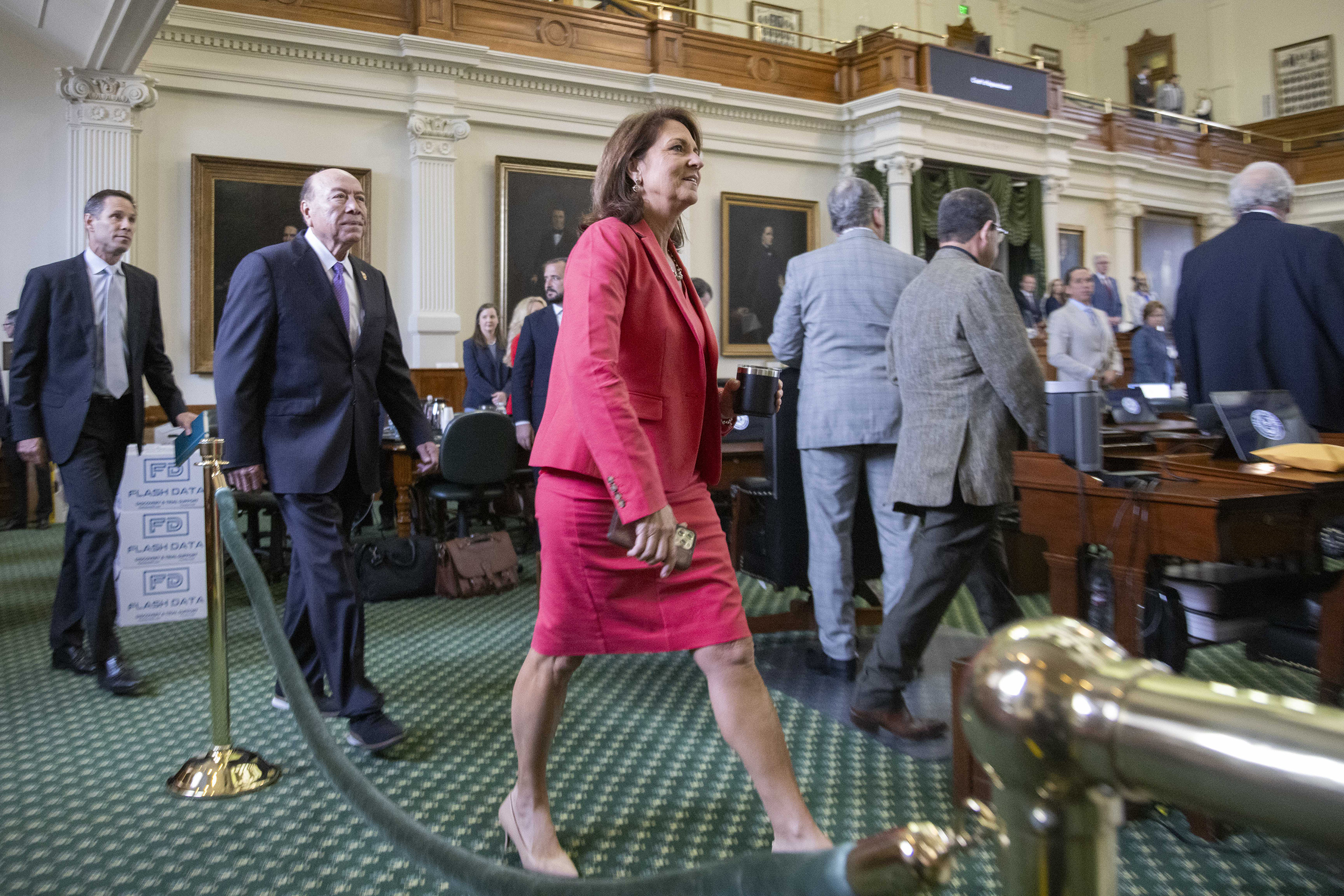
Listening to the evidence, Johnson recalls thinking, “my goodness, this is a powerful office,” he said at a primary debate put on by the Richardson Area Democrats. “It could be as powerfully good under the right leadership, as it has been powerfully bad under Ken Paxton.”
Not everyone agrees the office has been powerfully bad under Paxton, who opted against reelection to run for the U.S. Senate. Over nearly 12 years running the agency, Paxton has groomed it into a hard-charging, conservative attack dog that has tested novel legal strategies to push right-wing causes through the courts. His office filed more than 100 lawsuits against the Biden administration; sued to shut down left-leaning nonprofits and advocacy groups; tried to enforce Texas’ abortion and gender-affirming care laws beyond state lines; and tried and failed to overturn the results of the 2020 election.
“You look at the Texas attorney general’s office, this is the largest legal power in the conservative movement, nationally, period, end of story,” Adam Piper, executive director of the Republican Attorneys General Association, told the Tribune in February. “This is not just about the boundaries of Texas. This is about the entire conservative legal movement and how we promote, protect and preserve freedom for future generations.”
Middleton, who did not respond to requests for comment, is promising all the partisanship with none of the Paxton. In the primary, he papered the state with ads portraying himself as “MAGA Mayes” and has vowed to use the agency to enforce Trump’s agenda nationwide, selling himself as Paxton’s ideological successor without the legal or ethical distractions.
“I am 100% pro-Trump,” he told NBC DFW in May. “From Day One, I’ve said I’ll use every resource and tool to back up the president, back up his fight to secure our border, to deport illegal immigrants, the list goes on.”
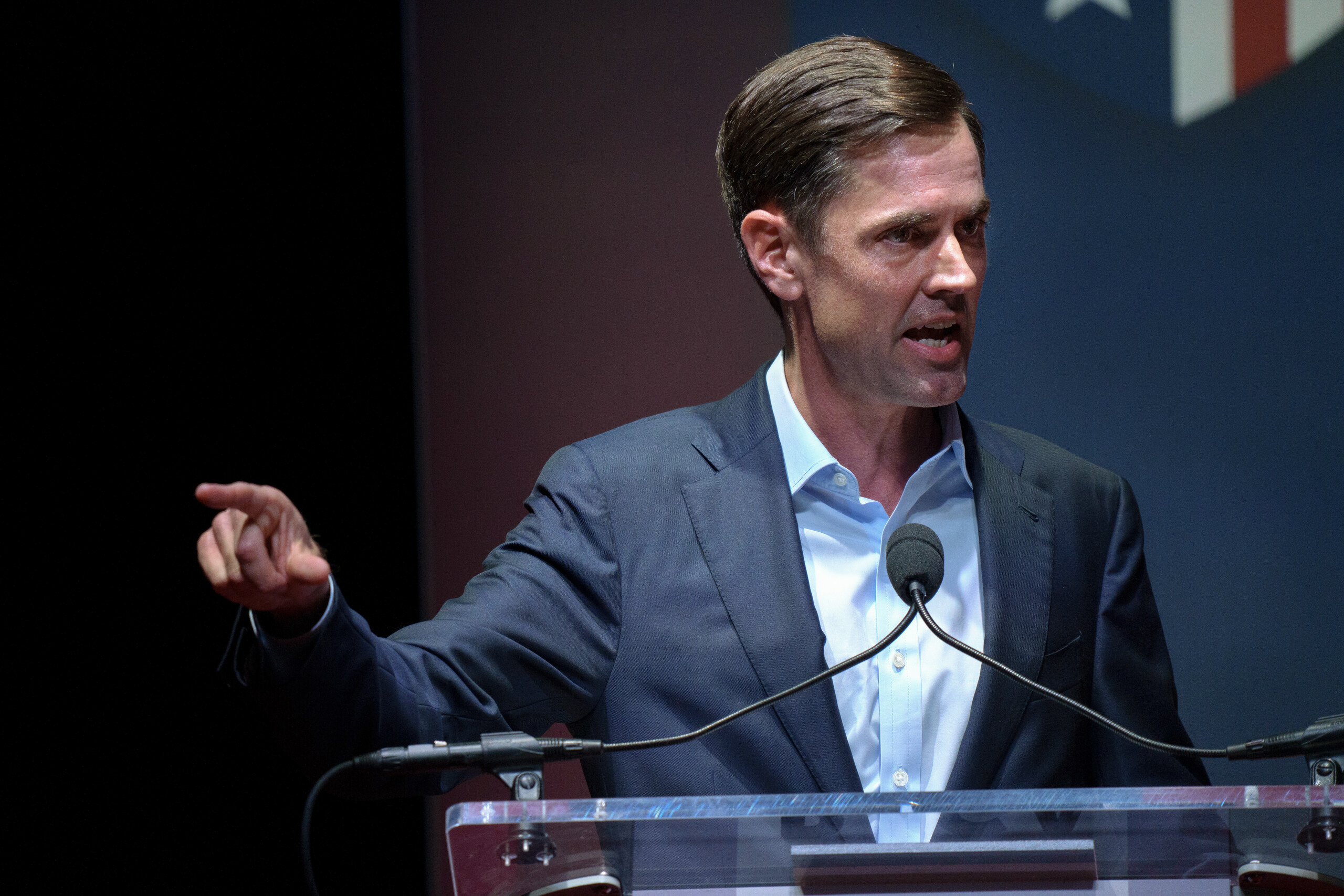
To Johnson, that should be disqualifying.
“I take Mayes Middleton at his word that he wants to use [the office] to defeat the left, which means he’ll be scouring the world for any kind of policy that irritates him and his base, and look for a way for the attorney general’s office to mess with it,” Johnson said.
Johnson says he was thrilled when Middleton tied himself so closely to Trump in the primary, anticipating that this midterm election year would require candidates to appeal to the middle of the road to get over the finish line. He observed that Middleton has pulled back on his “MAGA Mayes” ads in the general election — although, it should be noted, Middleton is hardly running ads at all.
After spending more than $20 million of his own wealth to defeat U.S. Rep. Chip Roy in the primary and runoff, Middleton seems to be keeping his powder dry in the general, dropping just $34,000 on ads and putting no additional money into the race.
On social media, he has focused his attacks on James Talarico, the Democratic nominee for U.S. Senate, only mentioning Johnson in connection with the man at the top of the ticket. He’s noted Johnson and Talarico both opposed a bill that limited how much tax revenue local governments could collect, and sought to paint Johnson as soft on crime, accusing Democrats “from James Talarico to my Democrat opponent” of voting to “allow the police to be defunded” — a reference to their votes against a GOP bill that penalizes large cities for reducing police budgets.
With Middleton off the airwaves, Johnson released his first television ad this week, a 30-second spot that portrays his opponent as a right-wing zealot, with “a seven-figure ad buy” behind it, according to the campaign. Johnson had about $1 million in his campaign account as of late September, a little under half of Middleton’s war chest. (One of Johnson’s bigger donors is Carona, the Republican who once held his seat in the state Senate.)
While the Democrats have led in public polls of the U.S. Senate race and even in some surveys of the governor’s race, Johnson has yet to surpass Middleton in a poll. But there are voters still up for grabs — 8% of likely voters hadn’t made up their minds, double the undecided share in other statewide contests, in a September poll that found the attorney general race within the margin of error.
What Johnson would do in office
Over the summer, Johnson rolled out a sweeping plan to use the attorney general’s office to rein in artificial intelligence, and began calling for an audit of the state’s broadband funding over concerns that Elon Musk got a friendly deal. After the Department of Public Safety announced that it had failed to send more than 150,000 voter registration applications to county registrars, Johnson said, if elected, he would audit Deloitte and other state vendors that built the underlying software systems.
“My strategy is to let them be crazy and unproductive, and run from my side as the serious guy,” he said. “I think people are tired of being treated like they’re stupid.”
Paul Nolette, a political science professor at Marquette University who studies attorneys general, said these once-bureaucratic agencies have become major political players on both sides of the aisle — and that’s ultimately what voters expect.
“These offices are nationalized now. There’s just no way around it,” Nolette said. “The political incentive is not there to be more state-focused. Saying ‘I care deeply about the state and its residents’ works for the middle, but that’s not who turns out.”
Partisan lawsuits are hardly the exclusive domain of Republican attorneys general — New York, California and other blue states have aggressively sued the Trump administrations, and the attorneys general there have run on those records as much as Paxton has run on his record against Biden.
Johnson said he would join lawsuits against the Trump administration if necessary, but tried to draw a distinction between that and the political lawsuits he has been so critical of from the other side.
“My approach will not be to sue the president for fun. I have no desire to waste my time tying up resources in litigation against the federal government if I don’t have to,” he said. “Whereas Paxton’s approach was sue, investigate, put out a press release with an irresponsible headline, every six hours.”
Johnson’s posture toward the Trump administration, Nolette said, would matter less than the mere fact that his election took the agency out of GOP hands. He would have the power to neuter state laws that require the attorney general to enforce them, such as Middleton’s “bathroom bill” that limits what facilities trans people can use.
Johnson has singled out that law as one he would not devote resources to enforcing, drawing criticism from Middleton, who told the crowd at a recent event that Johnson would “fight to get men in your little girl’s restroom and locker room.”
On the campaign trail, Johnson and Middleton are both touting the importance of the attorney general’s office to the future of the state, trying to remind voters about this down-ballot race. Johnson is betting that voters, when educated, will want something different than they’ve had for the last 12 years.
“Ultimately, people are going to say, this is about the rule of law, and this guy Nathan Johnson seems like he’s serious about it,” he said. “And this guy Mayes Middleton doesn’t.”
Disclosure: Deloitte has been a major financial supporter of The Texas Tribune. John Carona has been a financial supporter within the past five years. The Texas Tribune is a nonprofit, nonpartisan news organization that is funded in part by donations from members, foundations and corporate sponsors. Financial supporters play no role in our journalism. Find a complete list of them and more information about our financial and disclosure policies here.
This article first appeared on The Texas Tribune.