
What Earth Reveals When Humanity Loses Its Ego
by George Cassidy Payne

Every generation has imagined itself to be living at the center of history.
We inherit the conviction that our age is somehow different from every age that came before it. We celebrate our discoveries, mourn our tragedies, argue over our politics, build our cities, and develop technologies that would have seemed miraculous to our ancestors. We measure our lives against the headlines of the day and often assume that history itself is bending around our particular moment.
And yet there is another way of looking.
Imagine standing far beyond the atmosphere, looking back toward Earth from the quiet darkness of space. The continents are recognizable. The oceans shimmer in blue. White clouds drift across familiar coastlines. Day slips into night without fanfare. Storms gather and dissolve. The planet turns with patient indifference.
Now imagine looking at that same Earth not only today but one million years ago, 150,000 years ago, 50,000 years ago, 1,000 years ago, and 500 years ago.
The perspective barely changes.
The Earth remains astonishingly constant even as human history races across its surface.
That thought experiment became the foundation for an infographic I recently created. It presents six nearly identical images of our planet viewed from space, each representing a different era in human history. Alongside each image are defining moments from those periods.

One million years ago, early human species, including Homo erectus, lived across parts of Africa and Eurasia. Around 150,000 years ago, early populations of anatomically modern humans lived across Africa, laying the foundations for later migrations and cultural developments. By 50,000 years ago, symbolic expression, sophisticated tools, ritual practices, and long-distance migration were transforming human life.
One thousand years ago, kingdoms flourished, global trade networks expanded, and major religious and cultural traditions shaped societies across continents. Five hundred years ago marked the Age of Exploration, the spread of the printing press, the beginnings of the Scientific Revolution, and the expansion of European colonialism. Today we inhabit an interconnected world shaped by digital technology, globalization, and unprecedented scientific knowledge.
The images are intentionally repetitive.
From orbit, Earth reveals almost none of the distinctions that dominate human history. The boundaries that consume our political imagination do not appear. Empires leave no visible outline. Religions cast no shadow across the oceans. Economies, elections, currencies, ideologies, and social media debates disappear beneath the clouds.
Our stories unfold on a remarkably thin layer of atmosphere wrapped around an ordinary planet orbiting an ordinary star.
Yet there is another perspective worth considering.

A Messenger from Mercury? The Wad Alhath Aubrite Pegmatite. What we know for sure is that this is a very usual meteorite, made of creamy crystals, it’s an extraterrestrial pegmatite.
The million years represented in this infographic encompass nearly the entirety of recognizable human evolution. And yet one million years accounts for only about 0.02 percent of Earth’s 4.54-billion-year history. In geological terms, humanity has appeared only in the closing moments of an unimaginably long story.
This is not an argument that human life lacks significance.
Quite the opposite.
Its significance changes when viewed through the lens of humility.
Modern culture often encourages us to think in terms of scale. Bigger accomplishments, larger audiences, greater wealth, faster innovation, and more influence become the measures by which we judge ourselves. We are taught to leave a mark, build a legacy, and become unforgettable.
Yet the universe seems to operate according to another logic altogether. Mountains rise and erode without applause. Forests flourish without recognition. Stars are born and die without witnesses. Entire species emerge, adapt, and vanish over spans of time so vast that human civilizations resemble passing weather.
Against that backdrop, our achievements become both smaller and more beautiful.
A single act of kindness matters not because it alters the trajectory of the cosmos but because it transforms the life of another conscious being sharing this brief moment with us.
A conversation between friends. A child learning to read. A nurse comforting a frightened patient. Someone planting a tree whose shade they will never enjoy.
These moments rarely appear in history books, yet they may be closer to the true measure of a meaningful life than any monument or empire.
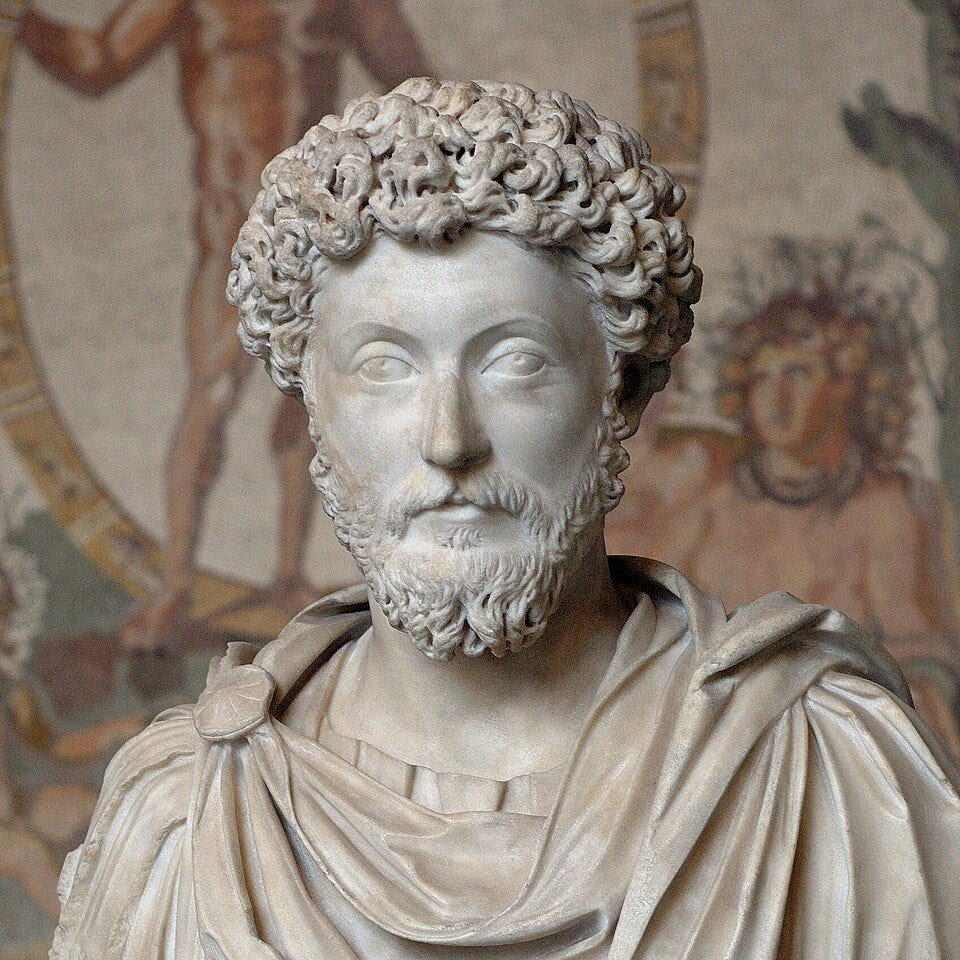
Marcus Aurelius
The ancient Stoics understood something like this. Marcus Aurelius repeatedly reminded himself to imagine the Earth from above, observing the endless cycles of birth and death, commerce and conflict, celebration and grief. This exercise was not meant to produce despair but freedom. When viewed from sufficient distance, many of the anxieties that dominate daily life lose their grip.
In Meditations, Marcus Aurelius wrote, “The whole universe is change, and life itself is but what you deem it.” His reflection was a reminder that permanence is an illusion and that wisdom comes from aligning ourselves with the larger movement of existence.
Centuries later, astronauts would offer humanity an actual version of this thought experiment.
The famous photographs of Earth taken from space transformed more than science. They transformed consciousness.
For the first time, billions of people could see what philosophers had long imagined: one fragile world suspended in darkness without visible borders or divisions.
Carl Sagan captured this beautifully when reflecting on the “Pale Blue Dot.” He wrote:
“Look again at that dot. That’s here. That’s home. That’s us.”

Every conqueror and every peasant, every saint and every sinner, every inventor, artist, philosopher, child, lover, and dreamer who has ever lived occupied a tiny fraction of that distant point of light.
Not one of us has ever stood outside it. Not one civilization has ever escaped its dependence upon it. That realization should inspire neither arrogance nor nihilism. It should cultivate gratitude. The Earth owes us nothing, yet it has given us everything.
Every poem has depended upon its forests. Every symphony upon its atmosphere. Every scientific discovery upon generations of curious minds sustained by its soil and water. Every act of love has unfolded beneath its sky.
Our technological achievements, remarkable as they are, have not liberated us from nature. They remain, in one philosophical sense, expressions of nature becoming conscious of itself.
Perhaps this is why humility is not the same thing as self-negation.
Humility does not ask us to think less of ourselves. It asks us to think of ourselves more accurately.
We are neither the center of the universe nor insignificant accidents drifting through it. We are participants in an unfolding story that began billions of years before our arrival and will continue long after our departure.
To recognize this is not to diminish human dignity but to deepen it.
We become free to exchange the exhausting pursuit of personal importance for something quieter and more enduring: participation.
Instead of asking whether history will remember us, we begin asking whether we have contributed something worthwhile during the brief span entrusted to us.
Instead of striving to dominate the world, we learn to care for it. Instead of seeking permanence, we embrace stewardship. That is the lesson hidden within the unchanged image of Earth.
History matters. Science matters. Politics matter. Justice matters. Culture matters. Every struggle for human dignity matters. But none of these realities exists apart from the larger context that holds them all together.
Our disagreements are real. Our identities are meaningful. Our aspirations deserve respect. Yet beneath every difference lies the same shared inheritance: one small planet traveling silently through an immeasurable universe.

Rachel Carson
The environmental thinker Rachel Carson understood this sense of connection when she wrote, “In nature nothing exists alone.” Her words remind us that humanity is not separate from the Earth but woven into a living system of relationships that sustains every breath and every generation.
Looking at Earth from space may be one of the greatest exercises in attention humanity has ever been given.
It reminds us that every generation believes itself to be exceptional, yet every generation inherits the same home.
It reminds us that civilizations are temporary, while the conditions that sustain life are precious.
It reminds us that our greatest achievements will ultimately be measured less by what we conquered than by what we preserved.
The infographic I created is, in the end, less about history than perspective.
From space, Earth looks almost unchanged. From within it, every moment is an opportunity to become a little more compassionate, a little more curious, and a little more humble.
That may be the most enduring legacy any of us can leave.
George Cassidy Payne is a journalist, essayist, poet, and community storyteller whose work explores the intersections of human connection, philosophy, nature, and social change. A graduate of St. John Fisher University with two master’s degrees in the liberal arts, George has spent more than two decades working as an educator, counselor, nonprofit strategist, and advocate.