An unprecedented data center boom means new challenges for Texas. Find out what’s planned near you.
By Emily Foxhall, Apurva Mahajan and Alex Ford, The Texas Tribune
June 8, 2026
Late last year, Texas electricity officials faced an astonishing rush of requests from data center developers wanting to connect to the state’s grid. The Electric Reliability Council of Texas, the grid operator, was logging dozens of new requests each quarter from companies that sought to pull more electricity than traditional data centers did — by a long shot.
ERCOT President and CEO Pablo Vegas called it “an unprecedented change in the pace of growth.”
Developers and speculators had been buying up land across the state, looking to cash in on a chance to construct massive warehouses filled with computers to power artificial intelligence for companies such as Meta, Amazon and Google. Older, smaller data centers ran the Internet. Artificial intelligence and cloud computing demanded much more.
The proposals kept coming. ERCOT in the last two years received 519 requests to connect large electricity users, compared to 24 such requests the year before that, according to its records as of May. The estimated electricity that large projects could need added up to a gobsmacking 438,595 megawatts — which would equal roughly a third of all the power generation in America.
Ninety percent of that was for data centers, most of which aimed to start operating by 2030.
ERCOT maintains that not all of those projects will come to fruition. But no one knows the real number that will ultimately connect to the grid, or how much power they’ll need. ERCOT’s board last week voted to change its policies for how it will review data center requests, partly in an effort to get to a more realistic expectation of how many will be built.
“The projections are insane,” said Dominic Boyer, a cultural anthropologist at Rice University who studies energy politics. “Not all of that will be built, but just even the fact that that much is being proposed sort of suggests that there is this absolute sea change happening in terms of electricity demand.”
The explosion in data center projects is tied to Texas becoming “one of the national leaders in digital infrastructure,” said Dan Diorio, vice president of state policy for the industry association, the Data Center Coalition. The state’s business-friendly regulatory environment and ability for companies to build needed energy infrastructure relatively easily attracted projects. So did its strong workforce and available land, water and fiber infrastructure, Diorio said. The Dallas-Fort Worth region in particular grew as a major market.
So many of these bigger, next generation data center projects are planned for Texas that the state could surpass Virginia for the title of the world’s largest data center market by 2030, according to a report by real estate and investment management firm JLL. Gov. Greg Abbott has touted Texas as “the epicenter of AI development” and some local officials have celebrated their arrival.
“Our competitive advantage as a state is also the source of our biggest planning challenge,” said Matt Boms, executive director for the Texas Advanced Energy Business Alliance, which advocates for clean energy policies and represents some technology companies. “So there’s a bit of a paradox there. But it’s a good problem to have. I think a lot of other states would kill to have that kind of problem.”
Not everyone agrees. Community advocates fighting to stop data centers fear the projects will spike Texans’ electric bills and make the grid less reliable. They envision a nightmare in which data centers suck up massive amounts of water, emit constant noise and spew pollution from on-site, gas-fueled power plants and backup generators.
Industry leaders say data centers create jobs, especially during construction of the behemoth sites. The facilities, which by the state’s count will receive billions of dollars worth of tax breaks, still pay billions of dollars more in state and local taxes.
There are at least 248 planned data centers coming to Texas, based on a review of facilities compiled by two companies that track the industry, along with Tribune research. ERCOT does not share detailed site information publicly, and the companies’ findings only found power use estimates for less than half of the projects.
Among the new projects, 86 are planned in North Texas, 56 in Central Texas and 45 in West Texas. The vast majority are planned in urban and suburban counties with more than 50,000 people. About half are aimed at unincorporated areas, which have limited means for regulating them compared to cities.
Some massive projects are already under construction: A sprawling facility in Abilene plans to use grid power plus on-site gas power and batteries to get up to 1,200 megawatts of electricity — enough to power roughly a third of the households in the city of Houston, according to census data.
Another huge campus outside Amarillo planned by former Texas Gov. Rick Perry’s company, Fermi America, could need up to 11,000 megawatts of power — enough to power 2.75 million homes, which is more than the number of households in Houston, Dallas, Austin and San Antonio combined. A third project in oil-and-gas-dominated Pecos County could use more than 5,000 megawatts.
All three will build at least some on-site, gas-fueled power plants, which emit carbon dioxide that contributes to climate change. Two of the project websites say they will cycle water through their systems. The project in Abilene said it will require 8 million gallons of city water to fill initially — which it said is the amount a large office uses in a year.
“Texas has been one of the best and easiest places to move those projects forward,” said Cully Cavness, co-founder of data center developer Crusoe, which is building the Abilene project, at a panel in March. “It’s never easy, but it is relatively smoother here than many other states.”
A potential strain on resources
The sudden propagation of data centers reaching every corner of the state threatens issues that matter to Texans.
It raises triggering questions about the reliability of the grid, which failed during a 2021 winter storm when ERCOT cut power to millions in the freezing cold. It could transform quality of life, from suburban subdivisions to rural farms, where Texans want to protect their communities from construction traffic, noise pollution and industrial blight. And it renewed fears about water supply, as some parts of the state navigate an impending crisis.
“A lot of the sentiment that I’m hearing from those that don’t want data centers… is like, ‘You’re telling me, you know, you want to build this big thing in my community that’s going to take all the energy and take the water to build the technology that’s going to take the jobs away from my kids?” said Joshua Rhodes, a research scientist at the University of Texas at Austin. “That’s what I’m hearing a lot of people are feeling, and some of that’s just because this technology is so new. We just don’t know what it’s going to do.”
Some experts warn data centers have the potential to help push the state’s fragile water supply to the brink — especially in Texas’ more arid regions. Population and economic growth are already driving more demand for water, and scientists have found climate change is intensifying droughts.
Texas made its largest financial commitment to expanding water supply last year, dedicating up to $20 billion for water projects over the next two decades. But that amount falls short of the $174 billion needed over the next 50 years, according to a projection in the draft of the 2027 state water plan.
Water experts say data centers will put more pressure on Texas’ water supply. One estimate shows data centers could account for between 3% and 9% of Texas’ total water use by 2040 — up from less than 1% today, according to a recent white paper from The University of Texas at Austin. By comparison, manufacturing accounts for about 7% of the state’s water use, according to the current state water plan.
Data centers demand significant amounts of water to keep their systems cool, though the industry argues its technology is improving with time to require less water. Some are proposing to use closed loop systems — which draw a large amount of water at the start but reuse it over some period of years — but Texas does not require projects to use that technology. Others run instead on cheaper evaporative cooling systems that more consistently replenish their water supply.
How much water a project can use is governed locally by various entities such as utilities, special districts and river authorities.
“Data centers are among the most efficient water users,” Diorio said, citing research that he said found they use less water than semiconductor manufacturing, food and beverage production and annual municipal water system leaks. “Data centers will continue to deploy advanced cooling technologies that are water efficient and continue to invest in water sustainability practices.”
Higher demand for electricity
The new data center projects are requesting considerably more power than those of yesteryear.
A Tribune analysis found that of the planned and existing data centers that provided information about their power draw, the average facility will require five times more capacity than the average existing data center in Texas.
Among the existing data centers in the analysis, the upper limit for power capacity is 1,200 megawatts. But among planned data centers coming online, the max is nine times that.
Historically, developers went to regional utilities with their connection requests, and the utilities studied whether they had enough infrastructure to supply each project and communicated with ERCOT. But that process became untenable as requests piled up.
Pending approval from regulators, ERCOT now is proposing to study proposals itself in batches so it can better evaluate how much overall power demand they will represent. Vegas, the ERCOT CEO said Tuesday that projects seeking to draw about 100,000 megawatts of power would qualify to be in the first group to be reviewed by ERCOT by April.
“It’s just this big tsunami wave (of projects) that is impending, and trying to crash down, and historically that was coming directly on the utility,” said Beth Garza, a senior fellow with the R Street Institute who also represents residential customers on an ERCOT committee. “Now with the implementation of the batch process, ERCOT is a little bit of that seawall in front of the utilities.”
Under the new rules, to be considered by the Public Utility Commission of Texas, developers would first have to pay ERCOT $50,000 per megawatt proposed and prove they have leased or purchased the land for their facilities. Vegas described the new process as a potential solution to a national problem of how to balance economic benefits with grid reliability.
“This is an issue that is affecting the whole globe and certainly the country,” Vegas said. “Everybody is trying to figure out how to do this in a reliable, stable way.”

In their review, ERCOT will figure out how many more power lines and related infrastructure need to be built to meet the additional demand. Some of that cost could be added on top of what researchers found are already rising electric bills for Texas power customers — residential consumers currently pay more of those costs than industrial ones.
It’s not clear how much of the infrastructure bill data centers will pick up, and regulators are evaluating the issue. Some experts have advocated for more of it to fall on companies to ensure affordability and support a variety of additional, local solutions such as investment in energy efficiency so people use less electricity at home.
“We can solve it,” said Margo Weisz, executive director of the Texas Energy Poverty Research Institute, a nonprofit that works on making electricity more affordable. “Whether we will solve it is another question.”
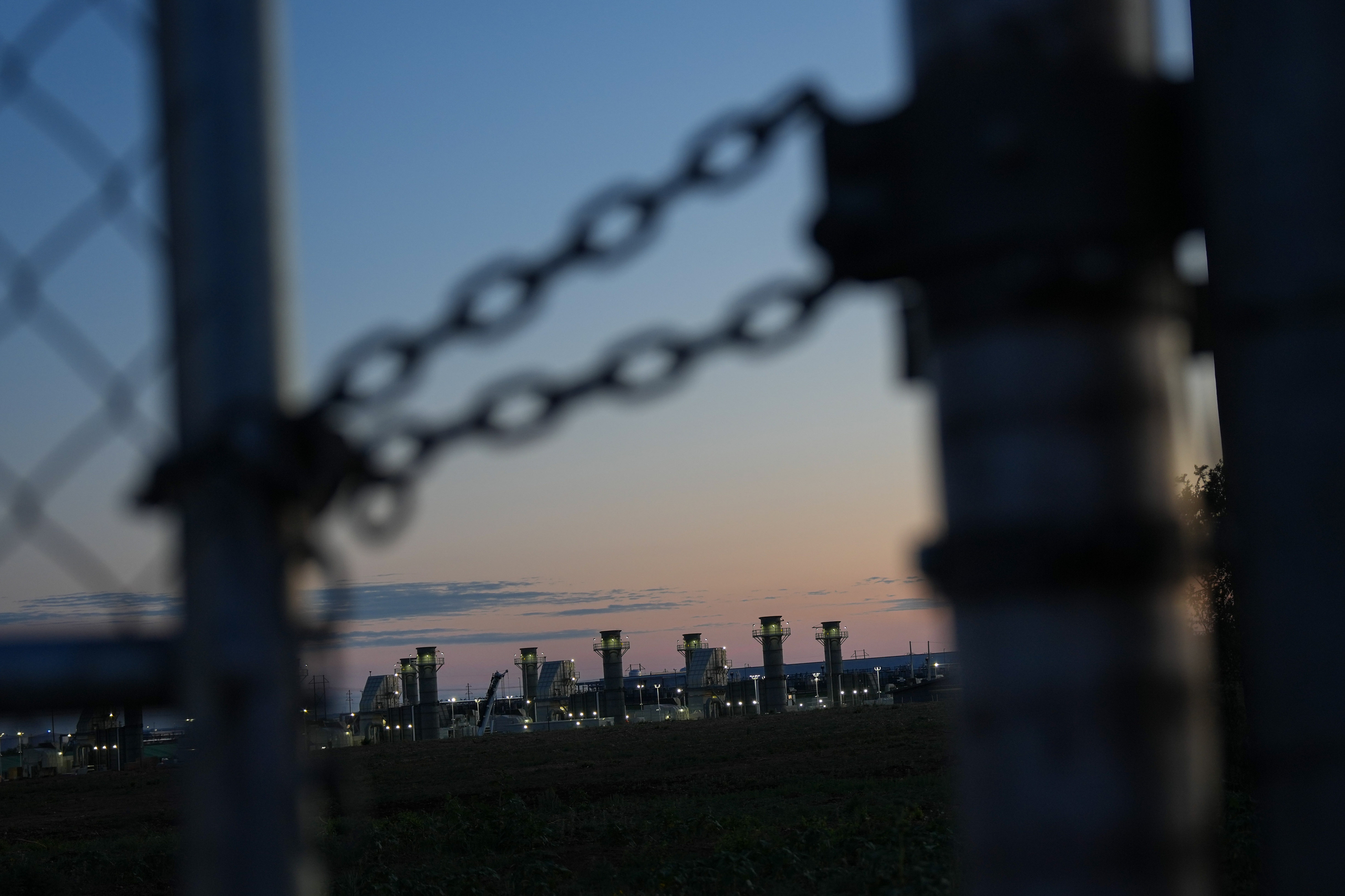
Other data center projects could meanwhile sit apart from the grid entirely by building their own power generation, such as gas-fueled power plants. Some projects also plan to install back-up diesel generators in case of power outages.
ERCOT won’t be assessing whether there’s enough electricity available to serve data centers’ needs. It’s operating on the assumption that the market will meet the demand: the opportunity to make money selling power to these new customers will incentivize other companies to build more power generation, whether it’s gas-fired power plants, solar and wind farms or battery facilities.
Legislators also passed a provision last year allowing ERCOT to direct large data centers that have backup power to cut back their grid use during emergencies.
Andrew Mahaleris, spokesperson for Abbott, said in a statement that protecting water and power needed by Texans will take priority over attracting investment.
“Governor Abbott will continue to work with the Legislature to protect Texans and ensure their voices are heard,” Mahaleris said.
Local resistance
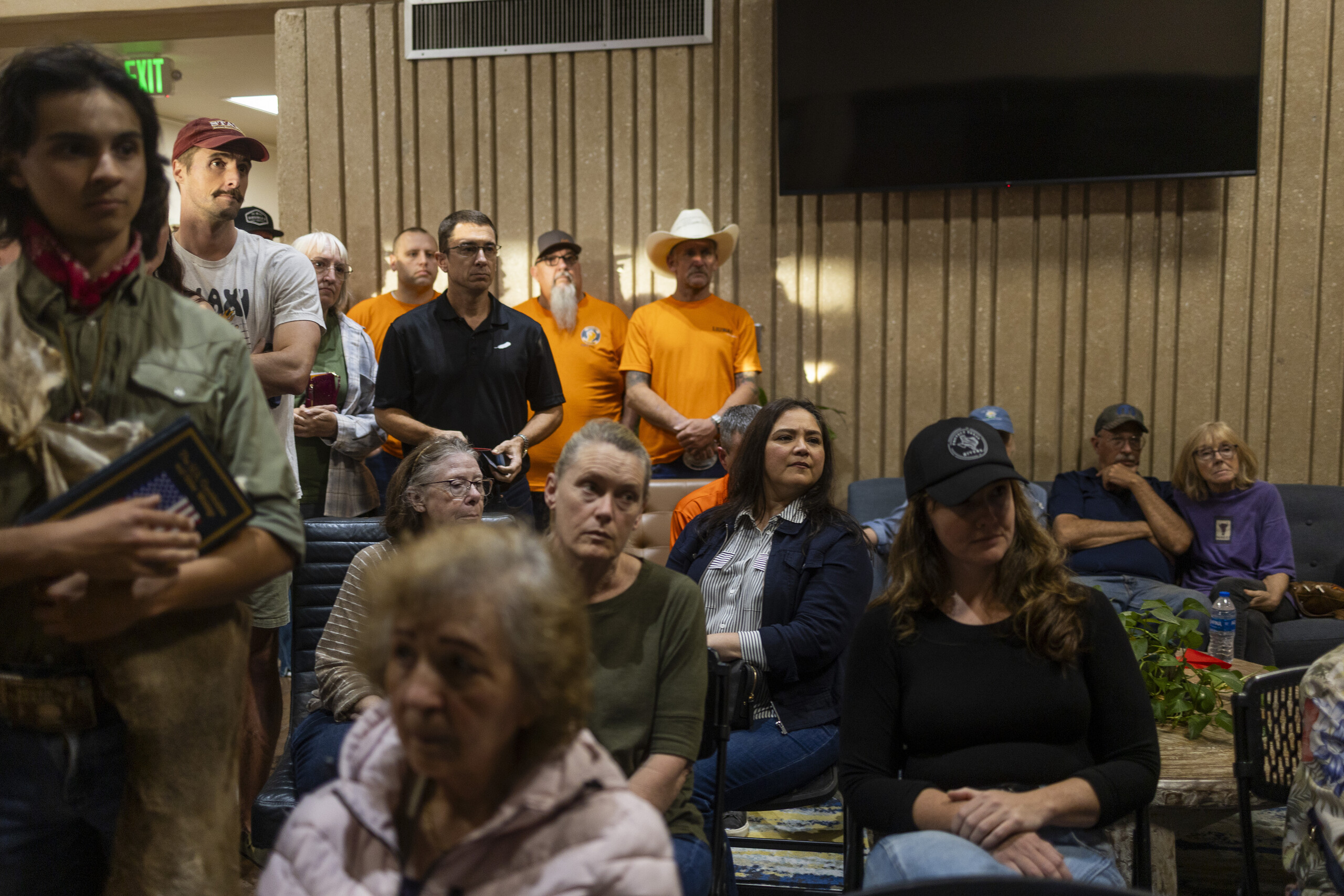
In February in San Marcos, just south of Austin, residents packed City Hall to protest a proposed data center that would have consumed more than 25 million gallons of water annually — in their view, threatening the city’s beloved namesake river that flowed through town.
One protester wore a blow-up salamander costume, referencing the endangered Texas blind salamander native to the river. A crowd of hundreds outside sang, chanted and held signs that read “Keep San Marcos wet” and “2 dry 4 AI.”
Inside, residents told council members over an eight-hour meeting to reject the zoning change needed for the project to move forward.
“All of us met at the water, and that’s what brought us here,” said Randi Finn, who was running a childcare station at the protest for parents who wanted to testify against the center. “We want these springs to be here for our kids and for our grandkids.”
Similar scenes have played out across Texas, from Round Rock to Waco to Athens. Residents aren’t willing to wait for legislators, who have vowed to look at data center issues before the next regular session begins in January.
The trouble is, when it comes to protecting quality of life, Texas gives cities and counties markedly different powers. Cities such as San Marcos have zoning powers that allow them to deny projects. San Marcos council members voted the proposal down.
But outside of city limits, counties — where a large number of the proposed data centers plan to build — have little power to control where or how projects are built.
County leaders can vote down tax abatement agreements, removing some of the economic incentive, but that wouldn’t block a company from building a data center.
State lawmakers — many of them Republicans stuck between outcry from communities that don’t want these projects and a president who does — have not shown much interest in giving counties more regulatory power.
Roughly two-thirds of the projects are slated for counties that voted in 2024 for President Donald Trump, according to the Tribune’s analysis, creating headaches for Texas’ Republican majority.
Some county leaders have considered how to block or slow projects. But when Hood County commissioners tried to pass a moratorium on data center projects, Republican State Sen. Paul Bettencourt fired off a threatening letter to the attorney general arguing they had no right to do so. Other counties weighing moratoriums dropped the idea; one that went through with it got sued by the developer and revoked its own moratorium.
“There’s an underlying no-growth philosophy — that’s not a majority of the party but it’s there — that’s driving this,” said Bettencourt, who represents part of the Houston area. “That’s not good public policy long-term.”
In Caldwell County, where at least three data center projects plan to locate, County Judge Hoppy Haden said he’s lost so much sleep over the issue that he now has big bags under his eyes. He’s taken heat from citizens at town halls where he feels made out to look like he’s pro-data center when really he just has little authority to slow or stop problematic projects in his county south of Austin best known for Lockhart barbecue.
“I would be a liar if I said that didn’t bother me because it does,” Haden said. “I’m just as concerned as everybody else and we’re doing what we can and certainly we’re not just sitting around hoping they go away.
“All the town halls in the world are not going to make these guys go away, unfortunately,” he added. “We have to come up with solutions to the issues that they create. Because they’re going to still come.”
In Hays County, which straddles Interstate 35 south of Austin and includes San Marcos, Judge Ruben Becerra wanted to set up his own county department to review the projects to make sure they can be run sustainably. He knew the county’s existing development services office that usually handles requests for say, an H-E-B distribution center, wasn’t equipped to understand the impacts of a data center.
“Theres no world where I’m going to sit idle, sit on my hands, and watch it happen, without at least fighting for our communities,” Becerra said, adding, “Do I have the statutory authority to do X, Y, Z? I really don’t care. I’d rather push hard and ask for forgiveness than to lay down and say, well I can’t do it, and throw my hands up in the air and say well it’s up to the [Legislature] and I’ll wait for 10 more years to see if something actually happens.”
ABOUT OUR DATA SET
The Texas Tribune acquired information on data centers from Cleanview and Data Center Map, two companies that compile and sell data on operating and planned data centers. The Tribune joined these datasets based on location and manually identified and removed duplicates that appeared in both sources. This data was filtered to data centers that had latitude and longitude coordinates, which were used alongside Census data to determine the types of areas data centers are being built in. The data was supplemented with other data centers identified with Tribune reporting.
Paul Cobler and Alejandra Martinez contributed reporting.
Disclosure: Google, H-E-B, Rice University and the University of Texas at Austin have been financial supporters of The Texas Tribune, a nonprofit, nonpartisan news organization that is funded in part by donations from members, foundations and corporate sponsors. Financial supporters play no role in the Tribune’s journalism. Find a complete list of them here.
This article first appeared on The Texas Tribune.