
As Corpus Christi scrambles to find more water, nearby cities are facing their own water woes
By Colleen DeGuzman, The Texas Tribune
April 17, 2026
As a historic drought in South Texas deepens, parched cities along the coastal bend are following Corpus Christi’s playbook and racing to drill their way out of a crisis.
But as more and more cities turn to groundwater instead of surface water, experts warn that they risk exhausting the area’s aquifers and should only use wells as a temporary solution.
Alice is working on getting a second well online by May. Mathis is currently drilling two. And Beeville, which already has four, finished drilling a new well this week and is expected to begin pulling water from it by the end of the year. It also has two offline wells ready to use as backups.
The rural cities are following in the footsteps of Corpus Christi, the region’s largest city and its biggest water supplier, which recently scrambled to drill around a dozen wells to meet demand.
The city is under pressure to find new sources of water for its 300,000 residents, as well as 200,000 other customers that its water system serves across seven counties — and that doesn’t count one of the nation’s largest petrochemical corridors and the country’s top port for crude oil exports.
Alice, Beeville and Mathis are among Corpus Christi’s water customers.
The city’s main reservoirs — Lake Corpus Christi and Choke Canyon Reservoir — have shriveled to 8% capacity during the drought and the city is depending on a patchwork of temporary solutions to meet demand, including the wells. City Manager Peter Zanoni has said the city is within months of declaring a water emergency, the point at which it has just 180 days’ worth of supply left.
As cities turn to groundwater, water experts are warning that the aquifers won’t be able to adequately recharge during a deepening drought.
“If what goes in is less than what goes out through pumping, then you are going to see that resource depleting,” said Dorina Murglet, a professor of hydrogeology at Texas A&M Corpus Christi. She said cities should turn to groundwater only in an emergency.
Corpus Christi and Mathis’ wells tap into the Evangeline Aquifer. Alice’s wells draw water from the Jasper Aquifer, which sits below the Evangeline. Beeville has wells drilled into both.
It’s difficult to measure how much water is safe to pull from aquifers before depleting them, Murglet said, which is why it’s important for the cities to communicate with each other.
“Remember that political boundaries are not hydrologic boundaries,” she added. “It’s all interconnected.”
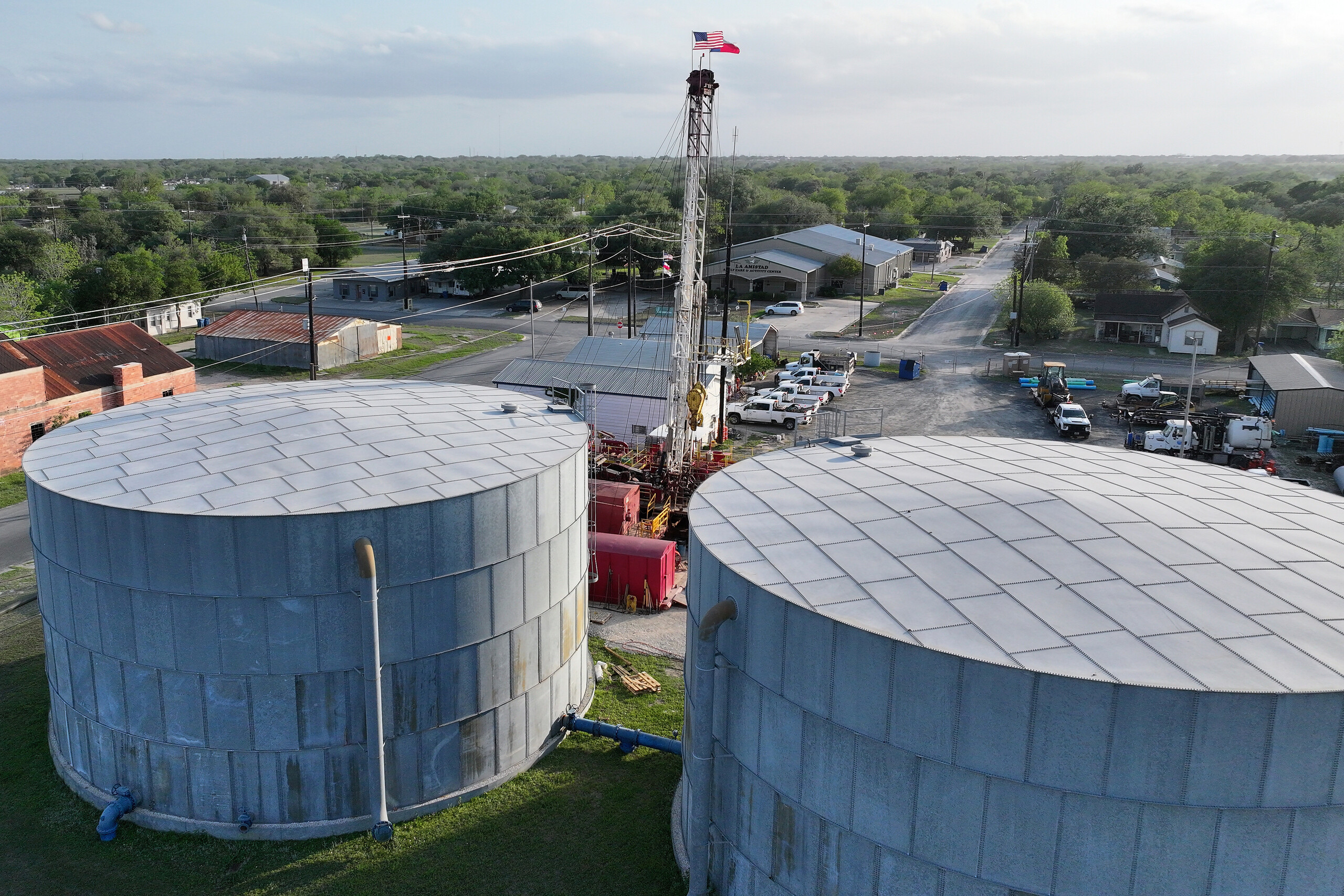
Beeville Mayor Pro Tem Benny Puente said the drought has not only pushed cities to drill their own wells, but it’s eroded their trust in Corpus Christi.
“They are a regional water supplier and for them to get to this point, to where we are running out of surface water, that’s pretty concerning,” he said.
Beeville has 13,000 residents and also has to supply water to a state correctional facility, one of its biggest consumers. The state has three units in Beeville, two pull water from their own wells while the McConnell Unit, with 400 employees and the capacity to hold around 2,300 inmates, uses city water. About a quarter of the city’s water supply goes to that unit.
Beeville has been purchasing water from Corpus Christi for decades, but if they don’t find new water sources, Puente said Corpus Christi may lose Beeville and other cities as customers.
“They’re not going to have our money anymore, so how are they going to pay for all of these upgrades that they had planned?” Puente said.
Cities that aren’t Corpus Christi water customers are also seeing the impacts of the dwindling reservoirs. In Three Rivers, which draws its water from Choke Canyon, Mayor Felipe Martinez issued a drought disaster declaration last week.
Orange Grove, west of Corpus Christi, which gets its water from the Evangeline Aquifer, and City Manager Todd Wright said that water has become saltier since Corpus Christi began pumping from the same aquifer.
“We are inching closer and closer to hitting that threshold to where we’re no longer technically quality drinking water, it becomes unsafe to drink,” Wright said.
Wright said Orange Grove is trying to purchase water from Alice, which has a reverse osmosis system that can turn salty groundwater into drinkable water.
The cities that have been depending on Corpus Christi for water say that they’ve been put in a tough position — and Puente said Corpus leaders could have prevented the shortage by imposing drought restrictions sooner.
Corpus Christi in December ordered residents to limit nonessential outdoor watering. Beeville’s mayor declared a water emergency two months earlier, in October. At that point, Puente said the city estimated it had 180 days until its water supply wouldn’t meet demand, but conservation efforts have pushed that back until the end of the year.

Seven months ago, Corpus Christi leaders scrapped a seawater desalination plant project after years of planning and investing tens of millions of dollars. Puente said the plant was critical for the region’s water supply.
“The failure of Corpus Christi’s City Council has affected not only their city, but it has affected our entire region,” Puente said. “I am disappointed in the way that they’ve handled this water situation, and things need to change fast. Desalination needs to happen right now.”
Mathis City Manager Cedric Davis has a different take.
“You can’t blame it all on Corpus,” he said, adding that there’s a lesson in this drought for cities like his: “the smallest cities have to diversify their water portfolio.”
Jeremy Mazur, the director of infrastructure and natural resources policy at think tank Texas 2036, agreed.
“Corpus Christi can only take you so far,” Mazur said. “If you want to have reliable water, you basically need to develop your own water supply.”
Cities’ water shortages are also having economic impacts.
Mathis, which is near Lake Corpus Christi, attracts thousands of Winter Texans every year who rent homes and RVs around the lake. Davis, the city manager, said many told him earlier this year that they’re reluctant to return.
Davis said a small city like Mathis, with around 4,000 residents, feels the loss of sales tax revenue and economic losses from fewer tourists.
“Some of them are saying they’re not coming back because they think the lake is going to dry up,” Davis said. “They come to live by the lake, which is not too much of a lake anymore. Now, it’s more of a pond.”
Disclosure: Texas 2036 has been a financial supporter of The Texas Tribune, a nonprofit, nonpartisan news organization that is funded in part by donations from members, foundations and corporate sponsors. Financial supporters play no role in the Tribune’s journalism. Find a complete list of them here.
This article first appeared on The Texas Tribune.