
Texas’ first review of college DEI ban doesn’t answer key questions about its impact
By Jessica Priest, The Texas Tribune
November 24, 2026
When Izabella De la Garza left San Antonio to attend the University of Texas at Austin, it was a culture shock.
She was doing well academically but struggled to find community after growing up in a predominantly Hispanic neighborhood. At the campus Multicultural Engagement Center, she made friends, connected with advisers and organized events for Latino students.
“I don’t know if I would have graduated if I didn’t have those programs or that sense of community,” she said.
But months after De la Garza graduated in 2023, UT-Austin leaders closed the center to comply with a new state law banning diversity, equity and inclusion offices and programs at public colleges and universities.
UT-Austin was hardly alone. Colleges across Texas closed student resource centers, cut support for campus groups serving students of color and LGBTQ+ students and stopped sponsoring graduation celebrations honoring those communities, leaving students to organize and fund events their schools once supported.
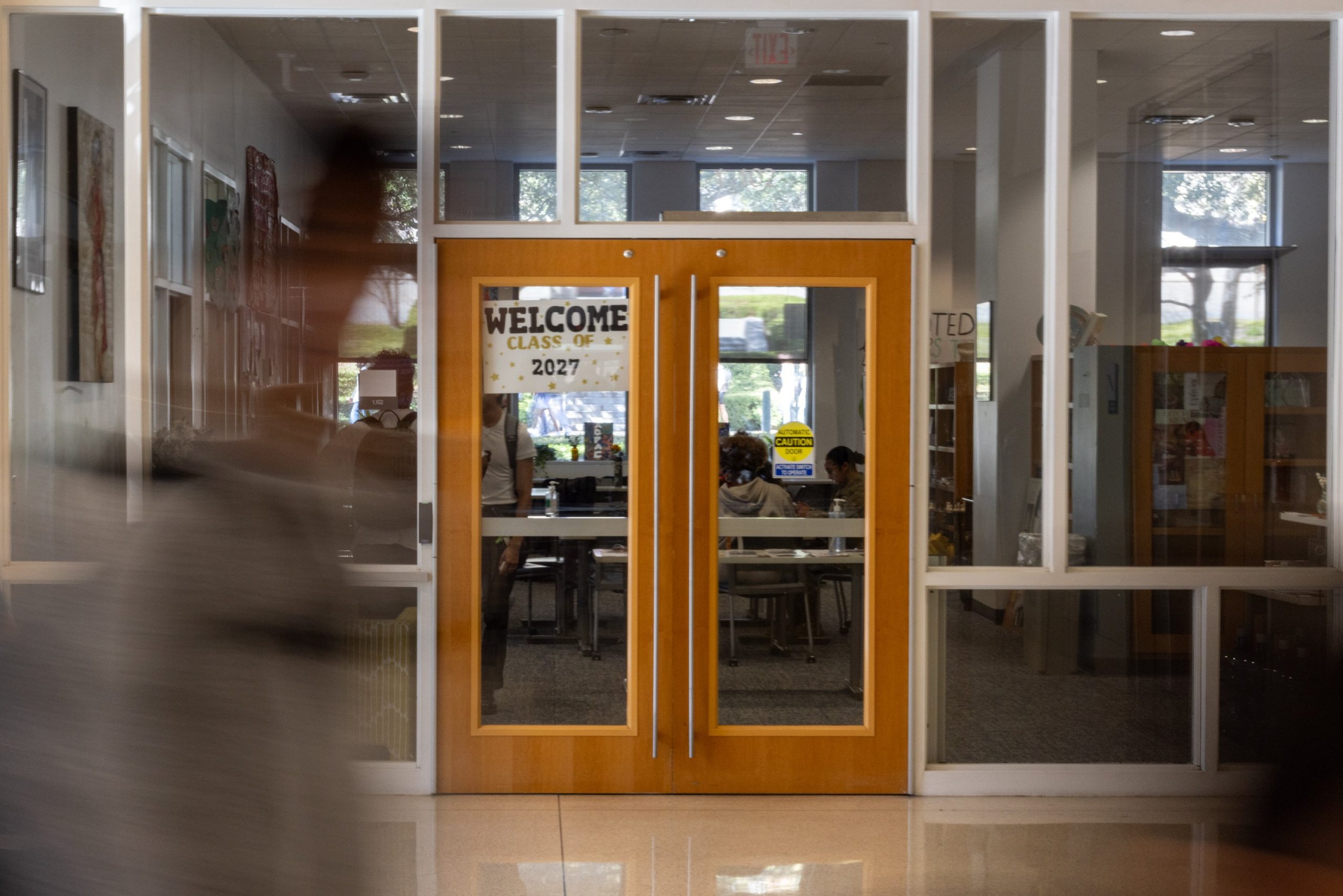
Texas’ first report examining student outcomes since the law took effect found that academic performance and retention rates held steady or improved at public colleges and universities. But the study cannot determine whether the ban contributed to trends, and the state may stop studying the law before it can fully measure its impact on graduation rates.
Meanwhile, public universities are accepting smaller shares of applicants across demographic groups, and those who gain admission are less likely to enroll, according to the report, which was approved by the Texas Higher Education Coordinating Board on Nov. 16.
State higher education officials cautioned that they could not determine whether the ban contributed to those changes.
When lawmakers passed Senate Bill 17 in 2023, they required the coordinating board to study the ban’s effects on college access and student success. But that requirement expires in September 2029, before students who entered public universities in fall 2024 reach their six-year graduation benchmark.
A 2024 coordinating board review established a baseline using data from the two years before the ban. The new report adds data through 2025.
Supporters of the GOP-backed ban argued that DEI programs gave certain groups preferential treatment and pressured students and faculty to embrace particular political beliefs. Outgoing Lt. Gov. Dan Patrick said in an April 2023 statement celebrating the bill’s passage in the Senate that universities should reward individual merit and achievement.
At public two-year colleges, the share of Black students who earned a grade point average above 2.0 after their first year rose from 71% in 2023 to 79% in 2025. Among Hispanic students, that figure rose from 77% to 81%.
Both groups also made modest gains in first-year retention at public colleges and universities.
But even as applications to public universities have generally increased, the share of admitted students who enroll has fallen across demographic groups, continuing a trend that began before the ban.
In 2023, 53% of Black students and 50% of Hispanic students who gained admission to Texas public universities enrolled. By 2025, those figures dropped to 45% and 44%, respectively.
Deborah Santiago, chief executive officer of Excelencia in Education, a national organization focused on Latino student success, said the reports lacks the context needed to determine whether the DEI ban affected student outcomes.
She pointed to a separate 2023 law that rewards community colleges with funding for helping students earn degrees and certificates and transfer to four-year universities as a possible explanation for the academic gains.
Santiago said affordability and location could also help explain why fewer admitted students are enrolling.
She criticized the report for relying on percentages without showing how many students they represent.
More than 624,000 Hispanic students attended Texas colleges and universities in 2024, accounting for 43% of college enrollment, according to coordinating board data. They were the state’s largest group of college students yet continued to graduate at lower rates than their white and Asian peers.
“There’s value in looking at the data and seeing the gaps. Can we do something about it?” Santiago said.
Gary Bledsoe, president of the Texas NAACP, said in an email to The Texas Tribune that the state should consider students’ family incomes and whether they work while attending college to better assess the ban’s effects.
He called for examining student outcomes at individual universities, arguing that statewide figures could mask differences among schools that implemented the ban differently.
“This study cannot be viewed in a vacuum,” Bledsoe wrote.
State Sen. Paul Bettencourt, R-Houston, a coauthor of SB 17 who chairs the Senate Higher Education Committee, did not respond to a request for comment.
Meanwhile, the end of the Texas Dream Act could affect future enrollment and graduation rates for Hispanic students.
The 2001 law allowed undocumented students who met certain residency and educational requirements to pay in-state tuition. A federal judge struck it down in June 2025, after Texas Attorney General Ken Paxton agreed with President Donald Trump’s administration that it was unconstitutional, leaving affected students at UT-Austin facing tuition bills nearly four times as high.
The report comes as Democrats prepare to take control of the governor’s office and the Texas House following the Nov. 3 elections, giving opponents of the DEI ban a new opportunity to change or overturn it.
So far, state Reps. John Bucy III, D-Austin, and Nicole Collier, D-Fort Worth, and state Sen. José Menéndez, D-San Antonio, filed bills ahead of next year’s legislative session to repeal SB 17.
Republicans, however, still hold a majority in the Texas Senate, which also must sign off on any legislation for it to pass.
Bucy said the ban has stripped universities of the freedom to serve their students and prompted some students and professors to consider leaving Texas.
Though conversations with Republican lawmakers are just beginning, Bucy said he is optimistic about repeal now that Democrat Vikki Goodwin has unseated Patrick, who has held the office for nearly 12 years and pushed several wide-ranging higher education priorities.
“These senators were not free to represent their districts and their communities,” Bucy said. “That has changed.”
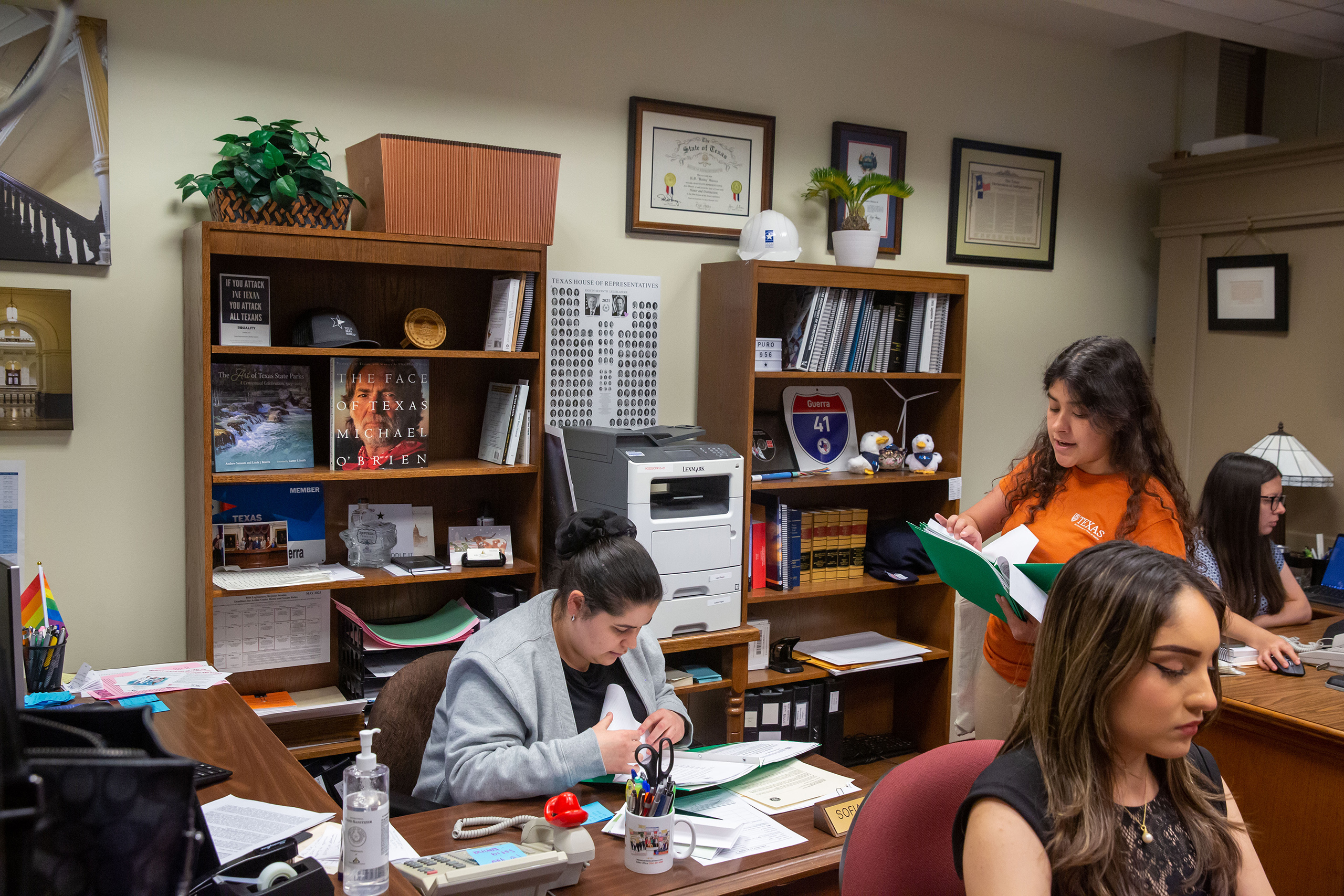
Capitol on May 18, 2023.
Now as she pursues her master’s at UT-Austin, De la Garza, who is involved with Texas Students for DEI, worries that many undergraduates don’t even know what resources and programs they’ve missed out on since the ban, including a welcome program for Latino students. She hopes the election results will give students a new opportunity to restore them.
“The fight is totally different now that everything’s been implemented, now it’s not a matter of protecting it, but getting it back,” she said.
The Texas Tribune partners with Open Campus on higher education coverage.
Disclosure: The University of Texas at Austin has been a major financial supporter of The Texas Tribune. Open Campus has been a financial supporter within the past five years. The Texas Tribune is a nonprofit, nonpartisan news organization that is funded in part by donations from members, foundations and corporate sponsors. Financial supporters play no role in our journalism. Find a complete list of them and more information about our financial and disclosure policies here.
This article first appeared on The Texas Tribune. 