Early Detection, Advanced Treatment Give Tyler Man Hope
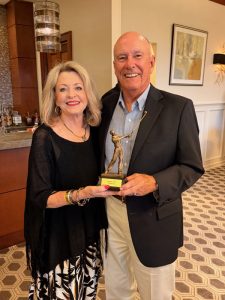
Stephenie and Randy Roberts
Randy Roberts has always taken his health seriously, especially as he’s gotten older. He fought and beat prostate cancer several years ago, stayed current on routine doctor’s appointments and made an effort to remain active.
Physically, Roberts kept fit by exercising regularly and often hitting the golf course with friends. Mentally, he felt fine. Neither he nor his wife of nearly 50 years, Stephenie, had noticed any concerning changes.
That’s why Roberts was surprised when a routine cognitive assessment during his annual physical two years ago raised a red flag. His primary care physician, Dr. Nghia Truong, took notice.
“He’s real observant of his senior patients,” Roberts said. “He looked at my results and said, ‘Something isn’t right here. We need to get you checked out. We need to find out what it is.’”
Roberts, now 80, underwent an extensive neurocognitive assessment at UT Southwestern in Dallas, which at the time was the closest location offering that level of advanced testing. Today, similar testing is available closer to home at the UT Health East Texas Dementia & Alzheimer’s Clinic in Tyler.
Roberts was ultimately diagnosed with mild memory loss and mild cognitive impairment (MCI), an early stage of cognitive decline. His physician determined he was a good candidate for donanemab, an FDA-approved intravenous infusion therapy for people with early symptomatic Alzheimer’s disease. At the time, the treatment had only recently become available in the U.S.
For 18 months, Roberts received monthly infusions. Follow-up testing brought encouraging news: his brain showed no signs of the beta-amyloid plaques the treatment is designed to target.
“It’s just the best possible result you can have,” Roberts said. “I do feel better. I feel sharper.”
Roberts will continue to be monitored every six months, but he has no plans to slow down. He intends to make the most of his time traveling with his wife, spending time with family and friends, staying active and, of course, playing golf.
“I’m just going to live my life,” he said. “All these doctors, including Dr. Truong, say don’t go to your rocking chair. Keep busy, be with your friends, work out, play golf, challenge yourself mentally, read books, play games. So that’s what I try to do.”
For Dr. Truong, recognizing the possible warning signs of Alzheimer’s is personal. He watched his father, along with several aunts and uncles, live with the disease, an experience that has made him especially mindful of subtle changes in his older patients.
“I’m very sensitive about the topic because it’s one of the most devastating diseases,” he said. “It kills you slowly and takes over your identity. It affects the person, but it also affects everyone around them.”
Having dementia specialists and advanced services available through the UT Health East Texas Dementia & Alzheimer’s Clinic means patients in East Texas can now receive evaluation, diagnosis and treatment, including infusion therapy, closer to home rather than routinely traveling to larger metropolitan areas for care.
“They have been very helpful in how to guide and treat the disease,” Truong said.
For more information about the UT Health East Texas Dementia & Alzheimer’s Clinic or to make an appointment, please call 903-877-7177.