
Flock license plate cameras are surging in Texas. So is an anti-surveillance backlash.
By The Waco Bridge and Ayden Runnels, The Texas Tribune
August 3, 2026
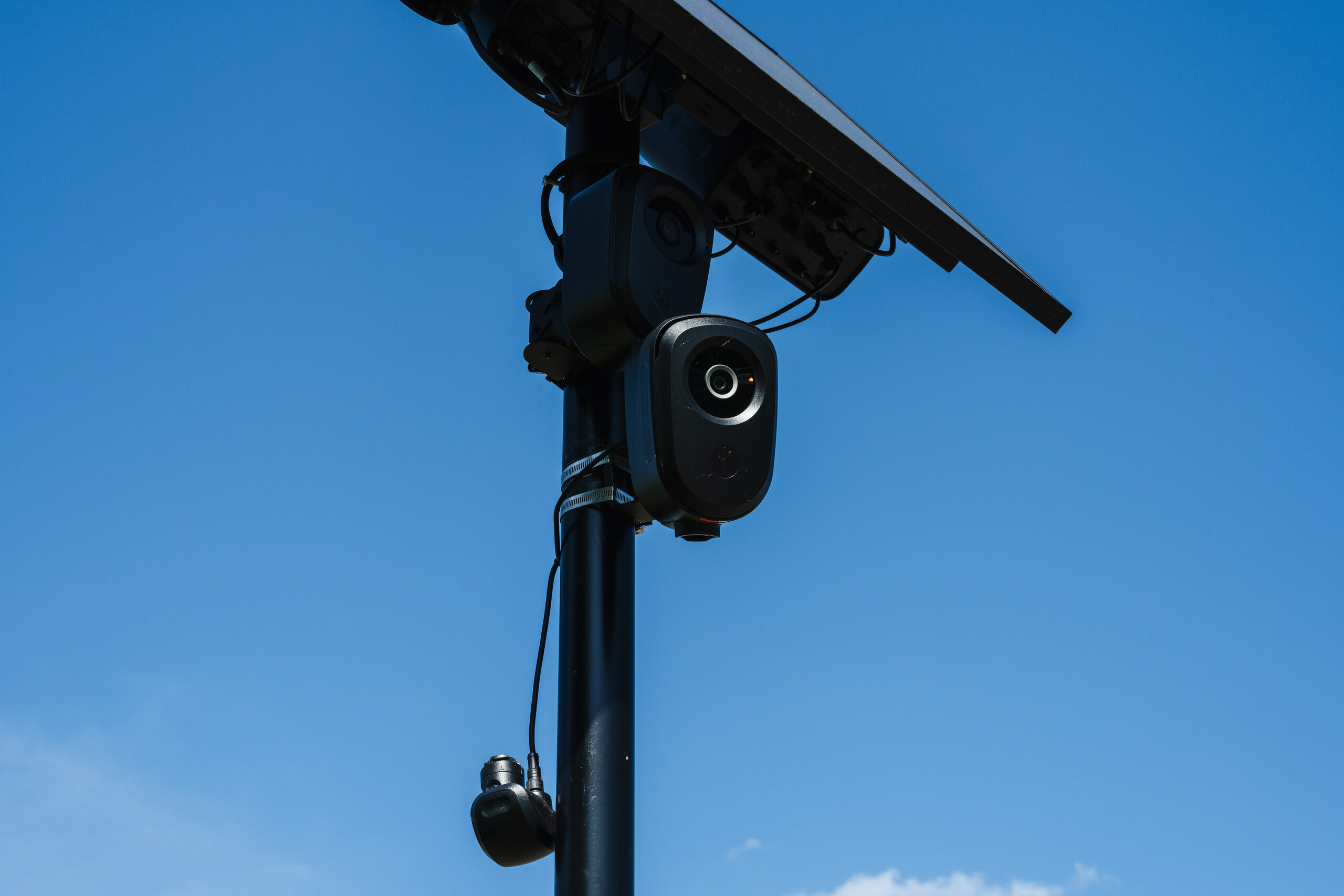
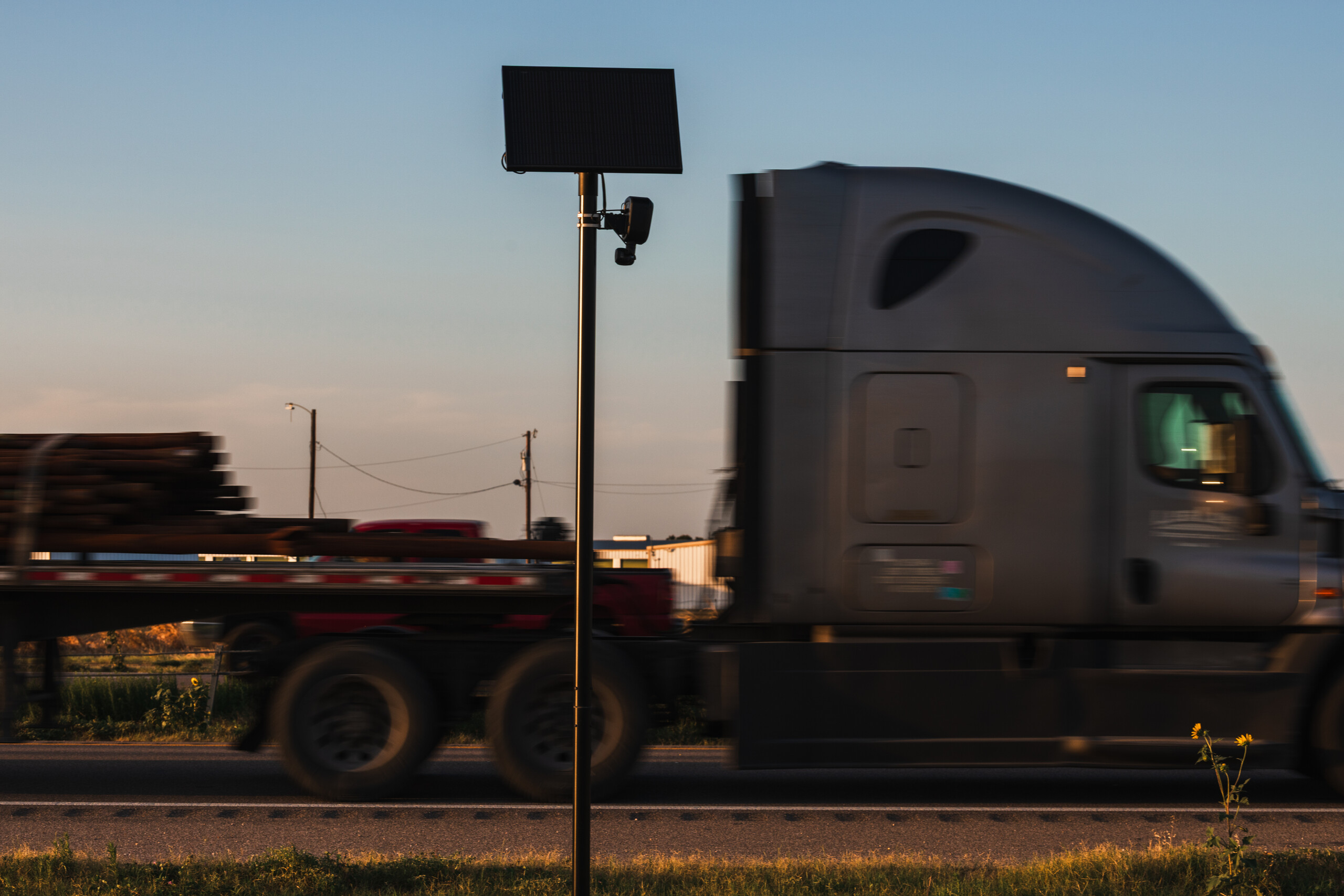
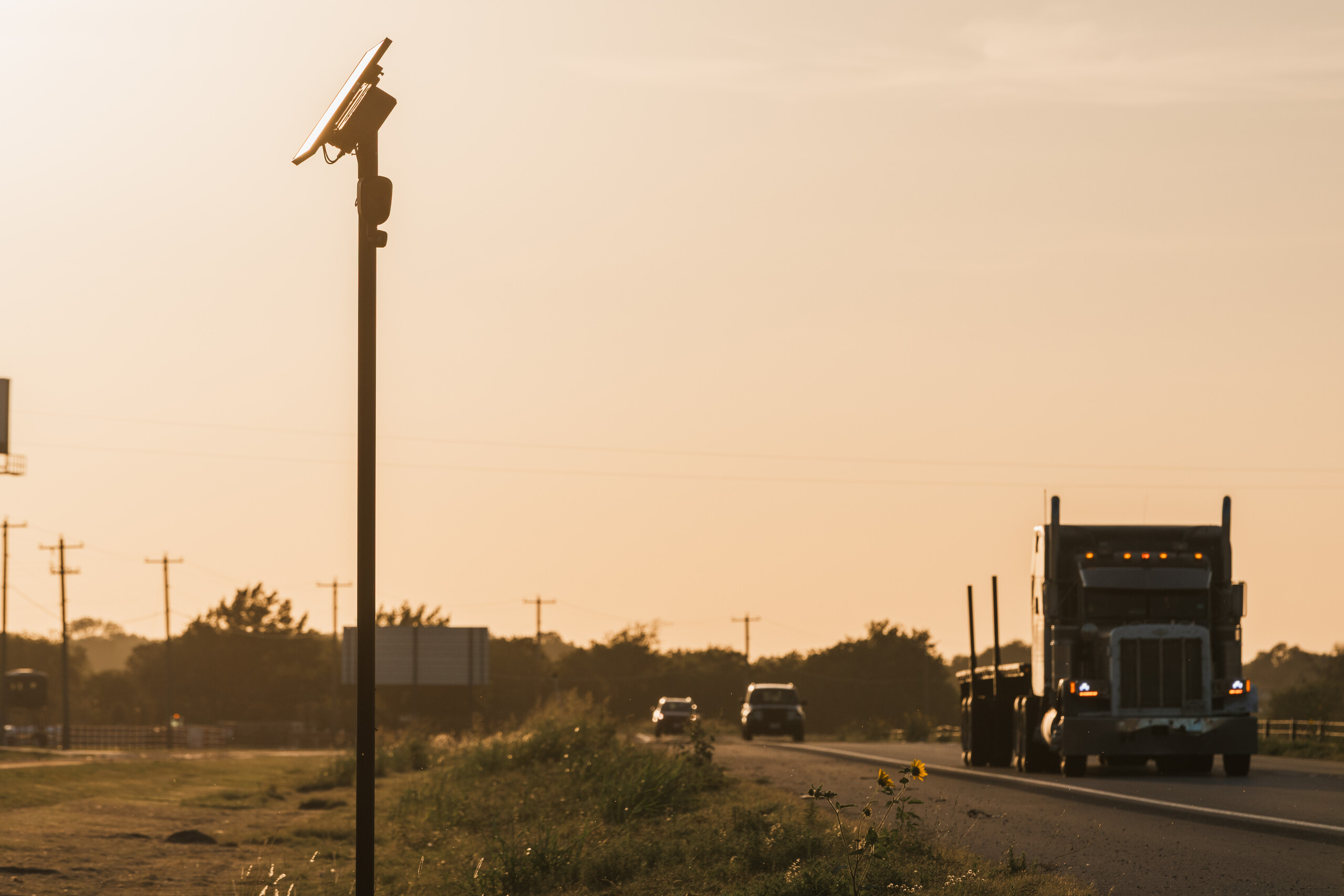
A network of little black cameras on tall metal posts has sprouted up across Texas, in big cities and along remote country roads.
The cameras, produced by Atlanta-based Flock Safety, use artificial intelligence to scan every vehicle that passes by, uploading the plate number, model, color and even bumper stickers to the country’s largest vehicle surveillance database. Law enforcement agencies that contract with the company — here and across the U.S. — can search the accumulated database with a few keystrokes and without a warrant.
A backlash is growing. U.S. Rep. Keith Self, a McKinney Republican, last month proposed legislation to require federal agencies to obtain warrants before accessing Flock camera data. Meanwhile, some Texans are done debating the cameras and are dismantling them instead.
It’s unclear exactly how many cameras dot the state, in large part because one of the biggest users of the cameras is the Texas Department of Public Safety, which declines to disclose how many devices it has positioned across the state.
What is known: The state troopers have partnerships with more than 200 local law enforcement agencies across the state that allow seamless data sharing between DPS and its partner agencies.
Nationally, Flock Safety estimates some 5,000 law enforcement agencies and 6,000 communities use its surveillance products.
Advocacy groups that track camera positions across Texas estimate there are more than 10,000 cameras in the state, including several thousand concentrated in the Houston area. At least 41 cameras have been installed around Waco-area cities and state roadways since 2024, according to public records and law enforcement officials.
Many police departments consider Flock an invaluable crime-fighting tool. Opponents — including privacy, civil liberty and immigrant rights advocates — argue the system’s capacity for abuse is well established. Texas cities such as Austin and Bandera, a town of about 900 people 50 miles northwest of San Antonio, have terminated their contracts over such concerns. They are among 47 cities nationwide to do so, according to DeFlock, an anti-surveillance group monitoring the company.
Despite the backlash, more local law enforcement agencies are considering adopting the technology, including the Waco police department, but some political leaders are skeptical.
“Americans’ Fourth Amendment right to be secure in their privacy does not disappear just because of new technology or artificial intelligence,” Self said in a July news release describing his proposed legislation. “Americans have a constitutional right to be secure in their persons, houses, papers, and effects, and our government is supposed to get a warrant before invading that privacy. This bill simply restores that protection. Get a warrant.”
Flock Safety did not respond to a request for comment.
What is a Flock camera?
Most Flock cameras scan license plates, looking for cars associated with warrants, stolen vehicles, missing persons or other suspected crimes.
Surveillance cameras like Flock, commonly referred to as “automatic license plate readers” or ALPRs, are not a new technology. However, Flock’s cameras have additional features that worry privacy advocates.
Flock cameras are notably different from the legacy license plate readers already attached to many police cruisers because they provide access to data by distant law enforcement agencies. Some searches from police departments scan through more than 7,000 camera networks, according to DPS records.
If a department opts in to Flock’s “national lookup” program, officers can search for a vehicle anywhere in the country where another department or agency has opted in. These searches do not require a warrant.
Another Flock difference is an AI capability allowing cameras to create a vehicle “fingerprint” independent of the license plate. A user can search “Blue Toyota Corolla, bumper stickers,” for example, to find matching hits and track the car’s movement. Other search options include accessories like bike racks, or even other vehicles that frequently travel together.
Finally, any user can create a shareable “custom hotlist” of suspected vehicles. Vehicles do not need to be tethered to a suspected crime to be added to a custom hotlist, according to Footnote4a, a nonprofit surveillance watchdog group and creator of haveibeenflocked.com.
Why are they controversial?
The backlash against Flock can’t be attributed to any one concern or trend, but rather a drumbeat of incidents accumulating over several years.
In Baytown, southeast of Houston, the city’s police chief last week announced a criminal investigation into an officer who was accused of misusing the city’s Flock cameras. The officer resigned Thursday, Police Chief John Stringer said, and the department did not specify what the allegations of misuse were.
Cases of Flock misidentifying suspect vehicles, however rare, have resonated well beyond the towns and cities where it happened, fueling fears of opaque technology driving arbitrary arrests.
A Colorado woman was falsely accused of package theft last year after an officer said a Flock camera found her at the scene of the crime. Her story found its way to national news outlets, as did a Denver man who was pulled over repeatedly because of his car’s mistaken addition to a Flock hotlist.
More than one incident has seen innocent motorists surrounded by officers with guns drawn.
Cases of erroneous Flock hits — where the system flags the wrong car — are happening with greater frequency as Flock’s network expands, according to the Institute for Justice, a leading public interest law firm. The institute identified 27 cases in nine states, but none in Texas as of late July.
Flock cameras have also been used to aid immigration enforcement in Texas and elsewhere, even in cases where the Flock customer explicitly restricted sharing with federal immigration agencies. Flock says it does not partner with U.S. Immigration and Customs Enforcement.
However, immigration agents were able to gain back-door access to a Houston school district’s Flock data through out-of-state police departments the district shared data with, according to a February investigation by The 74. Meanwhile, an investigation by 404 Media last year found several local and state law enforcement agencies in Texas conducting searches on behalf of federal immigration agents.
Those incidents underscore how the ease of sharing data — what makes Flock so effective for solving certain crimes, such as auto theft — makes data difficult to safeguard.
It’s a dilemma that’s hard to avoid when “the entire system depends on encouraging additional connections to the network,” said Beryl Lipton, a senior researcher at the Electronic Frontier Foundation, a nonprofit digital civil rights group.
Blake Burleson, a founding member of the Waco-based Heart of Texas Network for Immigrant Rights, said he’s worried about how state law enforcement might use Flock to accelerate immigration-related stops in Waco.
“Given the evidence we have right now of the Texas Department of Public Safety collaborating with ICE within the Waco city limits, and seeing the destruction they’re doing to families … I hope Waco doesn’t go to this quickly, or maybe never,” Burleson said.
The Texas Department of Public Safety approved a $26 million contract with Flock last year to surveil state roads and support Operation Lone Star, the state’s multibillion-dollar effort to curb unauthorized immigration and fortify the border.
State police have a 287(g) task force partnership with U.S. Immigrations and Customs Enforcement, allowing officers to cooperate with immigration agents in the field.
In the Waco-area, the greatest share of Flock critics appears to be concentrated among data center opponents. A search for posts including “Flock” in the Stop the Waco Data Center Facebook group returns more than 100 hits. Those posts present Flock, data centers and surveillance software, such as Palantir, as interconnected problems.
Sean Terrel, an organizer with the Waco data center opposition, does not see the two issues as fundamentally linked. He said the prevalence of anti-Flock sentiment in the data center opposition group is more a general indicator of community engagement.
“The people that are concerned with their community are interested in the things that are happening [to it],” Terrell said. “And these are two big issues.”
Last week, the Institute for Justice published a survey of 28 cases where police officers used Flock to stalk romantic interests. Two of the Flock stalking cases were reported in Texas this month, one of which involved an officer using Flock to stalk a female colleague.
Flock Safety in April introduced a new AI auditing tool billed as a solution to police abuse of the product. At least 20 officers in Georgia have been disciplined or charged with Flock misuse in the past year, according to an Atlanta News First investigation, which partly credited the sudden spike in cases to the new auditing tool.
The “use of automatic license plate reader data for non-law enforcement purposes is strictly prohibited,” according to a DPS policy document governing the department’s use of Flock.
What does a network of Flock cameras look like?
The Waco area provides a window into how Flock cameras are used in communities. Cameras in the region are operated by local police departments, DPS and private businesses. The Waco Police Department has not purchased Flock products, nor has the McLennan County Sheriff’s Office.
Because there is no centralized register of all Flock products in a given area, the most comprehensive list of known camera locations is a user-generated map hosted by DeFlock.
The Waco Bridge confirmed the following camera counts using public records and calls to local police departments:
- Hewitt – 19 ALPR cameras; 2 Flock video cameras
- Robinson – 11 ALPR cameras
- West – 9 ALPR cameras
- Bellmead – 2 ALPR cameras
Both The Home Depot, located on West Waco Drive, and Lowe’s Home Improvement on New Road have Flock cameras installed. Home Depot has said it does not grant federal law enforcement access to its Flock data. Bellmead’s cameras were partly paid for by Walmart, which has a location in the city along Interstate 35.
It’s unclear how many cameras DPS operates in the area or throughout Texas.
The department has a statewide data-sharing agreement with 206 county and local police agencies, according to a list of partners DPS provided to The Texas Tribune on Thursday. That list was up from 122 partner agencies in February, a 69% increase in five months to the state’s vehicle surveillance network.
DPS declined to answer how many cameras the agency operates across Texas.
“As part of continued efforts to improve public safety, the Texas Department of Public Safety (DPS) has installed automated license plate readers (LPR) in McLennan Co. – and across Texas – within several state right of ways following authorization by the Texas Department of Transportation (TxDOT) and once appropriate TxDOT state roadway permits were issued,” DPS wrote in a Thursday statement to The Texas Tribune. “Only law enforcement agencies who have signed agreements with the department have access to footage and images collected by DPS ALPRs.”
Why are they popular with law enforcement?
The value of Flock cameras for quickly investigating some crimes and preventing others is well-documented.
Flock cameras “have proven very effective [in solving crimes],” the DPS wrote in its Thursday statement. The department cited the system’s use in the July felony arrest of four suspects in a San Antonio home invasion case after a Flock hit led authorities to their location in Northwest Austin.
The Hewitt Police Department has been one of the biggest advocates for expanding the Flock network in the Waco area. With 21 cameras, the city has installed more Flock cameras than any other in McLennan County.
That’s not because Hewitt wants to spy on its residents, Hewitt Police Chief John McGrath told The Bridge.
“We have placed these cameras mainly on the outer limits of our city because what we’re interested in is the people that are coming into our city and committing criminal acts,” McGrath said.
He listed several examples where Flock was the deciding factor, including a victim of domestic violence in Hewitt who had a protective order against someone who lived outside the city. The suspect’s vehicle was added to a hotlist, allowing Hewitt officers to intervene when he approached the victim’s home.
Robinson police share Hewitt’s positive impression of the cameras. This week, the Robinson Police Department attributed a steep, year-over-year drop in burglaries, property crime and vehicle theft to the city’s 11 cameras. However, it’s not clear that Flock caused the drop. National crime rates across multiple categories have dropped precipitously since 2022, according to an analysis by the Council on Criminal Justice.
Flock Safety claimed its products helped locate 10,000 missing persons and supported 1 million investigations in 2025 and have specifically pointed to Texas as a demonstration of their importance.
A shooting spree by three teenagers in Austin earlier this year, injuring four people, led to a citywide chase with city police that took hours — only for the suspects to be caught an hour after entering Manor and being spotted on by city Flock camera. Flock touted the incident as an example of the price paid by Austin for cancelling its contract.
“Manor is a city of roughly 20,000 residents with a fraction of Austin’s resources,” a Flock post about the incident read. “What Manor has is an active license plate recognition network and the community support to keep it running. Manor PD located the suspects almost immediately. The spree ended. Residents stayed safe.”
Flock cameras are also heavily subsidized by state grants in Texas, chiefly through the Texas Motor Vehicle Crime Prevention Authority. Hewitt pays $9,600 a year for its camera network; the other $38,400 is paid for by the state grant. Bellmead’s system is partly paid for by the authority’s catalytic converter grant.
Can local law enforcement create safeguards for Flock?
Police departments can determine how Flock cameras are used and regulated, not just the company.
McGrath said his department takes potential officer misuse of Flock seriously. The Hewitt Police Department is an accredited member of the Texas Police Chiefs Association Best Practices Program and has instituted guidelines for proper use of its cameras.
Flock mandates users enter a reason for their search, though instances of vague search reasons have appeared in Flock audits throughout the country, such as “sus vehicle,” “test,” “investigation,” or random letter strings.
Hewitt’s policy demands a higher standard to execute a search, McGrath said. If a case number isn’t supplied, “you can’t just do a search and say something like ‘drugs’ [as a search reason],” he said. Hewitt officers who misuse the system could be fired.
McGrath said he was not aware of any requests from federal agencies to access Hewitt’s Flock data, nor were the cameras purchased with the intent of aiding immigration enforcement. Immigration enforcement is a “prohibited use” according to Hewitt’s Flock transparency portal.
Sign-up for Flock’s transparency portal service is optional. Because Flock data is owned by the user, according to the company, police can also choose the level of data access they grant other agencies.
Are Flock cameras being defaced?
The trend in Flock vandalism points to an emerging movement rejecting mass surveillance technology. Social media posts about damaged Flock cameras, as well as comedic instructionals on how to disable them, have gone viral.
Now, Flock cameras are being hacked, smashed and blinded across Texas, with reports of similar incidents surging throughout the country.
In July, Dallas police reported 25 attacks on Flock cameras since March, while authorities in Houston are investigating a string of anti-Flock vigilantism this month.
Flock cameras have been vandalized in the Hewitt area, too, police said. “We have actually had a couple of our cameras vandalized in Hewitt,” McGrath said, adding that Hewitt police are considering adding surveillance cameras to watch its Flock cameras in the event of a repeat strike.
A suspect in one of those cases was captured by the Flock camera being defaced.
“We will get arrest warrants for them, and we will put them in jail, and we will work with the DA’s office to try and get the maximum punishment,” McGrath said.
— Ayden Runnels contributed to this report.
Disclosure: Electronic Frontier Foundation has been a financial supporter of The Texas Tribune, a nonprofit, nonpartisan news organization that is funded in part by donations from members, foundations and corporate sponsors. Financial supporters play no role in The Texas Tribune’s journalism. Find a complete list of them here.
This article first appeared on The Texas Tribune.