
On the issues: Q&A with the Republicans running for Texas attorney general
By Eleanor Klibanoff, The Texas Tribune
January 29, 2026
Sign up for The Brief, The Texas Tribune’s daily newsletter that keeps readers up to speed on the most essential Texas news.
This is one of a four-part series of surveys featuring candidates in the Republican and Democratic primaries for U.S. Senate and attorney general. Read the survey with Democratic attorney general candidates here. See all of our resources for voting in the Texas primaries here.
Attorney General Ken Paxton’s decision to run for U.S. Senate set off an expensive and competitive race to fill one of the state’s most powerful posts.
Four Republicans are seeking the nomination in the March 3 primary, a contest that will be settled in a May runoff if nobody clears 50% of the vote. The winner will take on the Democratic nominee in November and look to continue the GOP’s three-decade winning streak in Texas statewide elections.
Whoever wins this seat as Texas’ top lawyer will be responsible for defending challenges to state agencies and statutes in court, issuing opinions interpreting state law, undertaking investigations and bringing lawsuits to protect residents of the state. They will be responsible for legal affairs that impact everyday Texans’ lives, like enforcing child support judgments, stopping waste and fraud in government programs and investigating deceptive charities, unscrupulous businesses and fraudulent billing.
The next attorney general will get to decide the agency’s priorities. To help primary voters distinguish between the three Republican hopefuls, we asked each of them to share their views on the office’s major issues. See where they stand, and how they differ.
Notably, three candidates provided responses, but Sen. Mayes Middleton refused to participate. In his absence, Tribune reporters sought out his past public statements and used his legislative record to give voters a view into his thinking.
Question topics

Joan Huffman
State Senator, Harris County
💰 Campaign finance:
- Total raised: $512,017
- Total spent: $865,632
- Cash on hand: $2,718,093
💰 Major donors this cycle:
- Andrew Schatte, Houston finance executive
- Kathy Britton, CEO, Perry Homes
- Ross Perot Jr., Dallas real estate developer
🏢 Experience:
- One of Texas’ longest tenured state senators, representing Harris County since 2008
- Lead budget writer in the upper chamber and chaired influential redistricting and state affairs committees
- Served two terms as a criminal district judge in Harris County
- Longtime prosecutor, rising to chief felony prosecutor at the Harris County District Attorney’s Office
📣 Endorsements:
- Combined Law Enforcement Associations of Texas
- Joe Gamaldi, president of the National Fraternal Order of Police
- Steve McCraw, former director of Texas Department of Public Safety
- District attorneys Sean Whittmore, Waller County, and Jack Roady, Galveston County
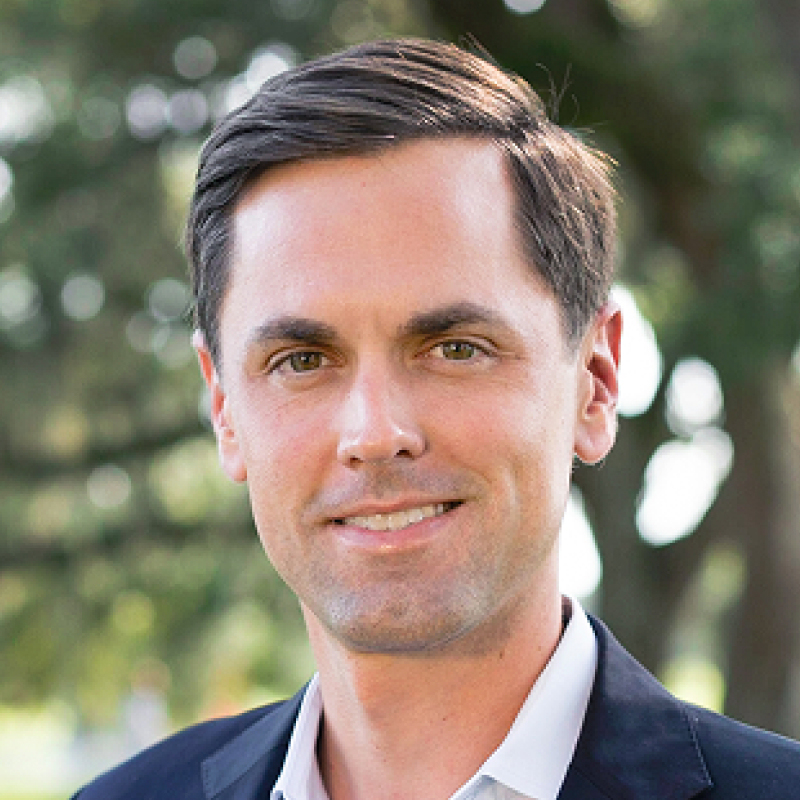
Mayes Middleton
State Senator, Galveston
💰 Campaign finance:
- Total raised: $11,819,527
- Total spent: $7,133,607
- Cash on hand: $5,098,210
💰 Major donors this cycle:
- Himself — Middleton has self-funded his campaign with more than $11 million
- William Oberndorf, California billionaire who supports school vouchers
- Will Hardeman, Austin car dealership owner
🏢 Experience:
- State senator since 2023, representing Galveston and surrounding areas
- State representative from 2019 to 2023
- President, Middleton Oil Company, a family company
- Graduate of the University of Texas School of Law
📣 Endorsements:
- Texas Eagle Forum
- The True Texas Project
- Conservative Republicans of Texas
- Republican state legislators including Sen. Brent Hagenbuch, R-Denton, Sen. Adam Hinojosa, R-Corpus Christi, Rep. Briscoe Cain, R-Deerfield, Rep. Brian Harrison, R-Midlothian and dozens more
Aaron Reitz
Former assistant attorney general at the U.S. Department of Justice’s Office of Legal Policy
💰 Campaign finance:
- Total raised: $1,658,444
- Total spent: $1,045,705
- Cash on hand: $2,953,221
💰 Major donors this cycle:
- Jonathan Knutz, Houston media executive
- Matthew Calhoun, Austin energy executive
- Ned Fleming, Dallas private equity executive
🏢 Experience:
- Confirmed as assistant attorney general at the U.S. Department of Justice’s Office of Legal Policy in 2025
- Served as chief of staff for Sen. Ted Cruz from 2023 to 2025
- Previously served as deputy attorney general for legal strategy under Paxton
- Clerked for Texas Supreme Court Justice Jimmy Blacklock
- Graduated from University of Texas School of Law
- Served five years in the U.S. Marine Corps, deploying to Afghanistan
📣 Endorsements:
- Attorney General Ken Paxton
- National Border Patrol Council
- Conservative Political Action Conference

Chip Roy
U.S. Representative, Central Texas
💰 Campaign finance:
- Total raised: $4,500,490
- Total spent: $1,224,264
- Cash on hand: $4,272,044
💰 Major donors this cycle:
- Chip Roy for Congress (transferred $2.1 million from his federal campaign account)
- Douglas Scharbauer, Midland oil investor
- Alex Fairly, Amarillo businessman
🏢 Experience:
- Four-term congressman representing Central Texas in the U.S. House
- Former chief of staff to Sen. Ted Cruz
- First assistant attorney general under Paxton
- Senior adviser to Gov. Rick Perry from 2011 to 2012, and ghostwriter of his book, “Fed Up!”
📣 Endorsements:
- Sen. Ted Cruz, R-Texas, and U.S. representatives including Keith Self, R-Mckinney, Ronny Jackson, R-Amarillo, Beth Van Duyne, R-Dallas, Michael Cloud, R-Victoria, and Pete Sessions, R-Waco
- Former U.S. reps. Matt Gaetz and Mark Meadows
Q&A
Editor’s note: These responses have been lightly edited for clarity and length. Minor changes have been made, when necessary, to correct grammatical or spelling errors and ensure the text conforms with Tribune style.

Attorney General Ken Paxton has refused to represent state agencies in certain lawsuits — at least 75 times in a recent two-year period — forcing agencies to hire outside counsel. Does the OAG have a responsibility to defend all state agencies in-house?
Huffman
The Texas Government Code designates the attorney general as the state’s chief legal officer, responsible for representing Texas in matters of statewide interest. Under Section 402.021, the attorney general is tasked with prosecuting and defending actions in which the state has an interest before higher courts, though this authority does not require in-house representation in every case or venue.
In practice, the Office of the Attorney General (OAG) acts as the primary counsel for state agencies. However, the law provides necessary flexibility: The OAG may decline representation in cases involving conflicts of interest or requiring specialized expertise.
As attorney general, my approach would emphasize and prioritize in-house representation whenever feasible to control costs and promote efficiency. At the same time, I would responsibly authorize outside counsel when it clearly benefits Texas taxpayers — making such decisions transparently and consistently with conservative values of fiscal responsibility.
Reitz
The attorney general does not exist to be a defense lawyer for rogue bureaucrats. The AG’s chief duties are to the U.S. Constitution, the Texas Constitution, and Texas law. When a state agency violates the law or the Constitution, the attorney general is not obligated to defend that misconduct in court. Agencies are free to fix their unlawful behavior if they want the attorney general’s help; they are not entitled to conscript him into defending it.
Roy
No. The OAG has a responsibility to have the best in-house lawyers possible and to find the most cost-effective way to win litigation. Sometimes that means employing outside counsel, but in partnership with a stellar in-house team to minimize costs and maximize state expertise.
Middleton
Did not respond to questions. The Texas Tribune was unable to find public comments from Middleton on this issue.
Paxton has also relied on outside counsel for lawsuits against Big Tech and pharmaceutical companies, among other cases. Would you continue that practice?
Huffman
I am open to continuing the use of outside counsel in complex, high-stakes litigation against Big Tech, pharmaceutical companies, and similar entities, but only when it is strategically advantageous and fiscally responsible.
This approach is not about abdicating core responsibilities; it is about deploying the highest-caliber legal expertise to effectively hold powerful corporations accountable—particularly when their actions, such as antitrust violations or deceptive drug marketing, harm Texans.
Reitz
Yes. Anyone who thinks the Texas Attorney General’s Office should fight trillion-dollar Big Tech monopolies or global pharmaceutical cartels without specialized outside counsel is either unserious or dishonest. Outside counsel, when used properly, are force multipliers, not substitutes. The AG sets strategy, controls the case, and answers to the public. The goal is a win for Texans while saving taxpayer dollars. The prudential, case-by-case employment of outside counsel accomplishes these goals.
Roy
It is perfectly appropriate to use outside counsel. I will continue to use outside counsel but would review all outside contracts in a way consistent with my answer above.
Middleton
Did not respond to questions. The Texas Tribune was unable to find public comments from Middleton on this issue.
The attorney general is responsible for interpreting and enforcing open records law. How would your approach to open records be similar or different than Paxton’s?
Huffman
The Texas Attorney General’s Office plays a critical role in interpreting and enforcing the Public Information Act (PIA), which ensures government transparency by allowing citizens to access public records. I would aggressively enforce the PIA against any entities that violate its requirements, ensuring accountability and openness in government.
Reitz
“Sunlight is the best disinfectant.” That principle guided my work when I oversaw the Public Information and Open Records Divisions as AG Paxton’s deputy, and it will guide me again. Transparency is not optional, and it is not something government grants grudgingly. The law is heavily biased toward disclosure, and I enforced it that way. I’ll continue to do so.
Roy
Texans deserve transparency from their government. I would ensure the Open Records Division operates with clear timelines, responsiveness, and respect for the public’s right to know. I also believe we should investigate best practices with modern technology, AI, and other tools to ensure we have the most transparent government possible with the fastest turnaround of cases at OAG possible.
Middleton
Did not respond to questions. Middleton has filed legislation to expand access to open records and has said making records widely accessible is a top campaign priority, citing them as a key tool to fight waste, fraud and abuse. While he hasn’t addressed Paxton’s handling of open records law specifically, Middleton said that “open records have largely become closed records,” and he would push for more transparency and accessibility as attorney general.
Paxton filed a lawsuit challenging the results of the 2020 election as illegitimate; that lawsuit was promptly dismissed by the U.S. Supreme Court. Would you have filed a similar lawsuit if you’d been running the office then? Do you believe the 2020 election was legitimate?
Huffman
I cannot speculate on decisions regarding the 2020 election, as I did not have access to the specific facts, evidence, or legal analyses available at that time. As Texas attorney general, my focus would be on proactively strengthening Texas-specific election security measures — such as the voter ID requirements I passed as a state senator, ramping up defenses against cyber interference through advanced threat detection systems and robust state-level cybersecurity protocols, and collaborating closely with counties to ensure local elections are conducted strictly by the book with rigorous audits and compliance checks — to build unshakeable public confidence and eliminate any future doubts about the integrity of our elections.
Reitz
I didn’t just support that lawsuit — I filed it. And yes, I would do it again. Four states violated the U.S. Constitution by unilaterally rewriting election rules under the pretext of Covid, and those violations affected the entire country. Two Supreme Court justices — Samuel Alito and Clarence Thomas — said on record that the court had an obligation to hear the case. Dismissing it on standing grounds didn’t make the underlying conduct constitutional. So no, the 2020 election was not legitimate. And yes, Texas was right to challenge it.
Roy
The 2020 election was plagued with rampant fraud, as has been increasingly documented over time, and raised very legitimate questions about the electors. I was publicly and privately concerned about alleged fraud at the time, was targeted by the New York Times and other media over private text messages to my friend Mark Meadows (then chief of staff to the president) about those issues, and have even been the target of the DOJ for daring to question the outcome of the election. As I very publicly said at the time, I disagreed with the litigation strategy because I knew it would be tossed out for lack of standing (it was), was therefore a distraction from focusing on what we could review, and that one state should not be trying to tell another state how it selects its electors. (As AG, I would defend Texas against any challenge to our process.)
Middleton
Did not respond to questions. Middleton has said the 2020 election was “stolen” from President Donald Trump.
Do you believe the state has to cooperate with court rulings, from state or federal courts, that you believe were wrongly decided?
Huffman
The state must cooperate with court rulings from both state and federal courts, even if I believe they were wrongly decided. This unwavering adherence to the rule of law — upholding court rulings even when we disagree — is the bedrock principle that distinguishes America from nations where justice is arbitrary, selective, or absent altogether. As attorney general, I would defend Texas laws vigorously in court, appeal adverse decisions when warranted, and seek higher review where possible.
Reitz
Blind obedience to every court ruling is not the rule of law — it’s judicial supremacy. Courts have a role, but it is a limited one, and judges do not possess roving authority to rewrite laws or constitutions. There are some limited circumstances — rare, serious ones — where the political branches must resist unlawful judicial overreach. Democrats hate that view. When I was confirmed by the Senate to my post at the Justice Department, the senior Democrat on the Judiciary Committee called me a “danger to the rule of law” for holding it. I consider that a compliment.
Roy
The state of Texas does not have to surrender to judicial activism. I will respect and promote the rule of law, but that includes standing up to courts that overstep their constitutional authority. If a court issues a ruling I believe is unconstitutional, I will aggressively pursue appeals and work to overcome it through all means appropriate under the Constitution.
Middleton
Did not respond to questions. The Texas Tribune was unable to find public comments from Middleton on this issue.
Paxton has pushed to enforce Texas’ restrictions on abortion and gender-affirming care on health care providers in other states. Do you believe Texas’ laws should be enforceable in other states?
Huffman
As a Republican committed to states’ rights and federalism, I strongly support Texas’ robust protections for life and our restrictions on certain medical procedures for minors. However, attempting to enforce our laws extraterritorially risks violating the Constitution’s Full Faith and Credit Clause.
While I respect Attorney General Paxton’s passion for defending Texas values, such extraterritorial actions have frequently resulted in legal setbacks and heightened tensions with other states, as evidenced by recent dismissals and retaliatory lawsuits.
If elected, I would prioritize vigorous enforcement within our borders — for instance, by pursuing more lawsuits against in-state providers who violate bans on gender-affirming care for minors — while working collaboratively with allied states through amicus briefs and coordinated efforts, rather than pursuing actions beyond Texas’ jurisdiction.
Reitz
When out-of-state actors intentionally target Texans to violate Texas law, jurisdiction doesn’t magically disappear at the border. If abortion pill distributors, medical providers, or activist networks operate across state lines to circumvent Texas law and harm Texans, Texas has every right to pursue them. States are not required to sit helplessly while their laws are nullified by coordinated interstate schemes.
Roy
Texas law will be enforced. No corporation or organization hiding behind blue-state politics while operating in Texas will get a free pass to violate our laws or endanger Texans.
Middleton
Did not respond to questions. The Texas Tribune was unable to find public comments from Middleton on this issue.
Paxton has sued numerous private companies, ranging from Big Tech firms to airplane manufacturers and clothing brands. Do you agree Texas’ attorney general should make suing big business a top priority?
Huffman
I believe that holding major corporations accountable through litigation should remain a priority for the Texas attorney general when they violate state laws, harm consumers, or engage in practices that undermine core conservative principles — such as free speech, fair competition, and ethical labor standards.
However, these efforts must be pursued judiciously to avoid any perception of being anti-business. Texas’ economy thrives on pro-growth policies, and my approach would protect that environment while ensuring corporations are held fully accountable for wrongdoing.
Reitz
If “big business” breaks the law, harms Texans, or engages in fraud or deception, then yes, they should expect to be sued. Big Tech, Big Pharma, Big Banks, Big Med — they don’t get immunity because they’re wealthy, politically connected, or fashionable in elite circles. I helped lead many of these fights as deputy AG, and I’m proud of it.
Roy
This is a major priority of my campaign. When large corporations act as crony extensions of government or foreign interests, the attorney general must step in.
Middleton
Did not respond to questions. Middleton has authored or voted for numerous bills that take aim at major companies, including removing soda, sweetened drinks, and candy from the food stamps program and removing cellphones from classrooms to stop “woke tech companies from trying to harm kids.”
Last legislative session, lawmakers affirmed the attorney general’s ability to independently prosecute election crimes. Do you believe investigating and bringing criminal election charges should be a top priority for the office?
Huffman
Yes, absolutely — investigating and prosecuting election crimes must be a priority of the Texas Attorney General’s office, which is why I joint-authored the bill (SB 12 from the Legislature’s second special session in 2025) to grant the AG this authority. Election integrity is the bedrock of our republic — without secure and trustworthy elections, public confidence erodes and our democracy is undermined. I would take every allegation seriously and address it promptly, and I would not hesitate to pursue criminal charges whenever the evidence supports doing so.
Reitz
Election integrity is the foundation of self-government. Investigating and prosecuting election crimes is a top priority of mine, especially where local prosecutors refuse to act for political reasons. I led Texas’s election integrity efforts in the 2020 and 2022 cycles, and I saw firsthand how widespread and organized election misconduct can be. The Court of Criminal Appeals’ attempt to strip the AG of prosecutorial authority in 2021 with its Stephens decision was lawless and absurd. The Legislature was right to reverse it. As attorney general, I will aggressively enforce election law.
Roy
Yes. This should be a core function of the OAG. I supported the Legislature’s efforts this past session. My office will aggressively investigate and prosecute election crimes. Texans deserve to know their elections are secure and legitimate and under my leadership they will.
Middleton
Did not respond to questions. Middleton has said election integrity is a top priority, and points to his role in passing legislation that allows the attorney general’s office to pursue election fraud cases without waiting for invitation by a local prosecutor. He has promised to create an election integrity division within the attorney general’s office with broad law enforcement power to investigate allegations of voter fraud.
Do you believe the attorney general’s office should be given more independent criminal prosecutorial authority?
Huffman
I strongly support granting the attorney general broader independent criminal prosecutorial authority to address cases where soft-on-crime prosecutors in major cities have declined to enforce entire categories of crimes or disregarded state laws they oppose.
In those situations, the attorney general must have clear statutory authority to step in and prosecute those cases directly — without needing permission from a non-compliant local prosecutor — so that no Texan is left unprotected and no victim’s cry for justice goes unanswered.
At the same time, I recognize that the overwhelming majority of our district attorneys across Texas are dedicated public servants who faithfully uphold the law every day. As a former prosecutor and criminal district court judge, I have a deep understanding of our criminal justice system and relevant experience that my opponents simply do not have. My approach would emphasize partnership over confrontation, unless confrontation is warranted.
Reitz
Absolutely. When radical prosecutors in blue cities and counties openly refuse to enforce state law, they create lawless zones that endanger public safety and undermine democracy itself. Texas cannot allow a patchwork justice system where the law applies in red counties but not blue ones. Expanding the AG’s independent criminal authority is necessary to restore uniform enforcement and impose order where Democrats have allowed chaos to take root.
Roy
Yes. I will pursue greater prosecutorial authority to enforce state law when failed district attorneys refuse to do their jobs. Texas law must and will be enforced in every county.
Middleton
Did not respond to questions. Middleton has said he wants to see district attorneys removed from office if they do not fully prosecute certain crimes. He has also said he would investigate Democratic megadonor George Soros, who has donated to left-leaning district attorneys and judges.
This article first appeared on The Texas Tribune.